
New Bedford Car Accident Lawyer
Getting hurt was not part of your plan.
Public crash records can add context about a New Bedford roadway’s history. Larson Law reviews the location and insurance records when assessing an injury claim and the next steps.
- No fee unless we win
- Same-day response
- Free case review
As Seen On:











What a New Bedford car accident lawyer looks at first.
New Bedford is Bristol County’s largest city and the ninth-largest city in Massachusetts, with a population of approximately 101,000 as of the 2020 census. Its road network – carrying commuters, fishing port freight, and commercial traffic through a dense urban grid – produces crash numbers that MassDOT data bears out. Between 2019 and 2021, MassDOT recorded 10,790 car crashes in New Bedford, including 17 fatal crashes and 177 crashes causing serious injury. Of those crashes, 247 involved pedestrians. On average, six people die in car accidents in New Bedford each year per MassDOT data. A report covering MassDOT crash data from 2017 to 2019 found that New Bedford had 31 of the 100 most dangerous intersections in southeastern Massachusetts – more than any other city in the region. The Ashley Boulevard and Coggeshall Street intersection alone recorded 91 crashes during that period, making it the most dangerous intersection in the city per MassDOT data. I-195, which runs through the center of New Bedford, recorded multi-car crashes, a wrong-way collision, and a tractor-trailer crash with severe and deadly injuries in 2022 alone, documented in WBSM.com citing MassDOT crash records.
When a car accident in New Bedford injures you because of another driver’s negligence, that documented crash history at specific intersections is part of the public record that may support your claim. A lawyer in New Bedford can review your situation at no cost and explain exactly where you stand.
A car crash in New Bedford can change a person’s life in seconds, and what happens in the weeks that follow often shapes the outcome as much as the crash itself. That is when the at-fault driver’s insurer begins building its position, frequently before the injured person has finished treatment, and when the record that will decide the claim is being formed. New Bedford’s older street grid, its mix of local and through traffic on corridors like Route 18 and Ashley Boulevard, and its busy downtown intersections all produce crashes, and the documented history of a location can help explain how one happened. Larson Law’s focus is on making sure the record reflects the facts, from the crash evidence at the scene to the medical proof tying the injury to the collision, so the claim is valued accurately rather than by an adjuster’s first low estimate.
Larson Law also helps injured clients across the region through related practices, including car crashes in Boston and the truck collisions that happen on the same roads.
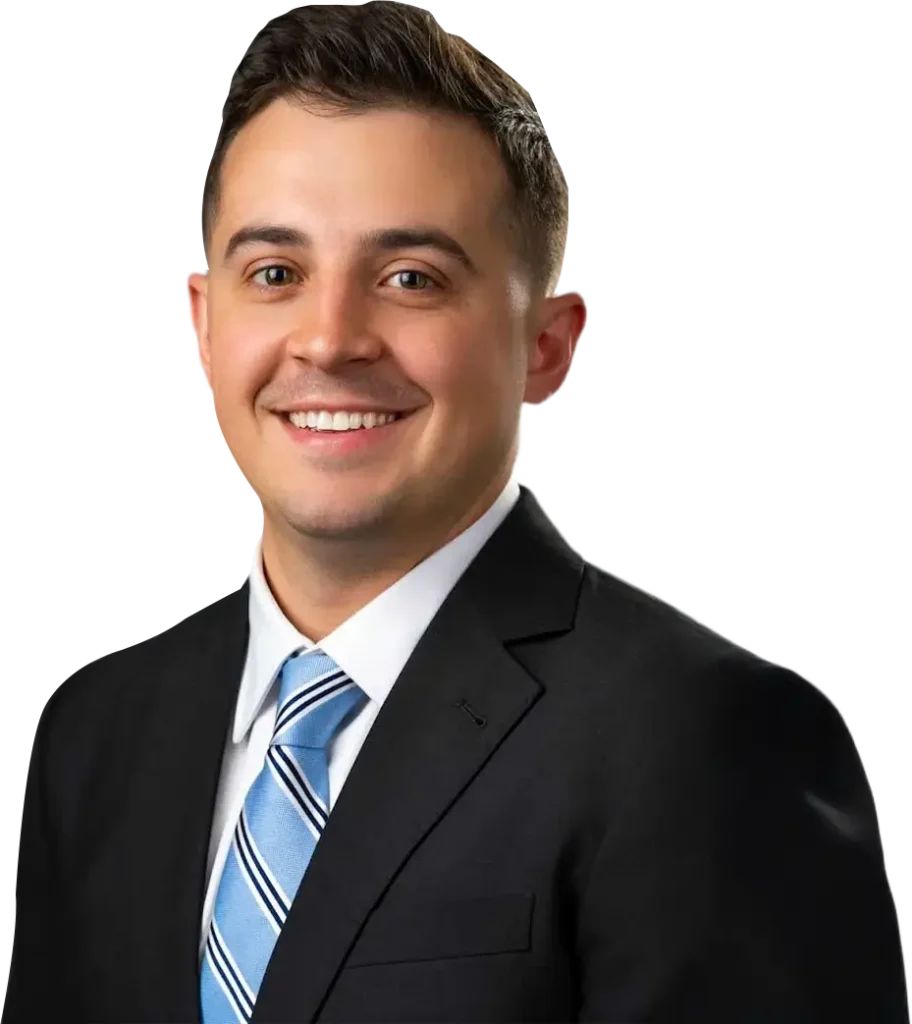
Every case at the firm is handled under the direction of Daniel J. Larson, whose background and credentials are on his attorney profile. From the first call you work directly with a lawyer who will explain what your claim involves and what it may be worth.
What our clients say

Larson Law can explain the issues in a car accident claim.
- We handle car crash injury claims for injured clients across New Bedford and the surrounding area.
- We deal with the insurers directly so you are not pressured into an early, low settlement.
- We move quickly to preserve the evidence that proves both fault and the full extent of the harm.
- We know the Massachusetts rules that shape these claims and the ways insurers try to limit them.
- We build each claim on medical proof and documentation, not on a rushed call with an adjuster.
- No fee unless we win your case
- No upfront costs
- Direct attorney access throughout
- Free, no-pressure case review
$1M+ Won For Clients
100+ 5-Star Google Reviews
9+ Years of Legal Expertise
98% Legal Success Rate
Hundreds of Victims Helped
No Win, No Fee Guaranteed
Coverage, fault, and time all shape a crash claim.
A New Bedford car accident claim moves on two separate tracks, and most people only discover the difference once the bills start arriving. The first is your own coverage, which pays quickly and without much argument about who caused the collision. The second is the claim against the driver who hit you, and that is where the real dispute lives: how badly you were hurt, how much of the blame can be shifted onto you, and what the injury will cost over the years that follow. Knowing which track you are on, and what each one can and cannot do, is usually the difference between a file that closes cheaply and one that reflects the actual harm.
What your own policy pays first
After any crash in the city, your own policy covers the first round of medical bills and a share of lost wages, no matter who caused it. That coverage applies automatically, which makes it the starting point for nearly every claim here, including for the many people brought straight from the scene to St. Luke’s Hospital, the Southcoast Health facility that serves as the city’s primary emergency hospital. It is also limited. It runs out well short of what a serious injury actually costs once imaging, specialists, surgery, or months of physical therapy enter the picture, and it pays nothing at all for what the injury does to your daily life. Treating it as the whole claim is the most common and most expensive mistake made in the first month.
When you can claim for pain and disruption
That first layer of coverage does not pay for pain and disruption. Reaching those damages generally requires your reasonable medical costs to pass a set dollar level, or your injury to fall into a category treated as serious on its own — a fracture, permanent scarring or disfigurement, the loss of a body part, or a qualifying loss of sight or hearing. Once one of those is met, you can pursue the at-fault driver’s insurer directly for the full picture of what the crash cost you, including future care and earnings you will not recover. Injuries out of the high-speed corridors — I-195 and the Route 140 and Route 6 junction in particular — frequently clear that bar, because the speeds involved produce exactly the fractures and lasting damage that qualify.
How shared blame changes what you recover
What you receive also turns on how the blame splits. If your share of the fault stays below a majority you can still recover, though the amount is reduced in proportion to that share; once your share reaches a majority, recovery is barred outright. Insurers know precisely what that arithmetic is worth to them, and at the city’s complicated junctions — the five-point meeting of Route 140 and Route 6, the six-way at JFK Highway and Potomska, the seven-point at Route 6 and Pleasant — there is room to argue you were speeding, followed too closely, or missed a signal. The counter is built from the record rather than from argument: the resting position and damage of both vehicles, the responding officer’s account, the signal timing, nearby business or municipal cameras, and witnesses who watched the approach rather than only the impact.
Coverage gaps and the clock
Not every driver on these roads carries enough insurance, and some carry none. Massachusetts policies include uninsured motorist protection for exactly that situation, and underinsured motorist coverage can be purchased to close the gap when the at-fault driver’s limits fall far short of the injuries. After a hit-and-run downtown or on a side street off Acushnet Avenue, that coverage on your own policy is often the main source of recovery, which makes an early, accurate description of the vehicle worth more than people realize. Time works against every part of this. The window to bring an injury claim is measured in years, but the evidence at a New Bedford intersection degrades within days, and a crash involving a municipal or transit vehicle carries an additional early written-notice step that can end an otherwise valid claim if it is missed.
None of this resolves on its own. The other driver’s insurer is working steadily toward closing the file for as little as possible: asking for a recorded statement before you know how badly you are hurt, treating any gap in treatment as proof the injury came from somewhere else, and questioning whether the care was necessary once the costs begin to climb. Answering that takes a record built deliberately from the first medical visit forward, tying each symptom to the collision and each cost to the injury, so the file speaks for itself long before anyone discusses a number.
Every New Bedford car accident lawyer starts at the scene.
New Bedford’s crash data is documented in MassDOT records covering specific intersections, highways, and corridors. Understanding where your accident happened helps identify what public evidence may already exist to support your claim.
Ashley Boulevard and Coggeshall Street
MassDOT data from the 2017-2019 study period identified this four-way intersection as the most dangerous in New Bedford, with 91 crashes recorded during that period. Ashley Boulevard is one of New Bedford’s primary north-south commercial arterials, and the crash volume at this intersection places it among the most documented dangerous locations in southeastern Massachusetts.
Route 140 and Route 6 (Alfred Bessette Memorial Highway and Kempton Street)
This five-point intersection is the junction of Massachusetts Route 140 – which connects to Route 24 in Taunton – and U.S. Route 6, which runs east-west across New Bedford toward Cape Cod. Five-point intersections create inherently complex conflict patterns between turning vehicles, and this location appears among the MassDOT-identified most dangerous intersections in New Bedford based on the 2017-2019 data.
I-195 through central New Bedford
Interstate 195 runs through the center of New Bedford and connects the city to Providence, Rhode Island, to the west and Wareham to the east. WBSM.com, citing MassDOT crash records, confirmed that in 2022 alone, I-195 in New Bedford was the site of a multi-car crash, a wrong-way collision, and a tractor-trailer crash with severe and deadly injuries. I-195 is under State Police jurisdiction, and crashes there generate State Police crash reports that are critical evidence for any personal injury claim arising from the highway.
Route 6 through New Bedford
U.S. Route 6 runs east-west through New Bedford, crossing the New Bedford-Fairhaven Bridge and the Popes Island Bridge. It creates multiple complex intersections within the city, including a seven-point intersection at Route 6 and Pleasant Street identified in MassDOT data as one of New Bedford’s most crash-prone locations. Route 6 also carries commercial traffic to and from the Port of New Bedford, one of the nation’s leading fishing ports, adding commercial vehicle volume to the city’s already heavy commuter traffic.
JFK Memorial Highway and the downtown grid
John F. Kennedy Memorial Highway intersects with Potomska Street in a six-way intersection identified among New Bedford’s most dangerous per MassDOT data. Downtown New Bedford’s street grid – a historic pattern dating to the city’s whaling era – creates multiple irregular intersections where vehicles, pedestrians, and cyclists share limited space at odd angles.
Car accident cases from New Bedford are filed based on the amount in dispute. Smaller civil claims fall under the New Bedford District Court in New Bedford, which serves Acushnet, Dartmouth, Fairhaven, Freetown, New Bedford, and Westport. Larger personal injury claims are filed at the Bristol County Superior Court in New Bedford, which handles civil matters for all Bristol County communities.
Where New Bedford crashes tend to concentrate
New Bedford’s crash patterns follow its road network. Route 18 and the connectors linking downtown to Interstate 195 carry heavy, faster-moving traffic where merging and sudden slowdowns lead to rear-end and lane-change collisions. Major surface corridors such as Ashley Boulevard, Acushnet Avenue, Kempton Street, and County Street mix commercial traffic, turning movements, and pedestrians, producing intersection and turning crashes. The older downtown grid near the waterfront combines narrow streets, parking turnover, and limited sightlines. Where your crash happened shapes what public evidence may be available, and the documented history at a given intersection can provide useful context for how a collision occurred.
That location evidence is time-sensitive. Traffic and business camera footage is overwritten on short cycles, signal and maintenance records must be requested, and witnesses move on. A crash at a known problem intersection carries a factual backdrop that can help explain it, but only if the evidence is identified and preserved before it disappears. Acting early is one of the most practical steps an injured person can take to protect a New Bedford claim.
No two cases are exactly alike. Alongside car collisions, our attorneys also handle truck accidents, motorcycle collisions, bus crashes, and rideshare wrecks, bringing the same focus on full recovery to every client.
The costs a serious injury leaves behind.
The scope of what your claim may support depends on your injuries, the insurance coverage available, and the facts of the crash. We work through every applicable category so nothing is overlooked.
What a claim can recover after a New Bedford crash depends on how serious the injury is and on how well that injury is documented. The economic side covers past and future medical expenses, lost wages and reduced earning capacity when the injury keeps you out of work, and the out-of-pocket costs that accumulate through the crash and the recovery. The non-economic side addresses the physical pain and the limits a serious injury places on ordinary life, and it opens up once the case clears the seriousness threshold — either through the level of reasonable medical costs or through an injury such as a fracture, permanent scarring, or a lasting loss of sight or hearing. If the insurer argues you were partly to blame, what you receive is reduced by your share and is lost entirely only when that share outweighs everyone else’s combined. Where a crash causes a death, the claim is brought separately by the estate. No two New Bedford crashes produce the same claim, and the strength of the medical record and the crash documentation is what decides the range a claim can support.
A serious crash reaches far beyond the first medical bill. Your own policy pays the opening bills and part of your lost wages, but how far those benefits actually reach is limited, and a serious injury is what lets you cross that threshold and pursue the at-fault driver for the pain and lasting disruption a crash causes. Valuing that harm fully takes a careful accounting of every present and future cost, which is exactly what an insurer works hardest to minimize.
Medical Bills and Treatment Costs
Lost Wages and Earning Capacity
Wrongful Death Claims
Pain and Suffering
After a New Bedford crash, three steps protect your claim.
Get medical care and note the crash
Get medical care promptly, and describe the collision clearly to your provider. Photograph the vehicles, the injuries, the roadway, and any nearby cameras. Avoid recorded insurer statements. Act. Act.
Get a free review before records go
Video footage and other records may not stay available for long. Submit the form or call Larson Law for a free review, and an attorney can assess the circumstances closely. No cost here. No cost here.
We deal with the insurers from here
Larson Law handles insurer contact, preserves the crash evidence, organizes the records, and monitors every deadline throughout your car accident claim. We take it from here. We handle it for you now.
- 5.0 stars out of 100+ reviews
Talk to a New Bedford car accident lawyer today. No cost, no pressure.
Car accident claims in New Bedford run through the coverage that pays first, the region’s most documented dangerous intersections, and evidence that disappears fast. Tell us what happened and we will walk you through what your claim can realistically cover, the same way we do for injured clients in Boston.
By submitting this form, you acknowledge that doing so does not create an attorney-client relationship. Please do not include confidential information. Contacting us does not obligate you to retain our services.
Our Clients.


Our Practice Areas.
We handle car accidents, wrongful death, truck accidents, rideshare accidents, and more across New Bedford, Bristol County, and the rest of the state. For crashes that happen up in the city, see how we handle the same claims in Boston.
We help injured clients well beyond New Bedford, including in Quincy, Worcester, and Cambridge. Not sure where your case belongs? Tell us what happened and we will point you in the right direction.
Questions people ask after a crash here.
New Bedford has more dangerous intersections than any other city in southeastern Massachusetts. Does that help my claim?
It can. A documented history of crashes at a dangerous New Bedford intersection can corroborate how your collision happened and reinforce a known hazard. We pull the crash data, the police report, and any camera footage to build the claim on evidence rather than argument.
How does Massachusetts no-fault PIP insurance work after a New Bedford car accident?
Massachusetts is a no-fault state, so your own policy’s PIP pays the first medical bills and part of your lost wages regardless of fault, usually up to $8,000. A serious injury moves beyond PIP into a claim against the at-fault driver for the full harm, including pain and suffering.
My accident happened on I-195 in New Bedford. What is different about a highway crash claim?
A highway crash on I-195 usually brings State Police, who may complete a formal reconstruction, and higher speeds mean more severe injuries and more vehicles. The core evidence, the police report, vehicle data, and any camera footage, is the same, but the highway setting often adds reconstruction and camera records.
What if I was partly at fault for the crash in New Bedford?
You can still recover. Massachusetts comparative negligence lets you collect as long as you were not more than half at fault, with your award reduced by your share. Insurers often overstate a victim’s fault, and pushing back with the evidence is a large part of the case.
What should I do right after a car accident in New Bedford?
Get medical care and a police report, photograph the vehicles and the scene, and exchange insurance and contact details along with any witnesses. Report the crash to your own insurer but avoid a recorded statement to the other driver’s insurer first, and call a lawyer before accepting any early offer.
What if the at-fault driver in my New Bedford crash had no insurance?
You can still recover. Massachusetts comparative negligence lets you collect as long as you were not more than half at fault, with your award reduced by your share. Insurers often overstate a victim’s fault, and pushing back with the evidence is a large part of the case.
How long do I have to file a car accident claim in New Bedford?
A car-accident injury claim generally must be filed within three years of the crash, and a claim against a city or state vehicle carries a much shorter notice deadline. PIP claims have their own early deadline. Acting quickly protects all of them and keeps the evidence fresh.
I was hit as a pedestrian in New Bedford. Is that covered under car accident law?
Yes. A pedestrian struck by a car has a claim against the driver, with access to the driver’s liability coverage and sometimes PIP. These cases usually involve serious injuries that clearly cross the threshold for full recovery of medical costs, lost income, and more.
Where are New Bedford car accident cases filed in court?
A car-accident injury claim generally must be filed within three years of the crash, and a claim against a city or state vehicle carries a much shorter notice deadline. PIP claims have their own early deadline. Acting quickly protects all of them and keeps the evidence fresh.
Does Larson Law handle car accident cases across Bristol County beyond New Bedford?
Yes. We represent car-accident clients across the South Coast and well beyond it, not only in New Bedford, and the same approach applies wherever the crash happened. What matters is the medical record and the crash documentation, not the distance from our office, so a claim from a neighboring town is handled exactly the same way.
I was involved in a truck accident on I-195 in New Bedford. Is that handled the same way as a car accident?
A highway crash on I-195 usually brings State Police, who may complete a formal reconstruction, and higher speeds mean more severe injuries and more vehicles. The core evidence, the police report, vehicle data, and any camera footage, is the same, but the highway setting often adds reconstruction and camera records.
Should I give the other driver's insurer a recorded statement after a New Bedford car accident?
The path after a crash depends on how serious the injury is and who was at fault, but the building blocks are the same: prompt medical care, a clear record of how it happened, and a full accounting of the losses. A free review shows what your claim may be worth.
Results Disclaimer: Past case results, settlements, and verdicts mentioned on this website do not guarantee or predict a similar outcome in any future case. Every case is unique and depends on its own facts and legal issues.