
A bike is the least protected thing on the road, but it is not the only one. The pages below cover the other claims this office takes on, and each explains how that kind of case usually runs.
MASSACHUSETTS MOTORCYCLE ACCIDENT LAWYER
Physical evidence answers the assumption about a rider's speed.
It gets assumed at the roadside, repeated in the driver’s own account, and then fixed in the report, and shifting it afterwards takes physical evidence rather than any explanation.
- No fee unless we win
- Same-day response
- Free case review
As Seen On:













Massachusetts motorcycle accident claims start behind.
The bias is not abstract. It shows up as one argument in one kind of crash: a car turns left in front of a rider, and the driver then explains that the motorcycle came out of nowhere and must have been going too fast. Both halves of that cannot be true at once. A vehicle nobody saw cannot also have had its speed judged, and not seeing something is a failure to look rather than an answer to it.
What settles it is geometry rather than argument. Where the impact sits on each vehicle, how far past the junction the bike came to rest, the length of any mark on the road, and what the sight lines from that turn actually allowed all point to a closing speed. None of it depends on either person’s memory, which is exactly why it carries weight.
There is also a gap in cover that riders discover at the worst possible moment. The automatic medical benefit a car occupant can draw on does not extend to a motorcycle, so treatment gets funded by the rider’s own health plan, or by the rider, while the fault question is still open. That changes the shape of the first few months and makes the claim against the driver the only real route rather than a top-up to something else.
Helmets are required here for everyone on the bike, which removes an argument that cycle cases still have to answer. Gear raises a subtler problem. A rider in full leathers often walks away with less to photograph, and an insurer will read an absence of visible injury as an absence of injury. What is underneath is usually worse rather than better, and it needs recording properly instead of being guessed at from outside.
Not every claim involves another vehicle at all. Gravel left behind after road work, a sunken drain, a pothole at the edge of a lane or a spill of diesel will put a bike down where a car would ride straight over it. Those claims run against whoever had charge of the surface, which is often a public body, and that brings a much shorter notice requirement with it.
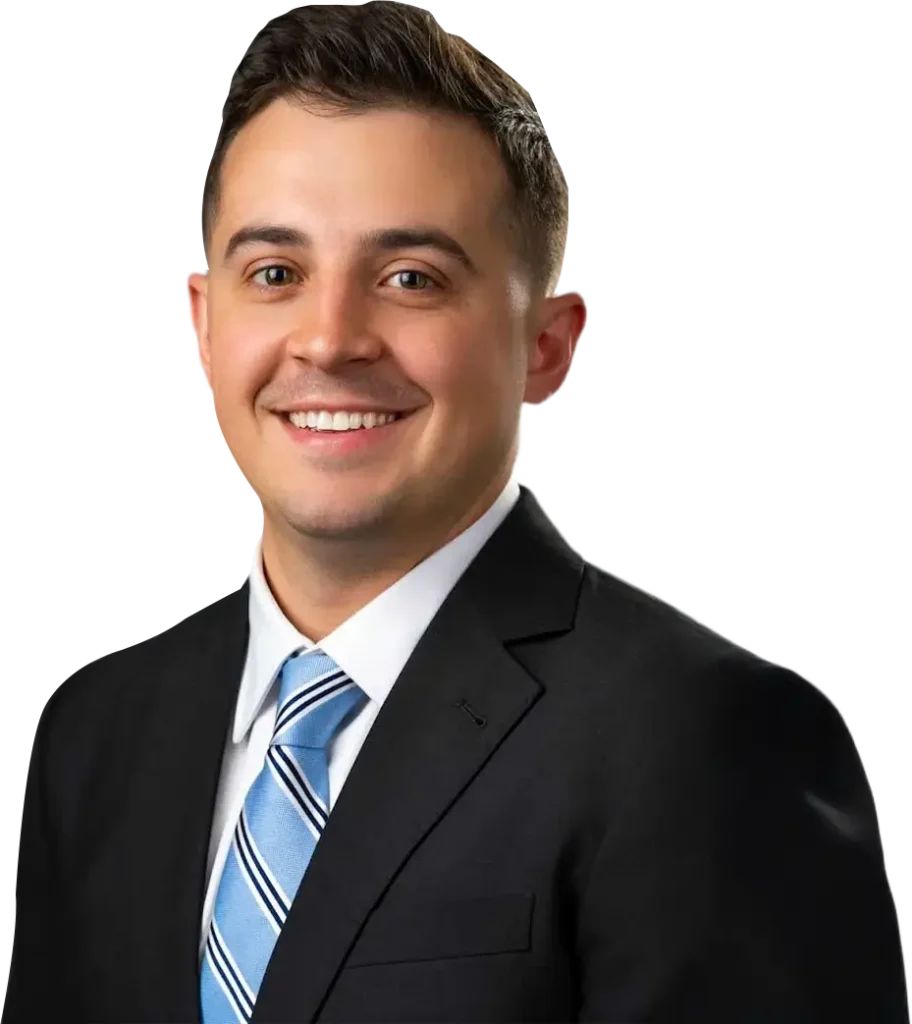
Daniel J. Larson takes the physical evidence first and the accounts second, because in these cases the accounts are where the assumption lives.
What our clients say
Jeffrey K.
★★★★★
Attorney Larson or Dan as I refer to him now is a phenomenal lawyer who has turned into a friend. He is knowledgeable, smart, extremely thorough and aggressive. He knows the law and delivers fantastic results in a timely fashion. I consider him a great partner and someone I always want to have in my court/corner when I need legal guidance, and support.
Samantha N.
★★★★★
I can’t say enough wonderful things about Dan and his personal injury firm. I’ve seen firsthand how dedicated, knowledgeable, and compassionate he is. Dan is the type of car accident attorney who truly goes above and beyond—he communicates clearly, fights hard for his clients, and genuinely cares about getting them the best possible results.
Jamal B.
★★★★★
Dan and the whole team at Larson Law were super helpful and informative, they were able to walk me through the whole process of my case and they did everything to make sure that I received proper compensation for the incident that happened to me. And I am glad to say that I am very satisfied with the services provided to me by Larson Law. Great team!
Megan A.
★★★★★
Dan was amazing to work with after my car accident. He kept me updated the whole time, explained everything clearly, and always responded quickly. Great communication and a great outcome—highly recommend!
Johnny M.
★★★★★
Dan helped me with a car accident and it was so easy and he is very communicative and reallly helps you out with all he can! Thanks again Dan!
Sina A.
★★★★★
Dan is the Man. He helped me recover from my car accident and the communication and whole process was smooth sailing. Thank you Dan. God speed.
Lee L.
★★★★★
Attorney Larson of Larson Law Did a great job with my case.. I was in a auto accident in 2024 Attorney Larson took my personal injury case and in 2025 I received a maximum payout. Anytime I had a question or concern he was always available.

The assumption gets tested here, not repeated.
- We measure the impact points, the resting positions and the sight lines before anyone argues speed
- Riders get no automatic medical benefit, so we treat the claim against the driver as the only route
- We record what the leathers hid, because less to photograph has never meant less injury underneath
- Where gravel or a sunken drain put the bike down, we find who had charge of that stretch of road
- Attorney Daniel J. Larson reads the physical evidence himself before he reads anybody's account of it
- No fee unless we win
- Free, private case review
- Same-day response
- Honest advice from day one
$300K+ Won For Clients
100+ 5-Star Google Reviews
8+ Years of Legal Expertise
98% Legal Success Rate
100+ Injured Victims Helped
No Win, No Fee Guaranteed
Same rights, fewer places to claim from.
Blame gets split by percentage rather than awarded outright. Carrying part of the responsibility cuts a recovery in proportion, and ends it only where that share is the larger one. The bar sits higher than insurers imply when they lead with it, which is why an unanswered suggestion of speed is worth so much to them early on.
The helmet argument is narrower than it sounds. Head protection is required here, so the question is rarely whether one was worn. Where it does arise it goes to whether a head injury was made worse, not to who caused the collision, and it has nothing at all to say about a broken leg or a shattered wrist.
There is another argument that never gets made openly but sits underneath a great many of these files: that riding is dangerous and the rider accepted the danger. Choosing to ride is not consent to be turned across. Nothing about the vehicle somebody chose reduces what the driver owed them.
Where the driver carried little or nothing, the rider’s own policy becomes the claim. That is worth checking before it is needed, because motorcycle cover is often bought at the minimum, and the part that would answer here is exactly the part people drop to keep the premium down.
Deadlines apply as they do to other injuries, and a young rider’s runs on a different footing, so those limits sit on our page about filing deadlines. What moves faster is the road itself, which gets swept, resurfaced and reopened long before anybody thinks to photograph it.
Massachusetts motorcycle accident claims cluster at junctions.
Junctions do most of the damage, and not only because drivers fail to look. A motorcycle shows one light rather than two, and a single light at distance is far harder to place and far harder to judge the speed of than a pair. A driver who genuinely looked can still pull out. That excuses nothing, but it does explain why the same crash keeps happening at the same kind of turn.
The season shapes the pattern as much as the road does. Riding here is compressed into a few months, and the earliest warm weekend is among the worst of them, because the roads fill with bikes that drivers have not had to account for since fall. Numbers climb through the summer and drop away again, which also means a crash in spring costs somebody the whole season rather than a few weeks of it.
Rural roads add a surface problem that outlasts the weather that caused it. Sand and grit spread over the winter gather on the outside of bends and at the foot of hills, precisely where a bike is leaned over and least able to tolerate either. Frost damage along the edge of a lane does much the same thing.
Who saw it counts for more in these cases than in most. Riders often travel together, which means the witnesses are other riders, they can be traced, and they understood what they were watching. Where somebody was riding alone, the useful witness is usually the driver behind, and that person is gone within minutes unless somebody takes a name.
City claims run through the firm’s main injury practice. Wherever it happened, the work starts with the surface, the view from the turn, and the light.
Some riders never throw a leg over again.
Road rash is the phrase that does the most quiet harm to a claim, because it sounds like a graze. What it often means is repeated debridement, grafts taken from skin that was undamaged until then, months of dressing changes, and a permanent difference in how an arm or a leg looks. Getting that described properly in the record matters, because the name it usually travels under carries none of it.
At the severe end the costs recur rather than resolve. A prosthetic is not bought once. It is fitted, adjusted, outgrown as the body changes, and replaced on a cycle that runs as long as the person does. Surgery after a fracture that healed badly behaves the same way. A claim settled on the first year of that has been settled on a fraction of it.
Then there is everything lost outside the hospital. A season of riding to begin with, and for a lot of people the way they got to work. Gear gets replaced, the bike is replaced or it is not, and none of that is the real loss.
The real one is harder to price and gets dropped for exactly that reason. Some riders go back. Some cannot, physically. And some could, but will not, because the person they live with has asked them not to and they have agreed to it. That is a genuine loss of something somebody valued, and it belongs in the account whether or not it is easy to put a figure against.
Medical Bills and Future Care
Lost Wages and Earning Capacity
Pain, Suffering, and Scarring
Wrongful Death of a Loved One
The helmet is evidence now, not scrap.
Get medical care and keep records
See a doctor the same day, even if you feel only shaken, because some injuries surface later and your medical records tie the harm to the incident. Keep every bill, note, and receipt that you receive.
Document the scene and the cause
Photograph what hurt you, the vehicles, the hazard, or the whole scene, and collect the names and numbers of anyone who saw it happen. Do not give a recorded statement to any insurer just yet, either.
Talk to a lawyer before the insurer
Before you accept any offer or sign any release, have a lawyer review the cause and the long term cost of your care. An early review protects the evidence and the deadline that controls your recovery.
- 5.0 stars out of 100+ reviews
Massachusetts motorcycle accident lawyer, now.
One thing before anything else: do not let the bike go. Motorcycles get written off quickly and moved to a salvage yard quicker still, and once one is crushed the clearest record of the impact goes with it. The same holds for the helmet and the leathers, whatever state they are in. Beyond that, bring what you have: the road before it was swept, the name of whoever was behind you, the letter from the insurer. Where a crash proved fatal, relatives have a route of their own. Nothing is owed unless the claim succeeds.
By submitting this form, you acknowledge that doing so does not create an attorney-client relationship. Please do not include confidential information. Contacting us does not obligate you to retain our services.
Our Clients.


Our Practice Areas.
Motorcycle injury questions, answered.
Do I have a claim if a driver hit me?
Very likely, if the driver’s carelessness caused the crash. Most motorcycle collisions happen because a driver failed to yield, turned left across the rider’s path, or changed lanes without looking. If that describes your crash, you may have a strong claim against the driver and their insurer. The bias against riders makes evidence important, so a free review with a lawyer who handles these cases is the best first step.
What if the insurer says I was speeding?
Expect it, and resist the urge to argue them out of it. A claim about speed needs supporting like any other, and an insurer that has measured nothing has merely asserted it. What answers the point is the physical record, which either produces a figure or it does not. Arguing on a recorded call adds a version, not a measurement.
Does not wearing a helmet end my claim?
No. Massachusetts requires riders to wear helmets, and an insurer may raise helmet use to argue about certain injuries, but it does not bar your claim when another driver caused the crash. The driver who hit you is still responsible for the collision. A lawyer can address a helmet argument with medical evidence about which injuries it would or would not have affected, and keep it from unfairly reducing your recovery.
Who pays for my injuries after a crash?
Usually the at-fault driver’s liability insurance, plus your own coverage. Because motorcycles are excluded from the personal injury protection that covers cars in Massachusetts, a rider typically recovers from the at-fault driver’s bodily injury coverage and, when that is not enough or the driver is uninsured, from their own uninsured or underinsured motorist coverage. Finding every applicable policy is one of the most valuable things a lawyer does early.
Why are motorcycle cases treated differently?
Two reasons: the injuries and the bias. Riders are far more exposed than drivers, so crashes tend to cause severe, costly injuries. And riders face an unfair assumption that they must have been reckless, which insurers exploit. On top of that, the insurance rules differ because motorcycles are not covered by no-fault PIP. Handling these cases well means overcoming the bias with evidence and knowing how the coverage works.
How long do I have to file a claim in Massachusetts?
Three years for most claims, with a young rider’s running differently and a far shorter route once a public body is involved. The more common mistake is waiting for a final prognosis before starting anything. A claim does not need one to begin, and the evidence needs somebody to begin before it has gone.
What if I was partly at fault?
Your share reduces the recovery and ends it only where it exceeds the other side’s. Watch what gets offered as proof of that share. An aftermarket exhaust, a sport bike, a jacket with a maker’s name across it: none of that bears on how the collision happened, and all of it reaches an adjuster as though it did.
What is a motorcycle accident claim worth?
It depends on the severity of the injuries. Value reflects medical care, lost wages and earning capacity, rehabilitation, pain and suffering, and lasting effects like brain or spinal injuries, scarring, or amputation, which are common in motorcycle crashes. Because these injuries are often serious and permanent, a careful claim accounts for future costs. A lawyer can evaluate value after reviewing the crash and the medical picture.
What if the driver who hit me had no insurance?
You may still recover through your own coverage. If the at-fault driver had no insurance or too little of it, your uninsured or underinsured motorist coverage can step in to pay for your injuries. Many riders do not realize this coverage applies to them. A lawyer can identify and pursue every policy available, which is often the difference between a frustrating dead end and a real recovery after a crash.
What if a loved one died in a crash?
When a motorcycle crash is fatal, the rider’s close family may bring a wrongful death claim under MGL Chapter 229 for the losses they have suffered. These cases often face the same bias against riders, which makes a careful investigation essential. We handle them with care, taking on the legal work and the fight against unfair blame so the family can focus on one another.
What should I do right after a crash?
If you are able, get to safety and call the police so the crash is documented, and get medical care right away even if adrenaline is masking pain. Photograph the scene, the vehicles, and your injuries, and collect witness information. Preserve your gear and helmet. Avoid giving a recorded statement to the driver’s insurer or accepting an early offer, and speak with a lawyer before the scene evidence is lost.
How much does a motorcycle accident lawyer cost?
Nothing upfront. Larson Law handles motorcycle accident claims on a contingency fee, so there is no charge unless we recover money for you, and the first review is free. We advance the costs of crash reconstruction and investigation that these cases need. We only get paid from a successful result, which lets an injured rider take on the insurers without paying out of pocket while they focus on healing.
Results Disclaimer: Past case results, settlements, and verdicts mentioned on this website do not guarantee or predict a similar outcome in any future case. Every case is unique and depends on its own facts and legal issues.