
Personal Injury Lawyer Worcester
Complete medical records make insurers take your injury seriously.
Adjusters study every chart entry before they make any offer. Regular visits, honest symptom reports, and complete billing records leave them little room to call your injury minor.
- No fee unless we win
- Same-day response
- Free case review
As Seen On:













Careful file preparation helps a Worcester personal injury lawyer persuade local jurors.
Hardly any place in the region packs so many different settings into one city. Colleges, hospital campuses, factories, warehouses, an arena, a ballpark, and dense older housing all sit within a short drive. Each setting injures people differently and involves a different kind of insurer. Falling in a dormitory, crashing on the elevated highway, and catching a hand in factory equipment share little except the need for proof. General injury practice here therefore demands range. Lawyers must be comfortable with institutions, corporations, landlords, and individual drivers alike.
Cases arising here are often decided here, because the county’s main courthouse stands downtown. Lawsuits are commonly filed in that building, and jurors are drawn from communities across the county. Insurance companies track how those juries have ruled in comparable cases. Their settlement offers reflect that history more than any formula. Familiarity with local verdicts helps set expectations honestly. Trials remain rare, yet readiness for one shapes every negotiation.
Where treatment happens affects the record. Serious injuries usually go to the teaching hospital that serves as the regional trauma center. Residents, attending physicians, and specialists each write notes, producing long charts that insurers read with great care. Patient portals release those notes to the patient within days of each visit. Reading them early lets a patient correct mistakes about what caused the harm before they spread through the chart. Appointments at assigned clinics should be kept, since missed referrals are noticed.
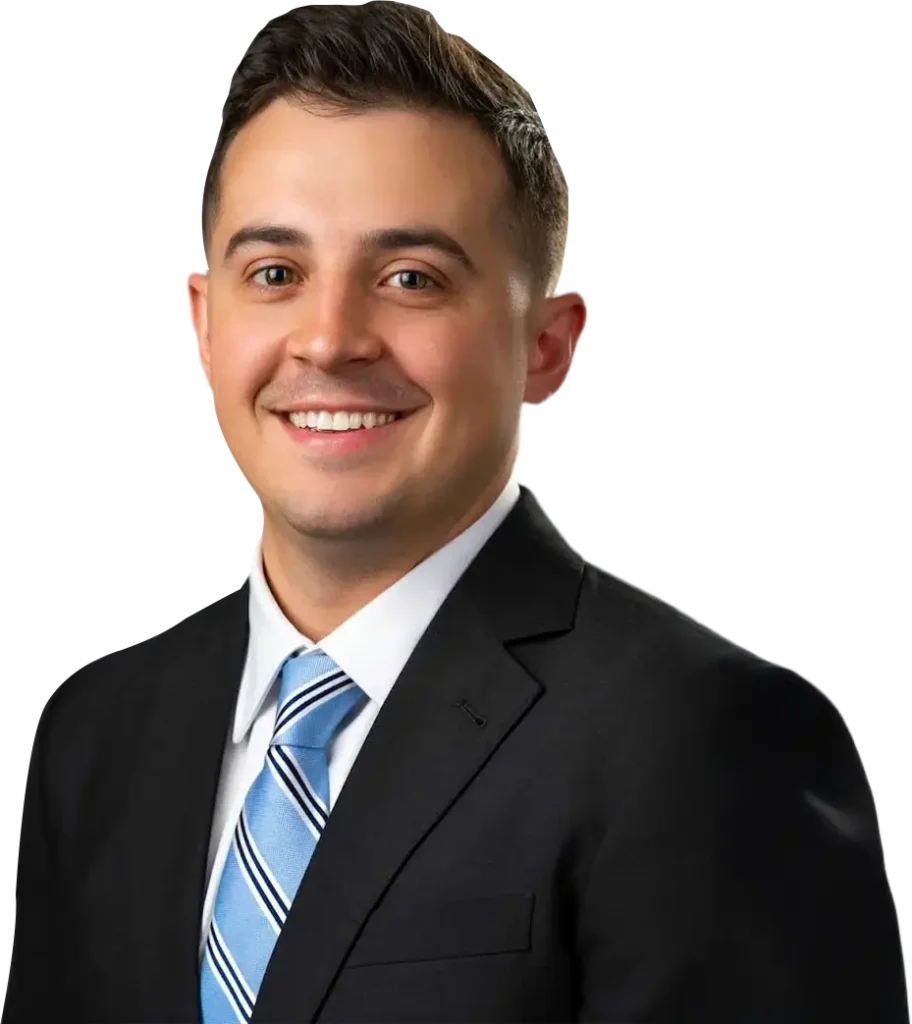
Responsibility for each new matter rests with Daniel J. Larson, who assigns the work and reviews strategy. Clients deal with a small team whose members know their names. Early tasks include notifying insurers, ordering reports, and securing video. Each medical bill is routed to the correct payer so that collections do not start. Progress is explained in ordinary language as each stage closes. Anyone unsure whether a lawyer is needed can ask that question directly and expect a candid reply.
Students and other temporary residents raise coverage questions that locals rarely face. Vehicles registered in other states carry different minimum insurance. A student without a car may still be covered under a parent’s policy at home. International students often hold health plans with unusual limits. Identifying the policies that apply takes letters to several companies in several states. Parents are frequently the ones who call, and they can take part with their adult child’s permission.
Early mistakes are easier to avoid than to repair. Damaged cars need thorough photographs before a body shop touches them. Apology messages, casual statements to an adjuster, and optimistic remarks about feeling fine get quoted months afterward. Forms that release medical history without limits should be left unsigned. Small settlement cheques sometimes carry language on the back that ends every further right to payment. Waiting a few days for advice is a minor delay compared with those errors.
What our clients say

Medical bills reach correct insurers before collection notices start.
- We explain how a claim works during the first conversation, before you decide anything about hiring.
- You work directly with attorney Daniel J. Larson, never a call center or an anonymous case mill.
- We deal with the insurers, the paperwork, and every deadline so nothing important is missed.
- More than 9 years helping injured Worcester clients document what their claims are worth.
- We build the evidence early, from crash and incident reports to medical records, to prove fault.
- No fee unless we win your case
- A clear first case review
- Same-day response, always
- Serving all Worcester County


Injury claims move through investigation, treatment, demand, and negotiation.
Formal steps open every claim. Each insurer involved receives written word of the event, then assigns a number and an adjuster. Coverage is confirmed first, meaning the company checks that a policy was active and applies. Reservation letters sometimes arrive, warning that coverage is under review. Those letters should be answered, not ignored. Phone conversations at this stage should be limited to basic facts such as names, dates, and policy numbers. Keeping every claim number in one list prevents confusion when several companies are involved.
Blame is investigated next. Adjusters gather the police report, photographs, and statements from their own customer. Their first conclusion often favors that customer and is not binding on anyone. Independent evidence, including witness accounts, video, and physical measurements, can change it. Reconstruction experts are worthwhile only in disputed, serious cases. Businesses and public agencies conduct internal reviews too, and those files can sometimes be obtained. Presenting contrary proof early, before positions harden, usually improves the outcome.
Medical proof takes the longest. Insurers will not evaluate a claim seriously until treatment has reached a plateau. Doctors call that point maximum improvement, when further recovery is unlikely. Settling sooner means guessing whether surgery, more therapy, or permanent limits lie ahead. Bills and records are ordered from every provider, including ambulance services and pharmacies. Where raw charts leave something unclear, a narrative report from the treating physician explains it.
A demand package then pulls everything together. It tells the story of the event, sets out why the insured party is responsible, and lists each loss with supporting documents. Photographs, wage statements, and a summary of treatment are attached. A specific figure is requested with a deadline for reply. Earlier settlement offers, if any were made, are addressed and answered in that same letter. Vague or inflated demands get slow, low responses. Precise ones show the insurer exactly what a jury would see.
Evaluation inside the insurance company is partly mechanical. Many carriers enter diagnosis codes and treatment dates into software that suggests a range. Supervisors must approve anything above an adjuster’s authority. Factors such as gaps in care, prior injuries, and modest vehicle damage push the range down. Clear liability, objective findings, and permanent impairment push it up. Human judgment still decides the final number, which is why persuasive presentation matters. Understanding that system helps frame the proof in terms the company actually uses.
Disputes about shared responsibility are negotiated like any other number. Each side estimates what percentage a jury might place on the claimant. An award is cut by that percentage and disappears entirely above fifty. Worked examples of fault divided between the two sides appear in a separate article. Conceding a small percentage is often the price of agreement. Larger ones call for a firm response when the proof contradicts them.
Filing suit changes the rhythm. District court takes the smaller cases, and the superior court in the same courthouse takes the larger ones. Each side must then answer written questions, produce documents, and sit for sworn interviews. Insurers hire defense lawyers whose fees add pressure to settle. Court-ordered schedules keep the matter moving. Both sides may ask the judge to resolve disputes about what must be disclosed. Most lawsuits end in agreement long before a jury is chosen.
Deadlines run throughout. A lawsuit may generally be started at any point during the first three years, as covered in our page about the time allowed to bring an injury case. Injuries from potholes, broken pavement, or missing covers on public roads need a written notice delivered to city hall inside one month. Other claims involving public agencies have their own shorter periods. Insurance policies also demand prompt cooperation. A single missed date can destroy rights that were otherwise secure.
Defense tactics are predictable. Insurers may arrange an examination with their chosen physician, whose report often minimizes the injury. Investigators sometimes film claimants in public or review their social media. Searches of industry databases turn up prior claims and medical history. An honest claimant has nothing to fear from these steps. Clients are told in advance what such an examination involves and what the doctor is likely to ask. Preparation for the examination and consistent daily conduct are the best responses.
Resolution brings its own paperwork. Once signed, a release closes the matter permanently, so its wording matters. Repayment owed to health insurers, public programs, or providers is settled from the proceeds, a topic covered in our article on who gets repaid before a client is paid. Structured payments are available for larger sums or for minors. Payment usually arrives about a month after signing. Each deduction and the final amount appear in a written accounting.
Unlit streets and parking areas bring pedestrian injuries every night.
Hills and snow combine to make winter the busiest season for injuries. Annual snowfall here ranks among the highest for any city of its size. From the center, streets climb sharply, and many homes sit above the sidewalk on long exterior stairs. Plowed snow piles up at corners and buries curb ramps. Whoever owns a property is expected to shovel and salt the walkways reasonably soon after snowfall stops. Photographs showing old, dirty ice suggest that period had long expired.
Near the ballpark, several streets meet at a junction rebuilt as an elongated roundabout. Its shape is unlike a standard circle, and first-time drivers hesitate or choose the wrong lane. Pedestrians cross multiple legs to reach restaurants and the stadium. Collisions tend to be sideswipes and low-speed impacts, and walkers come off worst. City cameras and nearby businesses record much of the area. Similar issues arise in the cases collected under crashes inside traffic circles elsewhere on this site.
An elevated interstate passes directly over downtown. Short ramps, exits that leave from the left, and limited merging room define it. Traffic slows abruptly at peak hours and during events. Chain collisions and lane-change impacts are routine, and they are handled with the steps our main office follows for highway crashes in and around the capital city. State troopers respond there, and their reports take longer to obtain than city reports. Debris and stalled vehicles on the narrow shoulders create secondary crashes.
More than half a dozen colleges operate within the city limits. Students walk at night, ride scooters, and crowd into older rental houses near campus. Porches and decks at off-campus parties have collapsed under too many people. Campus police, not city police, may be the ones who write the initial report. Substantial insurance backs each college, and risk managers handle the responses. Landlords of student housing are a separate source of responsibility.
Health care is the largest employer. Staff arrive at hospital campuses, a medical school, and research buildings for shifts that never stop. Parking garages, shuttle buses, and crosswalks near those campuses see steady incidents at shift changes. Stairs and curbs trip visitors unfamiliar with the buildings. Institutions of that size have formal claim procedures and video coverage. Requests should name the garage level, entrance, and time as exactly as possible.
Evenings bring crowds to the arena, the ballpark, and the restaurant district beside them. Alcohol service, packed sidewalks, and ride pickups that block moving traffic all add danger. Security, crowd control, and refusing service to visibly drunk patrons are duties that venues and bars owe. When someone on foot is hit, our lawyers draw on methods developed for walkers struck by vehicles in the cases our main office handles. Incident logs are written by event staff that same night. Ticket records help locate witnesses seated nearby.
Freight and industry remain part of the economy. A large rail yard, several distribution centers, and manufacturing plants put heavy trucks onto ordinary streets. Trucks strike the low railroad bridges with surprising regularity. Anyone injured by a commercial vehicle faces a corporate insurer and investigators who arrive quickly. Employees injured at work may have claims against outside companies in addition to workplace benefits. Towns to the east share that freight corridor, a point noted on our page serving people hurt in the neighboring commercial hub.
Spring reveals the damage winter did to the roads. Cyclists, walkers, and drivers are hurt by potholes, heaved pavement, and broken curbs. Suing the city over such defects is restricted and requires written notice almost immediately. Reports of the defect made by residents before the injury help prove the city knew. Warm weather adds claims from parks, a rowing lake, and public pools under similar rules. A photograph that includes a visible landmark fixes the exact location of a defect.
Teaching hospital bills list trauma fees as separate charges.
Hospital charges at a teaching institution run high. Separate lines appear for trauma activation, specialist consultations, and use of the facility. Every line belongs in the demand, even where insurance has paid or reduced it. Future care is added when physicians expect more surgery, injections, or therapy. Medication, braces, and travel to appointments are smaller items that still count. Billing offices can take weeks to produce complete statements, so requests are sent promptly. Itemized statements, not summary balances, are what an insurer needs to see.
Students lose more than wages. Injury can cost a student a semester, an internship, a scholarship, or a season of athletics. Tuition paid for classes that could not be completed is a measurable loss. Delayed graduation postpones the start of a career and its first salary. Letters from deans, coaches, and employers who withdrew offers supply the proof. Unused housing contracts and meal plans, already paid for, are further losses. Parents who paid those costs may be the ones reimbursed.
Working adults face lost shifts and, sometimes, lost careers. Nurses, aides, machinists, and warehouse staff need physical capacity that an injury may remove. Our wage guide, claiming pay after an injury, explains which documents are involved. Overtime that was regularly worked before the injury is included in the average. Licensing boards and employers may require clearance before a return. Retraining costs and reduced lifetime earnings are claimed with help from vocational experts. Benefits tied to employment, such as medical coverage and pension contributions, are counted.
Spinal damage is a frequent result of collisions and hard falls. Years of pain, numbness, and weakness can follow a bulging or ruptured disc. Proof and treatment are discussed in our overview of disc damage caused by trauma. Imaging, nerve studies, and a specialist’s opinion together confirm the diagnosis. Age is the insurer’s usual explanation, so earlier records without complaints are valuable. A surgical recommendation significantly raises the sum under discussion.
Injuries that others can see are treated seriously. Cuts, burns, and surgical incisions can leave marks on a face, a hand, or an arm. How those cases are assessed is described on our page covering lasting scars and changes in appearance. Monthly photographs show how a scar matures. Juries respond strongly to such evidence, a fact insurers understand. Plastic surgeons can estimate the cost and limits of revision. Younger people and those whose work involves the public are affected most.
Compensation reaches past the bills to pain and a disrupted routine. Sleep, mood, hobbies, exercise, and family roles all suffer while recovery drags on. The standards adjusters apply are summarized in our piece about valuing pain in a claim. Specific examples carry more force than general statements. Anxiety or depression that follows is documented in a counselor’s records. A spouse’s separate loss of companionship may support an added claim. Testimony from people close to the injured person fills in what charts omit.
Reaching a figure is methodical work. Financial losses are totaled, and human losses are estimated by reference to similar local results. Our outline of how settlement amounts are reached walks through an example. That range is then narrowed by coverage limits and disputed blame. The client receives a recommended range with reasons, never a single unexplained number. Final authority to accept or refuse stays with that client alone.
Medical Bills and Future Care
Lost Wages and Earning Capacity
Pain, Suffering, and Hardship
Wrongful Death of a Loved One
Medical appointments stay first while lawyers collect records elsewhere.
Reach out to us when you feel ready
Reach out whenever you feel ready, by phone or through the form. Tell us what happened in the accident and how it has affected you, and we then explain where things stand and the options you have now.
Get clear on your options and steps
From there, we review the details, gather the records and evidence, and deal with the insurance company for you. You will always know what is happening and what the next step in your claim looks like.
Take the pressure off of your plate
You focus on healing while we handle the investigation, the paperwork, the phone calls, and the negotiating. If a fair settlement is not offered, we stay ready to argue your case in a Worcester court.
- 5.0 stars out of 100+ reviews
A brief message starts our review of insurer letters.
Telephone us, or send a written message with the form provided here. Summarize the injury, the treatment received so far, and any letters from insurers. An attorney replies with next steps and a candid assessment of the situation. Cases from this region are prepared in cooperation with the lawyers at our firm’s flagship injury office.
By submitting this form, you acknowledge that doing so does not create an attorney-client relationship. Please do not include confidential information. Contacting us does not obligate you to retain our services.
Our Clients.


Our Practice Areas.
Larson Law helps injured people and families across Massachusetts after a serious accident. If you were hurt by someone else’s carelessness in Boston, we are ready to listen and explain your options at no cost.
Injured residents often ask how local juries value claims.
What's the difference between an injury lawyer and other types of lawyers?
Injury lawyers represent someone harmed through another party’s mistake. Other attorneys take divorce files, wills, criminal defense, or company contracts. Daily injury practice revolves around hospital charts, coverage terms, and evidence showing changed routines, so these lawyers recognize which facts adjusters usually challenge.
What can a Worcester injury attorney actually help you with?
Typical tasks include requesting crash reports, hospital charts, pictures, plus footage from nearby cameras. Adjusters then speak with the attorney instead of calling you. Treatment costs, missed pay, and everyday hardship get totaled before a written demand leaves the office. Should negotiations stall, suit papers are drafted while you receive regular updates.
Do you have to be badly hurt to contact a lawyer after an accident?
No. Problems affecting backs, necks, or heads frequently look mild early, then worsen across later weeks. Calling early tells you which symptoms need attention and which dates matter legally. A phone conversation creates no duty to sue or to sign with anyone.
How long do injury cases usually take in Worcester?
Simple claims often close within several months, although harder ones last beyond twelve. Healing sets the pace, since doctors must predict lasting effects before anyone can price the claim. Arguments over blame, slow adjusters, and crowded court calendars each lengthen the wait.
What kinds of accidents are covered under injury law?
Injury law reaches most harm traced to careless people or companies. Road crashes, struck walkers and cyclists, falls on neglected property, animal bites, faulty products, and certain job injuries all fall inside it. Location and control over safety there decide whether one particular event qualifies.
What should you do after an accident before talking to a lawyer?
Treatment belongs ahead of everything else, even when aches feel small. Next, report the event, photograph the area plus visible injuries, then store bills, employer notes, and adjuster messages inside one folder. Signing forms, recording statements, or taking fast settlement offers should wait until someone explains each effect.
How do medical bills get handled in an injury case?
When vehicles collide, your own car policy normally covers early treatment bills plus some missed pay, whichever driver erred. Health coverage commonly follows, and both payers can demand reimbursement out of settlement money. Every bill still gets listed in the demand sent to the responsible party’s insurer.
Can I still file a claim if the accident was partly my fault?
Often, yes. Sharing blame lowers payment by your percentage instead of ending the claim, provided the larger portion sits with the other party. Picture a speeding driver hit by someone ignoring a red signal: that speeding driver would likely still collect most losses.
What kind of compensation is common in injury cases?
Typical payments cover treatment already received, expected later care, missed paychecks, and lower earning power. Payment also reflects bodily pain, worry, and hobbies given up. Grave injuries can bring nursing costs, ramps or vehicle changes, and a husband’s or wife’s own claim for lost companionship.
Why does local experience matter after a Worcester accident?
Local experience helps because steep roads, winter weather, and busy junctions shape how accidents happen here. Knowing how nearby courts schedule cases and how juries in this county have decided similar claims makes estimates more realistic. It also speeds requests for video, police reports, and hospital records.
Can I file a claim if the accident was partly my fault in Worcester?
Usually, yes. Adjusters tend to enlarge the injured party’s portion of blame since each extra point shrinks their payment. Early witness names, footage, and scene pictures hold that figure down. Carrying half or less of the responsibility still leaves you entitled to the remainder.
What if my injury was caused by a pothole or road defect in Worcester?
Yes, though strict conditions apply. Street defects such as potholes or cracked pavement generally demand a written letter that reaches city hall inside roughly one month. Recoveries against cities are limited as well. Dated pictures, together with residents’ earlier complaints, help establish that officials already knew.
How long does a case take to resolve in Worcester?
Injury severity and arguments over blame control the schedule. Undisputed claims with completed treatment sometimes settle inside months, whereas severe injuries or public agency defendants can stretch past a year. Closing early, before doctors understand your recovery, may leave future bills uncovered.
Results Disclaimer: Past case results, settlements, and verdicts mentioned on this website do not guarantee or predict a similar outcome in any future case. Every case is unique and depends on its own facts and legal issues.