
Quincy Car Accident Lawyer
The crash was not your fault to carry alone.
Quincy’s Southern Artery and Route 3 traffic can shape how a crash claim is reviewed. Larson Law helps injured people in Quincy and Norfolk County weigh their rights and next step.
- No fee unless we win
- Same-day response
- Free case review
As Seen On:











Heavy traffic is where a Quincy car accident lawyer starts.
Quincy is Norfolk County’s largest city and one of the ten most populous cities in Massachusetts. Its road network bears a particular burden because Route 3 – the primary highway connecting the South Shore to Boston – runs directly through the city and funnels traffic onto Quincy’s surface roads when congestion at the Braintree Split backs up, as it does daily during peak hours. Route 3A, designated locally as the Southern Artery, runs parallel to Route 3 and carries substantial commuter overflow traffic. A Boston MPO Safety and Operations Analysis commissioned by MassDOT examined two intersections on the Southern Artery in Quincy and found both had been flagged on MassDOT’s 2007-09 high-crash intersection list. The intersection of Southern Artery at Sea Street and Coddington Street recorded 76 crashes over a three-year study period, with a crash rate approximately three times the average for similar signalized intersections in MassDOT’s District 6, per the Boston MPO study citing MassDOT data. The intersection of Southern Artery at McGrath Highway and Field Street recorded 71 crashes over the same study period, 21 of which caused personal injuries.
When a car accident in Quincy injures you because of another driver’s negligence, these documented conditions are part of the public record that may support your claim. A lawyer in Quincy can review your situation at no cost and explain exactly where you stand.
A car accident lawyer’s work begins well before any courtroom. In the early weeks after a Quincy crash, the tasks that tend to protect a claim are practical ones: identifying every applicable insurance policy, notifying the right insurers in the right order, gathering the police report and medical records, and preserving physical evidence and witness accounts before they disappear. Insurers assign adjusters whose job is to resolve claims efficiently for the company, and the first offer rarely reflects the full arc of a serious injury, including future treatment and time missed from work. Having someone manage those communications and deadlines lets an injured person focus on recovery rather than paperwork.
Every crash is different, and the right next step depends on the facts: the severity of the injuries, the clarity of fault, the coverage available, and the deadlines already running. A short conversation early on can identify which of those issues are in play and what should be done first, even when a person is not yet sure whether they want to pursue a claim at all. For a crash closer to the city, the same team handles that work in Boston.
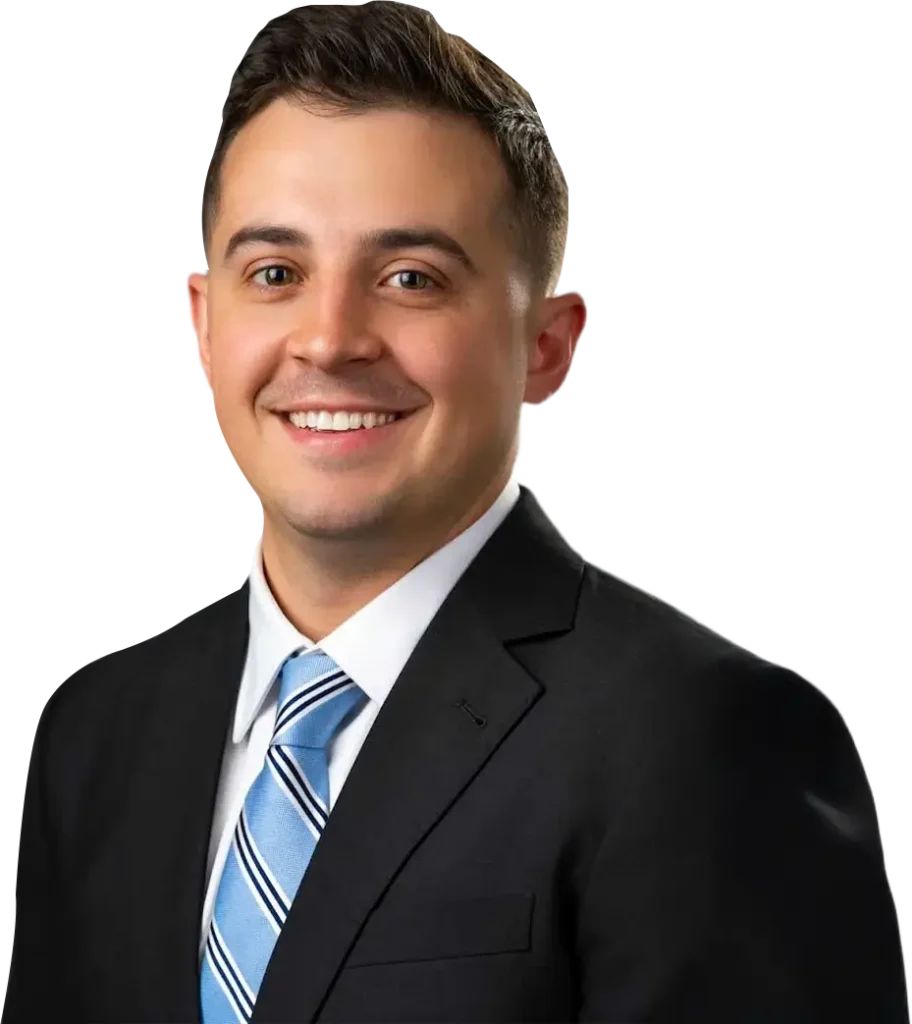
The firm’s cases are directed by Daniel J. Larson, so from the first call you work with a lawyer rather than a case number.
What our clients say

The other driver’s insurer protects itself first.
- We handle car accident claims across Quincy and throughout Norfolk County and the South Shore.
- We know Massachusetts no-fault PIP rules and the injury thresholds that open a pain and suffering claim.
- We deal with insurers directly so you are not pressured into settling before your injuries are documented.
- We move quickly to preserve crash evidence from the Southern Artery and Quincy's high-crash intersections.
- We build each claim on the medical proof and evidence of fault that a serious claim actually needs.
- No fee unless we win your case
- No upfront costs
- Direct attorney access throughout
- Free, no-pressure case review


No-fault insurance starts a claim but never finishes it.
A Quincy car accident claim runs on two separate tracks, and most people only learn the difference once the bills start arriving. The first is your own coverage, which pays quickly and without much argument about who caused the collision. The second is the claim against the driver who hit you, and that is where the real dispute lives: how badly you were hurt, how much of the blame can be shifted onto you, and what the injury will cost over the years that follow. Knowing which track you are on, and what each one can and cannot do, is usually the difference between a file that closes cheaply and one that reflects the actual harm.
What your own policy pays first
After any crash here, your own policy covers the first round of medical bills and a share of lost wages, no matter who caused it. That coverage applies automatically, which makes it the starting point for nearly every claim in the city. Quincy adds a wrinkle most places do not have: it is the largest community in the state without its own hospital or emergency department, so anyone hurt badly enough to need emergency care is transported out of the city, usually to South Shore Hospital in South Weymouth or Beth Israel Deaconess in Milton. That transport, and the records it generates, becomes the first entry in the file that decides your claim. The coverage itself is limited, running out well short of what a serious injury costs once imaging, specialists, surgery or months of therapy are involved, and it pays nothing at all for what the injury does to your daily life.
When you can claim for pain and disruption
That first layer of coverage does not pay for pain and disruption. Reaching those damages generally requires your reasonable medical costs to pass a set dollar level, or your injury to fall into a category treated as serious on its own — a fracture, permanent scarring or disfigurement, the loss of a body part, or a qualifying loss of sight or hearing. Once one of those is met, you can pursue the at-fault driver’s insurer directly for the full picture of what the crash cost you, including future care and the earnings you will not recover. Injuries out of the high-speed approaches — Route 3 near the Braintree Split, and the Southern Artery where volume and turning traffic meet — frequently clear that bar, because the speeds involved produce exactly the fractures and lasting damage that qualify.
How shared blame changes what you recover
What you receive also turns on how the blame splits. If your share of the fault stays below a majority you can still recover, though the amount is reduced in proportion to that share; once your share reaches a majority, recovery is barred outright. Insurers know precisely what that arithmetic is worth to them, and on Quincy’s congested roads — the merge points around the Split, the turning movements along Hancock Street, the mixed commuter and local traffic on Route 53 and Route 37 — there is room to argue you were following too closely, changed lanes carelessly, or missed a signal. The counter is built from the record rather than from argument: the resting position and damage of both vehicles, the responding officer’s account, signal timing, nearby business or municipal cameras, and witnesses who watched the approach rather than only the impact.
Coverage gaps and the clock
Not every driver on these roads carries enough insurance, and some carry none. Massachusetts policies include uninsured motorist protection for exactly that situation, and underinsured motorist coverage can be purchased to close the gap when the at-fault driver’s limits fall far short of the injuries. After a hit-and-run on a side street off the Southern Artery, that coverage on your own policy is often the main source of recovery, which makes an early, accurate description of the vehicle worth more than people realize. Time works against every part of this. The window to bring an injury claim is measured in years, but the evidence at a Quincy intersection degrades within days, and a crash involving a municipal or transit vehicle carries an additional early written-notice step that can end an otherwise valid claim if it is missed.
None of this resolves on its own. The other driver’s insurer is working steadily toward closing the file for as little as possible: asking for a recorded statement before you know how badly you are hurt, treating any gap in treatment as proof the injury came from somewhere else, and questioning whether the care was necessary once the costs begin to climb. Answering that takes a record built deliberately from the first medical visit forward, tying each symptom to the collision and each cost to the injury, so the file speaks for itself long before anyone discusses a number.
A Quincy car accident lawyer starts with the corridor.
Quincy’s road network is shaped by its position as the point where Route 3 and I-93 converge at the Braintree Split, and where the South Shore’s commuter traffic feeds into Boston. The roads that carry the most volume are the same roads that generate the most claims. Understanding where your accident happened in Quincy helps identify what public records and evidence may be available to support your case.
The Southern Artery (Route 3A) – Quincy’s most documented crash corridor
The Southern Artery is Route 3A for most of its length, running from near the Braintree border north to slightly west of Furnace Brook Parkway. It is the most significant surface arterial in Quincy, serving as a commuter alternative to Route 3 when the Braintree Split – the interchange of I-93 and Route 3 – backs up during peak hours, confirmed from the Boston MPO Safety and Operations Analysis. The MassDOT study identified two intersections on the Southern Artery as high-crash locations on the 2007-09 statewide list. The intersection at Sea Street and Coddington Street recorded 76 crashes over a three-year period with a crash rate approximately three times the District 6 average for signalized intersections. The intersection at McGrath Highway and Field Street recorded 71 crashes over the same period, 21 of them causing personal injuries. The study noted the corridor features dense commercial development with multiple driveway entry and exit points, which creates consistent turning conflict between vehicles. Both intersections are also close to a major MBTA Red Line station, adding to the pedestrian and vehicle interaction at those locations.
Route 3 and the Braintree Split
Route 3, also designated as the Pilgrims Highway, runs north-south through Quincy before meeting I-93 at the Braintree Split interchange – one of the most congested interchanges in the Massachusetts highway network. Route 3 is a controlled-access highway through much of Quincy, and crashes on it fall under Massachusetts State Police jurisdiction. The combination of high-speed traffic and the merge conditions at the Braintree Split create consistent crash risk for both highway drivers and those transitioning to and from Quincy’s surface road network via the Route 3 exits.
Hancock Street and Quincy’s downtown network
Hancock Street is one of Quincy’s primary downtown arterials, running through Quincy Center near the MBTA Red Line station. The area around Quincy Center sees consistent vehicle and pedestrian traffic, with the Red Line’s Quincy Center station generating MBTA bus connections and foot traffic that interacts with vehicle traffic on Hancock Street and adjacent roads. Washington Street and Quincy Avenue are also significant downtown corridors.
Route 37 and Route 53 in South Quincy
Routes 37 and 53 serve the southern sections of Quincy, connecting residential neighborhoods with commercial areas and the highway network. Route 53 is designated as Washington Street through much of Quincy before intersecting with the Southern Artery at the western end of the Route 3A corridor.
Car accident cases from Quincy are filed in one of two courts depending on the amount at issue. Smaller civil claims fall under the Quincy District Court at 1 Dennis F. Ryan Parkway, Quincy, MA 02169, confirmed from mass.gov, which serves Braintree, Cohasset, Holbrook, Milton, Quincy, Randolph, and Weymouth. Larger personal injury claims are filed at the Norfolk County Superior Court at 649 High Street, Dedham, MA 02026, confirmed from mass.gov, which serves all Norfolk County communities.
No two cases are exactly alike. Alongside car collisions, our attorneys also handle truck accidents, motorcycle collisions, bus crashes, and rideshare wrecks, bringing the same focus on full recovery to every client.
The pattern of collisions in Quincy tracks the way the city moves. Commuter volume builds on the arteries feeding the Braintree Split and the Southern Artery during morning and evening peaks, and the mix of highway-speed merging, dense surface streets, and heavy pedestrian activity near Quincy Center and the North Quincy transit stations produces different crash types in different places. Rear-end collisions cluster where fast-moving traffic meets sudden backups; turning and lane-change collisions concentrate at busy intersections; and pedestrian and cyclist injuries rise where foot traffic and vehicle traffic share the same crowded corridors. Understanding where and how a crash happened often shapes how liability is evaluated and what evidence is worth preserving.
Local detail can matter to a claim in concrete ways. Traffic-signal timing, sight lines obstructed by parked vehicles or winter snowbanks, roadway design at a particular merge, and the availability of nearby camera or business surveillance footage can all bear on how a collision is reconstructed. Because that evidence is often controlled by third parties and is not preserved indefinitely, the days and weeks after a Quincy crash are frequently when the most useful proof is still available.
Quincy’s road network also reflects its size and role on the South Shore. As one of the state’s larger cities, it carries not only its own residents but through-traffic bound for Boston, the expressway system, and the transit lines that converge here. That volume, combined with a mix of older surface streets and high-speed connectors, means the circumstances of two crashes a mile apart can call for very different analysis. A claim arising from a highway merge is examined differently than one from a downtown intersection or a residential street near a school, and treating each on its own facts is part of building it properly. The same corridors that produce car crashes also generate Quincy truck accident and Quincy motorcycle accident claims, and the evidence-first approach to each is much the same.
The same commuter corridors keep running north across the Neponset, and we take on the same work in Dorchester, where the road patterns and the insurers are much the same.
What a car accident claim may cover.
The scope of what your claim may support depends on your injuries, the insurance coverage available, and the facts of the crash. We work through every applicable category so nothing is overlooked.
What a claim can recover after a Quincy crash depends on how serious the injury is and on how completely it is documented. The economic side covers the care already given and the care still ahead, the wages lost while you are out, and the earning capacity you may never fully regain — a figure that takes a careful accounting of every present and future cost rather than a quick estimate. The non-economic side answers for the pain and the disruption a crash forces into ordinary life, and it opens up once the injury is serious enough to clear that bar. Where a crash proves fatal, the claim is brought separately by the estate, and where an injury proves permanent the calculation has to look years forward rather than at the bills already on the table.
Medical Bills and Treatment Costs
Lost Wages and Earning Capacity
Wrongful Death Claims
Pain and Suffering
Do these three things right after a Quincy crash.
Get medical care and record details
Get medical care quickly at the nearest hospital, describe exactly how and where the crash happened, document the vehicles and your injuries, and avoid any recorded statement before full legal review.
Request your free case review today
Request a free case review before nearby footage is overwritten. We examine that crash, explain the no-fault rules, identify which evidence matters most, and outline what must be preserved right away.
We handle the insurers and evidence
We deal directly with the insurer, gather and preserve crash evidence, manage every legal deadline, and keep you fully updated while you focus on treatment, recovery, and getting safely settled again.
- 5.0 stars out of 100+ reviews
Talk to a Quincy car accident lawyer today. No cost, no pressure.
Car accident claims in Quincy run through the coverage that pays first, the seriousness threshold, and the documented crash history of corridors like the Southern Artery. Tell us what happened and we will walk you through what your claim can realistically cover, the same way we do for injured clients in Boston.
By submitting this form, you acknowledge that doing so does not create an attorney-client relationship. Please do not include confidential information. Contacting us does not obligate you to retain our services.
Our Clients.


Our Practice Areas.
We handle car accidents, wrongful death, truck accidents, rideshare accidents, and more across Quincy, Norfolk County, and the rest of the state. For crashes that happen up in the city, see how we handle the same claims in Boston.
We help injured clients well beyond Quincy, including in Worcester, Cambridge, and Dorchester. Not sure where your case belongs? Tell us what happened and we will point you in the right direction.
The questions we hear most after a crash.
The Southern Artery is where my accident happened. Does the crash history there support my claim?
The documented crash history along that corridor is part of the public record, and it helps explain how a collision happened rather than proving it on its own. Paired with scene evidence, vehicle damage and the responding officer’s account, it makes an “unavoidable accident” argument much harder to sustain.
How does Massachusetts no-fault PIP work after a Quincy car accident?
Your own policy pays the first round of medical bills and part of your lost wages regardless of who caused the crash, so treatment can start immediately. It is capped, though, and runs out quickly once imaging, specialists or months of therapy are involved.
What if I was partly at fault for the crash in Quincy?
You can still recover as long as your share of the blame stays below a majority, though what you receive is reduced in proportion to it. Insurers push that argument hard on congested roads, which is why scene photos, vehicle damage and witness accounts carry so much weight.
Quincy does not have a hospital. Where should I go for medical care after a crash?
Quincy has no hospital or emergency department of its own, so serious injuries are transported out of the city, usually to South Shore Hospital in South Weymouth or Beth Israel Deaconess in Milton. Go the same day regardless, because the first medical record anchors the entire claim.
What should I do right after a car accident on Route 3A or Route 3 in Quincy?
Get to safety and call 911 so the crash is recorded. Photograph the vehicles, the roadway, the signals and your injuries, exchange details and collect witness names. Say nothing about fault, and see a doctor the same day even if you feel able to walk away.
What if the at-fault driver in my Quincy crash had no insurance or not enough insurance?
Your own uninsured motorist coverage may respond, and underinsured coverage can close the gap when the at-fault driver carries too little for the injuries. After a hit-and-run it is often the main source of recovery, which makes an early, accurate vehicle description genuinely valuable.
How long do I have to file a car accident claim in Quincy?
Most injury claims allow about three years, but that is the outer limit rather than a target. Evidence degrades within days, and a crash involving a municipal or transit vehicle carries a much earlier written-notice step that can end an otherwise strong claim if missed.
Why does Quincy's commuter traffic pattern matter for my car accident claim?
Commuter volume concentrates crashes into predictable windows and locations, which shapes what evidence exists. Rush-hour collisions tend to have more witnesses and more camera coverage, while late-night crashes on the same road often have neither, and that changes how a claim is built.
Where are Quincy car accident cases filed in court?
Most Quincy cases are handled through the Norfolk County courts, with smaller civil claims and larger matters following different tracks. Venue rarely changes the value of a claim, but it does affect timing, and knowing local practice helps set realistic expectations early.
Does Larson Law handle car accident cases across Norfolk County beyond Quincy?
Yes. We represent injured clients across Norfolk County and well beyond it, and the same approach applies wherever the crash happened. What decides a claim is the medical record and the crash documentation, not the distance between your home and our office.
I was a pedestrian hit by a car near Quincy Center station. Do I have a claim?
You may well have a claim. Pedestrians struck by a vehicle can pursue the driver and any available coverage, and injuries in those collisions are typically far more serious. The same documentation rules apply, and camera coverage around a busy transit area often helps.
What does hiring a lawyer cost?
Nothing upfront. The firm works on a contingency fee, so the cost comes out of the recovery and there is no fee at all unless the case succeeds. The first review of your case is free and carries no obligation, whatever you decide to do afterwards.
Results Disclaimer: Past case results, settlements, and verdicts mentioned on this website do not guarantee or predict a similar outcome in any future case. Every case is unique and depends on its own facts and legal issues.