
Massachusetts Car Accident Lawyer
How serious the injury turns out to be decides the claim.
An adjuster asks for a recorded account within days, before the injury has shown what it really is, and whatever gets said then tends to outlast every scan that follows afterwards.
- No fee unless we win
- Same-day response
- Free case review
As Seen On:












Massachusetts car accident claims take shape early.
Two systems run at once after a crash, and most people only notice when they collide. One set of benefits covers early treatment whoever was to blame. The other runs against the person responsible, and that one has to be proved. The first has a ceiling and stops there, recovered or not, and most people reach it around the time physiotherapy starts to matter. Knowing which is which decides whether a case ends at the first offer.
Who can bring a claim is wider than people assume. The driver who was hit, a passenger in either car, a person walking or riding who was struck at a crossing, any of them may have one depending on fault. Passengers are the most overlooked, because a passenger can generally claim against whoever was careless, including the friend who was giving them a lift. That is awkward socially and simple legally, since the policy answers rather than the person. What differs is which policy pays, not whether there is a case at all.
Insurers contest fault, question the injury, or move to settle before anyone knows its extent. An offer arriving in the first two weeks is not generosity. It is arithmetic done while the answer is still unknown, built from a bill or two and an emergency room note. Nothing in it allows for the scan that has not happened yet, and once it is accepted the treatment that follows is yours to fund.
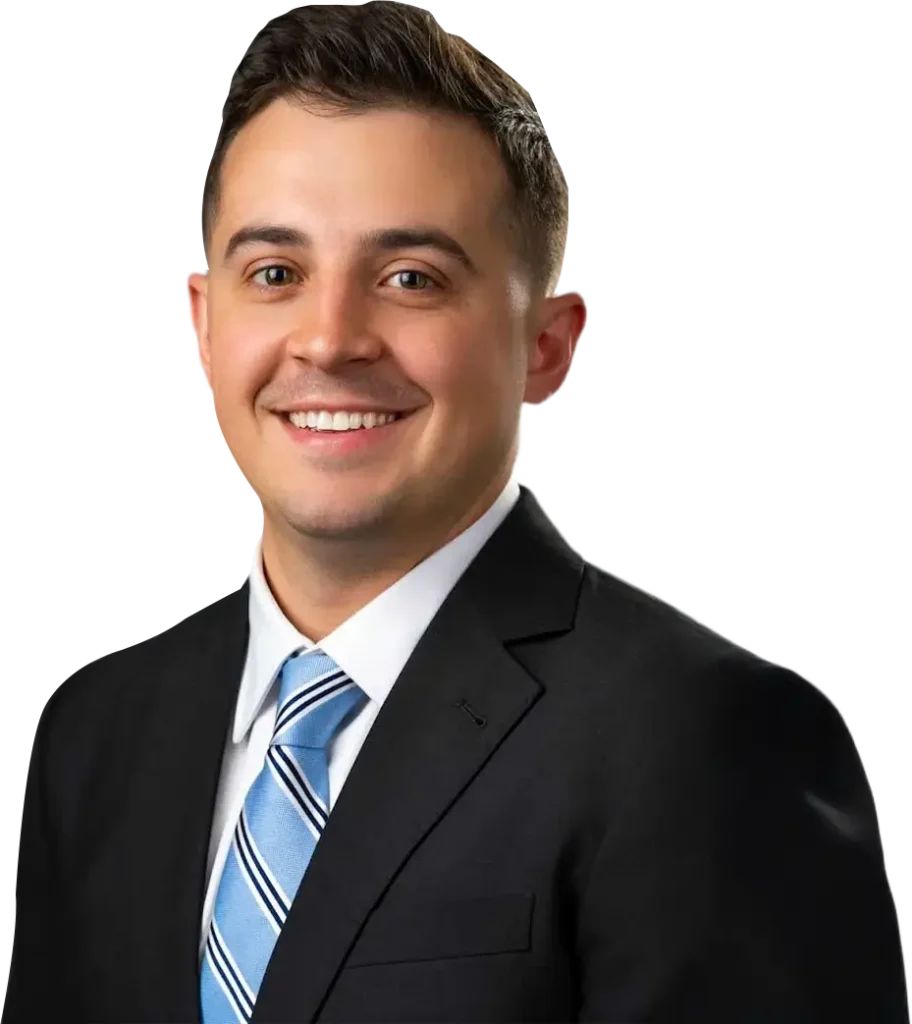
Daniel J. Larson looks at the facts, the injuries and whatever cover is actually available before anything is filed. That last part matters more than people expect, since a strong case against a driver carrying the minimum is worth less than a modest one against a well-insured company. Where the cover runs short, a policy in your own household sometimes closes the gap. What a lasting injury is worth is worth knowing before agreeing to anything. City claims run through the firm’s main injury practice.
What our clients say

No claim gets valued before the treatment ends.
- We handle car crash claims for injured drivers, passengers, and pedestrians across Massachusetts
- We deal with the PIP no-fault rules and the at-fault driver's insurer so you do not have to
- We prove fault and pursue the full value of your injuries beyond the no-fault basics
- We push back on the quick, low offers insurers make before your injuries are fully known
- Attorney Daniel J. Larson prepares every crash case as if it may have to go to trial
- No fee unless we win
- Free, private case review
- Same-day response
- Honest advice from day one
$1M+ Won For Clients
100+ 5-Star Google Reviews
9+ Years of Legal Expertise
98% Legal Success Rate
Hundreds of Victims Helped
No Win, No Fee Guaranteed
Where the early benefits stop and the claim begins.
One gate decides how big a car claim can get. Below it, the case stays inside the early benefits. Above it, the full harm becomes claimable from the driver responsible, including what the injury did to a life rather than to a bank balance. An injury crosses that line either by its nature, a fracture being the clearest example, or by what the treatment came to. We set that out properly on our page about the threshold rather than repeating it here.
Recovering from the other driver still means showing they were careless. The report, the vehicle damage, the layout of the road and what witnesses saw all go to that. Shared blame does not end a claim, it reduces it, and only bars recovery if your share is the larger one. Insurers push on that point because every percentage they shift is money they keep.
An early finding of fault, whether from a report or an adjuster, is not the last word. Reports contain errors, and an insurer’s conclusion is reached by an interested party. Independent work on the damage, on any footage and on the people who saw it regularly produces a different account, and that is often what turns a refusal into a recovery.
Two adjusters usually handle one crash, and they are not the same person. One deals with the car, moves quickly, and is pleasant to deal with because repairing a bumper costs the insurer little. The other handles the injury, moves slowly, and asks different questions. People often judge the whole company by the first and are caught short by the second, and a fast payment for the car says nothing at all about how the injury claim will be treated.
The low-damage argument deserves its own warning. Where the photographs show a dented panel rather than a wrecked car, an insurer will argue the forces involved were too small to hurt anybody, and will put that to a doctor as if it were the end of the matter. It is not. Bumpers are built to absorb impact and hide it, seating position and head position at the moment of impact matter more than the bodywork, and a person already carrying a stiff neck or an old disc problem will feel a collision a healthier person shrugs off. Answering it takes the treating doctor’s own view, not an adjuster’s reading of a photograph.
Gaps in treatment do more quiet damage than almost anything else. Someone feels better for a couple of weeks, misses two appointments, then deteriorates, and the file now shows a person who stopped treating because they had recovered. Nothing in the record explains the childcare, the shift they could not drop, or the wait for a referral. Those gaps get read as recovery and priced accordingly, which is why continuity matters even on the weeks when it feels unnecessary.
There is also money to be repaid out of any recovery. Where a health plan or a state program has covered treatment, it can generally reclaim that from a settlement, and the sum is often larger than people expect. It is negotiable, and negotiating it is part of the work, but it needs finding early. A figure that looks acceptable before those repayments are worked out can look very different once they are.
Deadlines run in the background throughout, and a child’s runs differently again. Should a crash prove fatal, those left behind have a claim of their own that follows a separate path.
Most Massachusetts car accident claims begin close to home.
Most crashes happen on roads people drive every day, a few miles from where they live, at speeds that sound too low to hurt anybody. The familiarity is part of the problem. Drivers on a route they know stop scanning it, and the collision that follows is the one nobody was braced for.
It also shapes what evidence survives. On a familiar road at low speed, two people often agree not to involve anyone, swap details and drive off. No report is made, no photographs are taken, and the only account of what happened is two memories that will have parted company within a week. By the time the pain arrives, the scene is long gone.
Rotaries and unprotected left turns produce more disputed fault than anything else on the road. Both involve one driver crossing another’s path with nothing to settle who had priority, and both generate two accounts that are honestly held and flatly incompatible. What resolves them is rarely the drivers. It is where the damage sits on each car, where the vehicles came to rest, and anyone who watched it from outside.
Winter changes the argument rather than the crash. A driver who slid will say the road was to blame, as though ice lifted the duty to drive for the conditions. It does not, and the question becomes speed, following distance and tires rather than weather.
Old road layouts add their own difficulty. Streets laid out long before the traffic they now carry give you blind corners, narrow lanes with parked cars on both sides, and junctions meeting at angles no modern designer would draw. A driver who genuinely could not see what was coming is still responsible for the speed at which they could not see it, and that distinction is where a lot of these cases are actually argued.
Where it happened decides what can be proved. In a dense area there are cameras on buildings, buses and doorbells, and the difficulty is reaching them before they record over. On a quieter road there may be nothing at all, and the case gets built from the physical evidence and whoever stopped. Neither is hopeless, but they need different work, and knowing which one you have decides where the effort goes in the first two weeks.
Claims arising in the city tend to run differently from claims further out, mostly because of what gets recorded and who is watching, and those are handled by the firm’s main injury practice. The order of the work stays the same either way: find what still exists, fix the account of how it happened while people still remember it, and let the medical picture develop before anybody puts a number on it.
Repairs finish long before people do.
The bills already in hand are the smallest piece of it, and the easiest to agree on. What takes work is everything still ahead: treatment recommended but not yet had, the operation a surgeon says will probably be needed in a few years, and the effect on what somebody can earn between now and retiring.
Missed wages and lost earning power are not the same thing, and the second is usually worth more. Missed wages are the shifts already gone. Earning power is the promotion that stops being realistic, the overtime that can no longer be taken, the trade that depends on lifting and now does not work. Someone can be back at a desk full time and still have lost a great deal of it.
Driving is its own loss after a crash and gets left out almost every time. Plenty of people recover physically and still cannot settle behind the wheel, or will not use the road where it happened, or drive so cautiously that every journey takes twice as long. That is a genuine restriction on a life and it belongs in the account of what the crash did.
So does the work somebody else picked up. The shopping, the stairs, the school run, the driving, all of it shifted to a partner or a parent for months on end. It is not an abstract inconvenience, and it does not stop being a loss because nobody sent an invoice for it.
All of it has to be valued before anything is signed, because a settlement closes the file for good. Treatment that is still only recommended is either counted now or paid for later out of your own pocket.
Medical Bills and Future Care
Lost Wages and Earning Capacity
Pain, Suffering, and Hardship
Wrongful Death of a Loved One
The steps that protect your claim after a serious car crash.
Get medical care and a crash report
See a doctor right away, even if you feel okay, and make sure the crash is reported to police. Fast care builds a record tying your injuries to the wreck, which insurers question if you wait too long.
Document the scene and swap details
Photograph the vehicles, the scene, and any injuries, and exchange insurance and contact info with the other driver. Get names and numbers from any witnesses, and report the crash to your own insurer.
Talk to a lawyer before the insurer
Before you give an insurer a statement or accept a quick payout, talk with a lawyer who can sort out the coverage. Early advice shields the evidence and your deadline while you focus on your recovery.
- 5.0 stars out of 100+ reviews
Ask a Massachusetts car accident lawyer before signing.
One thing is worth checking before anything else gets signed. A medical authorization sent by an insurer is often written broadly enough to open your entire history rather than the treatment for this crash, and that history is exactly what a pre-existing condition argument gets built from. Read it, or let somebody read it for you. Beyond that, bring whatever you have: the claim number, the name of the other insurer, any photographs, and anyone who stopped at the scene. Nothing is owed unless the claim succeeds.
By submitting this form, you acknowledge that doing so does not create an attorney-client relationship. Please do not include confidential information. Contacting us does not obligate you to retain our services.
Our Clients.


Our Practice Areas.
Reach out whenever you are ready, and we will explain where you stand and what the next steps could be, at no cost and with no obligation.
Your first call costs nothing, and you are never under any obligation to move forward.
Common Questions After a Massachusetts Car Crash
Do I have a claim if another driver hit me?
Very likely, if the other driver was at fault. A motorist who runs a light, follows too closely, or drives distracted can be held responsible for the harm they cause. Beyond your no-fault PIP benefits, you can pursue that driver’s insurer for the full value of your injuries once fault is established.
What is PIP and no-fault in Massachusetts?
Every Massachusetts auto policy includes Personal Injury Protection, which pays part of your early medical bills and lost wages regardless of who caused the crash. PIP is only the first layer; it does not cover pain and suffering, so a serious injury usually means a claim against the at-fault driver.
Can I recover for pain and suffering?
Yes, once you cross the threshold. You can pursue pain and suffering from the at-fault driver if your reasonable medical expenses pass a set amount or your injury involves a fracture, permanent disfigurement, or a loss of sight or hearing.
What if the other driver had no insurance?
Your own uninsured motorist coverage, mandatory in Massachusetts, can step in when the at-fault driver has no insurance, and underinsured coverage can help when their limits are too low. These first-party claims carry their own rules and deadlines, so it is worth reviewing every policy that may apply to your crash.
Whose insurance pays for my injuries?
Your own PIP pays the earliest medical bills and some lost wages no matter who was at fault. For the rest, the at-fault driver’s liability insurer answers for the full harm, and your own uninsured or underinsured coverage may apply if that driver carried too little insurance or none.
How long do I have to file a claim?
You generally have about three years from the date of the crash to file a personal injury claim. Waiting is risky, though, because evidence fades and witnesses move on; acting early protects both the proof your claim depends on and the deadline itself.
What if I was partly at fault?
You can still recover as long as your share of fault is not greater than the other driver’s. Any award is reduced by your percentage, so how fault is investigated and apportioned directly affects what you are able to recover.
What is a car accident claim worth?
It depends on the injury, the treatment, the income you lose, and the lasting effect on your life, not on any table or formula. A claim accounts for medical care, lost wages, and pain and suffering, and building it on complete records is what shows its true value.
Should I take the insurer's first offer?
Rarely. A first offer usually arrives before the full extent of an injury is known and is calculated to close your claim cheaply. Once your treatment and its lasting effects are documented, the claim can be valued properly, which is almost always more than that early number.
What if a loved one died in the crash?
A fatal crash gives the family a wrongful death claim for the losses they suffer, including lost support, income, and companionship. No claim can undo the loss, but holding the at-fault driver accountable can bring a measure of stability and answers in a devastating time.
How much does a car accident lawyer cost?
Nothing up front. These cases are handled on a contingency fee, so you pay no attorney’s fee unless there is a recovery, and the first case review is free. That arrangement lets anyone pursue a claim without worrying about hourly bills while they are hurt and out of work.
What should I do right after a car crash?
Call 911 and get medical care promptly, even if you feel fine, because some injuries surface days later. Photograph the vehicles, the scene, and your injuries, collect the other driver’s information and any witnesses, and speak with a lawyer before giving a recorded statement to any insurer.
Results Disclaimer: Past case results, settlements, and verdicts mentioned on this website do not guarantee or predict a similar outcome in any future case. Every case is unique and depends on its own facts and legal issues.