
Boston Motorcycle Accident Lawyer
A motorcycle has no insurance that pays your first bills.
A car occupant’s first medical bills run through PIP. A rider’s usually don’t. That gap shapes how you pay for treatment, who ends up owing what, and how much the other driver’s insurer thinks it can wait you out.
- No fee unless we win
- Same-day response
- Free case review
As Seen On:













The case a Boston motorcycle accident lawyer has to build
Almost every one of these cases begins with the same imbalance. The rider is on the ground and in no condition to explain anything, while the driver is upright, unhurt, and already giving the officer a version of events. That version reaches the report first, and an insurer treats whatever arrives first as the baseline. Changing it afterward is done with evidence, not with argument.
Two forces shape a motorcycle claim in this city more than any others. The first is that the injury never matches the impact, because a collision a driver would describe as minor is the one that puts a rider in an ambulance and then in an operating room. The second is that someone will suggest, usually within a day, that the rider was moving too fast, weaving, or otherwise the author of their own harm. Neither claim is measured at the scene. Both are decided months later, on paper, by people who were never there.
The streets contribute their own share. Trolley tracks are set into several of the main avenues, and wet steel gives a front tire nothing to grip. The riverside routes pair short sight lines with constant merging and no shoulder worth escaping onto. Winter leaves the pavement broken in the same places every spring, and a pothole a car absorbs is a loss of control on two wheels.
Older intersections and rotaries do the rest. In the squares, the circles, and on the approaches to the bridges, drivers scan for gaps sized to other cars, and a motorcycle does not fill the space they are looking for. A vehicle turning left across an oncoming rider remains the most common way these collisions happen, and the driver’s account is almost always some version of the bike appearing from nowhere.
What resolves that disagreement is rarely the rider’s recollection, which is often missing for sound medical reasons. It is the gouge and scrape pattern the machine left on the road, where the debris came to rest, the crush profile across the car’s front quarter, and whatever a nearby storefront, bus, or doorbell camera recorded before the footage was overwritten. Most of that has a useful life measured in days, not months.
Riders come here with the injuries that follow from having nothing around them. Fractures that need hardware and a second surgery, road rash deep enough to require grafting, spinal injuries that redefine what work is possible, and internal injuries that were not obvious at the roadside because adrenaline masked them. The medical record has to carry the whole arc of that, not only the first night.
Helmet use is raised early and almost always as leverage. It bears on one narrow part of the discussion and on nothing else, and an adjuster who opens with it is usually trying to make a single fact stand in for the entire case. It has no bearing on who caused the collision, and treating it as though it does is a negotiating posture rather than an analysis.
The motorcycle itself is evidence, and it goes missing faster than anything else on the list. Once it is released to a salvage yard, the damage pattern that shows the angle and force of impact is gone, and snapshots taken by someone who did not know what mattered are no replacement. Where the bike is stored, and who controls it, is worth settling in the first week rather than the first month.
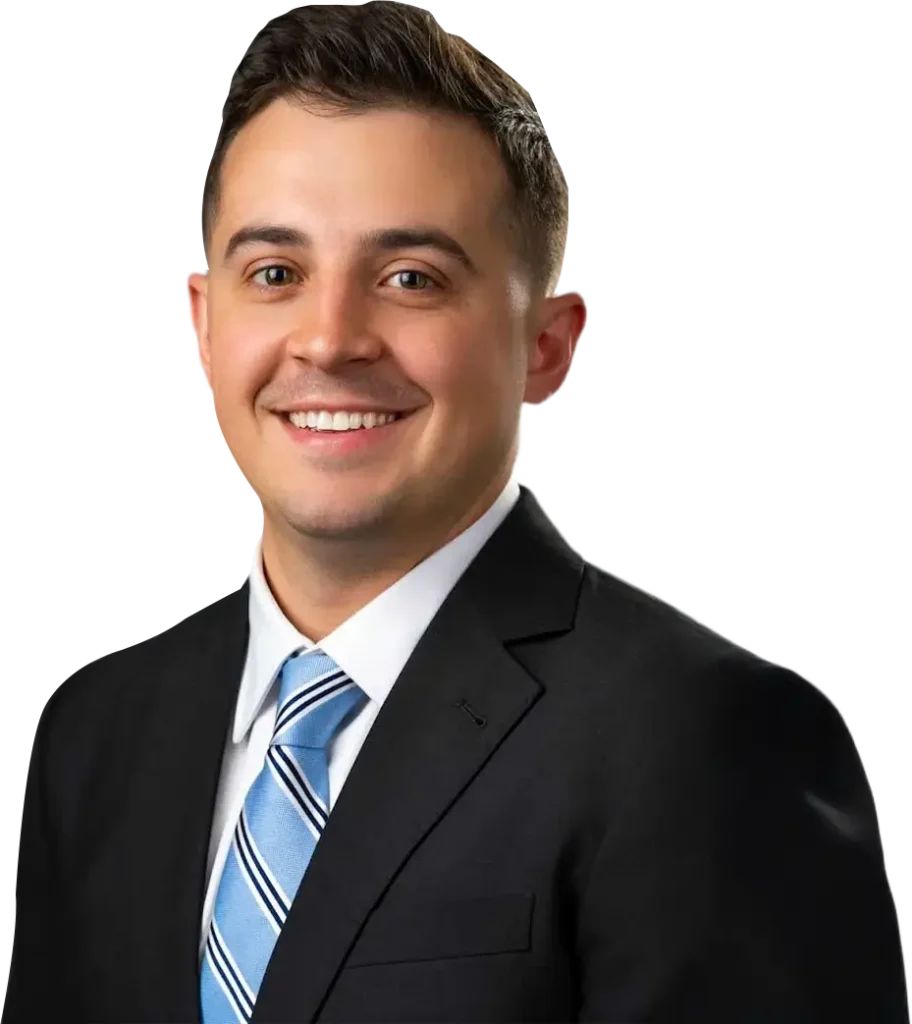
Coverage is the other question that will not wait, and it is the first thing a Boston motorcycle accident lawyer checks. A rider’s own policy and the at-fault driver’s policy rarely stretch far enough between them to cover a serious injury, and the rest is usually found in layers of coverage most riders do not know they carry. Daniel J. Larson builds these claims outward from the physical evidence rather than inward from the police narrative, which is the practical difference between a file that is negotiated and one that is only processed.
What our clients say

We start with the bike, not the report.
- We take on motorcycle claims for riders hurt on city streets and the river roads.
- We reach the bike, the road marks and the camera footage before they disappear.
- We answer the speed-and-weaving story with physical evidence rather than argument.
- We document what a rider's injuries cost in work, mobility and daily life over time.
- We handle the adjuster so you are not pushed toward an early, low settlement.
- No fee unless we win
- No upfront costs
- Direct attorney access
- Free case review


What decides fault after a motorcycle crash on Storrow Drive.
Fault in these cases is usually assumed before it is examined. Riders are treated as the fast ones, the reckless ones, the ones who must have contributed something, and that assumption arrives at the adjuster’s desk dressed up as a finding. It is not one. An assumption becomes a finding only when something physical supports it, and the practical work of a claim is forcing that distinction back into the file before the number is set.
The reason it matters so much here is that responsibility is shared out in percentages rather than decided outright. A rider found partly responsible recovers less in proportion, and past a certain share recovers nothing at all, so an insurer has a direct incentive to attach a percentage to the rider early and defend it. That percentage is usually first written down by someone who never saw the road, working from a narrative supplied by the only person still standing.
Time works against the rider in two separate ways, and they run on different clocks. The general window for bringing an injury claim runs a few years and feels comfortable. The window for a claim involving a public body, whether a city road, a state roadway or a transit vehicle, is far shorter, sometimes a matter of weeks for the required notice, and it closes quietly while a rider is still in a hospital bed. Missing it does not weaken the claim; it ends that part of it.
That short fuse matters on a motorcycle more than on four wheels, because the defect claims that involve a public body are exactly the ones riders bring: a sunken trench across a lane, a plate left proud of the surface, tracks set at a bad angle, a signal timing that hides an oncoming turn. A car absorbs those and drives on. A bike does not, and the entity responsible for the surface is often the one with the shortest notice window on the whole file.
Coverage is the second place riders are caught out. The no-fault medical benefit that pays a car occupant’s first bills does not reach a motorcyclist the same way, so a rider’s early treatment often has no automatic source behind it. What is available instead is scattered: the at-fault driver’s liability limits, the rider’s own uninsured and underinsured coverage, sometimes household coverage nobody remembered, and occasionally a commercial policy sitting behind a van or a rideshare vehicle.
Whether the other vehicle was working changes the whole shape of the claim. Delivery vans, contractor pickups, box trucks and rideshare cars carry larger policies, employer obligations and, often, telematics that record speed and braking. That data is real evidence and it is overwritten on a schedule set by the company that owns it, which is why a claim involving a commercial vehicle has to be opened faster than one involving a neighbor’s sedan.
Lane position is the argument riders should expect. Sitting toward the left of a lane to stay visible, moving within a lane to avoid a hazard, or riding between rows of stopped traffic all get described afterward as recklessness by people who have never had to make those choices. The answer is not a debate about riding style. It is the road: what was on the surface, where the sightline ended, and what the rider was avoiding when the driver turned.
The injuries themselves are read differently on a bike, and that misreading costs money. A shoulder that will not lift a tool, a wrist that will not hold a grip, a knee that fails on stairs are all described in a first record as sprains and strains, because that is what the emergency visit was for. What proves them is the months afterward: the imaging, the therapy notes, the failed return to work. Riders hurt in Cambridge run into the same pattern with the same insurers.
What actually moves a carrier is a file that answers its arguments before it makes them, and assembling that file is the practical work of a Boston motorcycle accident lawyer. Scene photographs that show the surface, a preserved machine, camera footage pulled while it still exists, treatment records that track the same complaint from the first night through to the last appointment, and a plain account of what the rider can no longer do. Insurers settle files they cannot easily reduce, and reducing a file is what an early, thin record invites.
These crashes cluster, they do not scatter.
The places these crashes happen are not evenly spread across the map. They cluster on the old radial routes where a modern volume of traffic runs on a nineteenth-century street plan: Huntington Avenue, Commonwealth Avenue, Massachusetts Avenue, Columbus Avenue and the approaches to every bridge. Lanes narrow without warning, parked cars sit inches from moving traffic, and the space a rider needs to react is the first thing the design gave away.
Rails and gratings deserve their own mention because they are unique to a handful of cities and this is one of them. Green Line track is set into the surface along Huntington and Commonwealth, and a wet rail taken at a shallow angle removes traction entirely. Add utility trench work, steel plates left proud of the pavement, expansion joints on the bridges and the winter’s leftover sand, and the road itself becomes a party to the crash.
Rotaries and the older intersections produce the collision riders describe most often. At Leverett Circle, at the Fenway and Park Drive, and on the approaches to the tunnels, a driver looks for a gap sized to a car, finds one, and turns across a rider who was inside it the whole time. Sightlines around parked delivery vehicles and construction hoarding make it worse, and the driver’s honest belief that the bike appeared suddenly is the hardest testimony to dislodge.
Timing matters as much as geography. The riding season concentrates from spring through October, which is also when construction plating, tour buses and event traffic are at their peak. Low sun on the east-west streets in the early evening blinds drivers at exactly the hours riders are heading home, and the first warm weekend of the year reliably puts inexperienced traffic and returning riders on the same road at the same time.
The traffic mix is its own hazard. Double-parked delivery vans in the Back Bay and the Seaport push riders into the adjacent lane without warning. Rideshare vehicles stop wherever the app told the driver to stop, doors open into moving traffic, and a rider passing a stopped queue has no room to absorb either. The same pattern repeats at the curb outside every hotel and restaurant on the block, hour after hour. These are ordinary events for a car and a hospital admission for someone on two wheels.
Riders do not stay inside the city, and the claim often does not either. The routes south toward the shore, the roads out through the western suburbs and the runs up the coast all begin here and end somewhere with a different police department, a different set of cameras and a different response time. A rider hurt on the way down toward Quincy is dealing with the same insurers under a different report number.
What happens to the machine afterward is a local problem with a local solution. A bike is usually towed to whichever yard the responding department uses, storage charges begin accruing immediately, and the pressure to release it arrives long before anyone has documented the damage properly. Photographs of both sides, the forks, the pegs and the underside are worth more later than anyone realizes at the time, because that pattern is what shows the angle of impact.
Where a rider is taken shapes the record that follows. Serious cases go to the trauma centers in the city, and the first documentation is built around keeping someone alive rather than cataloguing every injury. A shoulder or a wrist that will matter for years is often a single line in a note written that night. Nobody writes a trauma record as an inventory, but that is precisely how an adjuster reads it afterward, which is why the follow-up appointments and the later imaging carry so much of the proof.
Witnesses count for more here than in most places, and they vanish faster. Dense sidewalks mean somebody saw it, but they scatter within minutes and rarely leave a name. What stays is the footage: storefront cameras, building entrances, buses and the cameras mounted at busy intersections. Most of that is overwritten on a cycle measured in days, so the request has to go out while the file is still new.
What a crash on Dorchester Avenue actually costs.
What a rider loses runs a long way past the machine. The bike is replaceable and it is the cheapest thing in the file. What is not replaceable is a shoulder that no longer holds a tool overhead, a hand that cannot grip through a full shift, a knee that decides on its own when a flight of stairs is finished, and the sleep that stops coming after the first month. None of that shows up in a photograph of a damaged motorcycle, which is usually the only image anyone takes.
The medical side rarely ends when the discharge paperwork does. Hardware placed to hold a bone together frequently comes back out in a second operation. Grafted skin needs its own follow-up. Nerve pain announces itself weeks later, once the acute injuries have quieted down enough for anything else to be noticed, and physical therapy runs in blocks with gaps between them. Every gap in that sequence gets read afterward as evidence the injury had resolved, which is why the reason for each pause belongs in the record at the time it happens.
Work is where the real cost usually sits, and it is the part most often understated. Riders are disproportionately people paid for what their bodies can still do: trades, deliveries, kitchens, transport, care work. A limitation an office worker absorbs by sitting differently is a career interruption for someone who climbs, lifts or drives. The difference between the wages lost this month and the earning capacity lost permanently is a distinction insurers are content to leave blurred, and leaving it blurred is worth a great deal to the party doing the valuing.
Then there is what the injury does to an ordinary week. Missed pickups, a partner who quietly becomes a caregiver, a second floor that stops being usable, a season of riding given up and then another one. None of it appears on a bill. It is the part a thin claim leaves out entirely, because nobody asked the right question early enough to write it down, and a year later it has to be reconstructed from memory against an adjuster who treats anything undocumented as something that never happened.
The worst outcomes are not simply larger versions of the rest. Catastrophic injuries and the loss of a limb reshape a household permanently and require the claim to be built around a lifetime of care and adaptation rather than a course of treatment. Those files turn on different questions entirely. Where a rider does not survive, the family’s claim is a different case again, and it begins under the same short clocks while they are least able to attend to any of it.
Medical Bills and Future Care
Lost Wages and Earning Capacity
Pain, Suffering, and Hardship
Wrongful Death of a Loved One
The first three moves, from Charlestown to Roxbury.
Be checked, and hold on to the bike
Be seen the same day even if you walked away from it, and keep every piece of it: discharge notes, imaging, the ambulance run sheet, and photographs of the bike, your gear and the road surface itself.
Call us before you give a statement
One free and private conversation, whatever stage you are at now. We will go through what happened, what the insurer will likely argue, and what has to be preserved this week before it stops existing.
We work the crash from the marks up
We take over the insurer contact, secure the bike and the footage while they still exist, document the injuries as they actually develop, and then build the claim so that it cannot be quietly reduced.
- 5.0 stars out of 100+ reviews
A Boston motorcycle accident lawyer can take the calls.
The insurer has probably rung already, and they will have been perfectly pleasant about it. Before you put anything in writing or on a recording, it costs nothing to hear how the file looks from this side: what is worth preserving this week, what the report has wrong, and whether there is a claim here at all.
By submitting this form, you acknowledge that doing so does not create an attorney-client relationship. Please do not include confidential information. Contacting us does not obligate you to retain our services.
Our Clients.


Our Practice Areas.
Riders are not the only people who end up here after a bad afternoon on these streets. The same insurers, the same short evidence windows and the same early arguments about fault turn up across every kind of injury claim in the city.
If what happened to you sits somewhere else on the list below, those pages go into what changes for that kind of claim and what stays exactly the same.
What riders ask after a night at Mass General.
The driver told police he never saw me. Does that help my claim?
It usually helps. Not seeing a motorcycle is not an answer to failing to look, and a driver who says it honestly has also conceded that he turned or pulled out without knowing what was there. It moves the argument away from your riding.
Everyone assumes I was going too fast. How is that answered?
With physical evidence rather than assertion. Scrape and gouge marks, how far the debris travelled, the crush pattern on the car and where the bike came to rest all put limits on speed. An assumption survives only until something measurable contradicts it.
I was not wearing full gear. Does that finish the claim?
No, and it is raised far more often than it decides anything. Protective clothing has no bearing on who caused the collision. It can be argued about in relation to particular injuries, which is a narrow question rather than the whole file.
My bike was towed days ago. Is that evidence gone?
Not necessarily, but it is going. Storage yards move machines on, and once repair or salvage begins the damage pattern that shows the angle of impact cannot be recovered. Photographs of every side, including the underside, are the next best record and should be taken now.
I went down on trolley rail. Does the road surface matter?
It can matter a great deal. Flush rail, steel plating, sunken trenches and unrepaired defects all bear on why a rider lost traction, and responsibility for the surface may sit with a public body. Those claims carry far shorter notice deadlines than an ordinary one.
The other driver was working at the time. Does that change anything?
Usually for the better. A vehicle driven for work generally brings a larger policy and an employer with obligations of its own, and often vehicle data recording speed and braking. That data is overwritten on the company’s schedule, so it has to be requested early.
I was riding with others. Are they useful as witnesses?
Very much so. Riders who were present understand road position, sightlines and what the traffic was doing in a way other witnesses do not, and they were watching the same hazard unfold. Their accounts are worth recording while the detail is still fresh.
Will my own insurance cover any of this?
Often it has to. Where the driver responsible carries thin limits, a rider’s own uninsured and underinsured coverage becomes the source that matters, and household policies sometimes add more. Notifying your own insurer is a separate step with its own timing requirements.
How long before anyone knows what the claim is worth?
Longer than most people expect, and that delay is deliberate. A value can only be put on injuries once the medical picture has settled enough to show what is permanent. Settling before that point means guessing about the part of the claim that lasts longest.
Do I have to speak to their insurer at all?
No. You are not required to give a recorded statement to the other side, and the request usually arrives before anyone knows the extent of the injuries. Anything said then is quoted back months later against a fuller picture you did not have yet.
The police report blames me. Is that the end of it?
No. A report records an officer’s impression, built largely from whoever was able to speak at the scene, which is rarely the rider. It is evidence rather than a verdict, and reports are routinely contradicted by the physical marks left on the road.
What happens if the rider did not survive?
The claim becomes the family’s and runs on its own timetable. It covers the loss to the people who depended on the rider as well as what happened before death. It begins under the same short deadlines, at the worst possible moment to attend to it.
Results Disclaimer: Past case results, settlements, and verdicts mentioned on this website do not guarantee or predict a similar outcome in any future case. Every case is unique and depends on its own facts and legal issues.