

Lowell Scooter Accident Lawyer
A scooter rental company may be liable for faulty brakes.
Rental scooters spend their days outdoors and pass through dozens of hands. Service logs and battery records show whether anyone checked a machine before the next rider stepped on.
- No fee unless we win
- Same-day response
- Free case review
As Seen On:













A Lowell scooter accident lawyer works out which driver or company caused your injuries.
Narrow decks, small wheels, and open air are all a scooter offers its rider. Should a car clip the deck or a wheel catch a seam, the rider meets the pavement wrists first, then face, then head. Broken wrists, chipped teeth, facial cuts, sore shoulders, and concussions are what doctors see most. Many riders blame their own balance, and so a sound claim never gets started.
Drivers, companies, and property owners can all end up sharing fault for a single scooter fall. A few drivers cut across a rider’s line while others leave the curb without looking. Rental firms leave machines in service with tired brakes or weak batteries. Sidewalk, lot, and road owners overlook hazards that anyone could see. Insurance stands behind most of these parties, so each is a possible source of money. Careful work early on often uncovers a party that the rider never suspected.
Unlike bicycles, scooters leave a digital trail. A rental app logs where the trip began, the path taken, the top speed, and when the ride ended, while an identification number ties each machine to its repair history. Companies can edit or erase such records within days. One written request from a lawyer often decides whether the proof survives. Pictures taken before you leave the spot supply the rest. Dashboard cameras and phones inside the car may hold footage too.
Adjusters often treat a scooter crash as proof of rider error. Speeding, sidewalk riding, phone use, and a missing helmet top their list of accusations, even when the injury was a wrist or a knee. Statements recorded early, before doctors know the full damage, can be replayed later. Referring those callers to our office avoids that trap entirely.
Certain injuries surface slowly. Aching wrists may hide hairline fractures, and lingering headaches can signal concussions. A prompt exam safeguards your health and begins a dated medical record. Young riders and older riders need a checkup even after a mild tumble. Put discharge sheets, prescriptions, and bills into one envelope and keep it handy.
All scooter work here answers to Daniel J. Larson, and outside experts join whenever a machine or a trip record needs review. The firm sides with riders hurt by careless drivers and neglected machines, never with the companies behind them. Progress reports arrive in plain words, and questions receive same-day answers whenever possible. Ask anything, whenever it comes to mind.
Waiting costs riders far more than they expect. Fleets move scooters around daily, batteries get swapped, and trip histories are wiped after a fixed number of days. Our letter asks the company to hold every record tied to your ride. Right now, screenshots, receipts, and photos are still yours to save. Starting soon keeps the best evidence within reach.
What our clients say
Our team requests the scooter itself and its ride records before they can be erased.
- We handle e-scooter crash claims for riders and for pedestrians struck by scooters in Lowell
- We find every source of fault, whether a careless driver, the scooter company, or a bad road
- We preserve the ride data, the scooter, and the scene before that proof can disappear
- We push back on the quick, low offers insurers make before your injuries are fully known
- Attorney Daniel J. Larson prepares every scooter case as if it may have to go to trial
- No fee unless we win
- Free, private case review
- Same-day response
- Honest advice from day one


Blame for a scooter crash may land on several businesses and people at once.
Drivers must look for scooters as carefully as they look for cars. Turning without checking, leaving a curb blindly, and passing with too little space are ordinary examples of carelessness. Machines this small and quiet are easy to miss, which is why drivers so often claim they saw nothing. That defense rarely works, since a careful motorist expects two-wheeled traffic. Footage and vehicle damage frequently expose what the driver missed.
Renting out scooters carries duties too. Fleet operators must inspect their machines, replace worn brakes and tires, and pull any unit that riders have reported as unsafe. Throttles, lights, and batteries fail suddenly whenever maintenance slips. Batteries that overheat and brakes that fade on hills are typical complaints. Service logs, complaint records, and each machine’s history reveal whether the company kept pace. Where a flaw traces to design or manufacture, the maker shares responsibility, and engineers can test the brakes, throttle, and battery on the machine itself.
Sidewalks, lots, and roads belong to someone, and that owner answers for hazards it knew of or should have spotted. A loose plate, a deep gap, a missing cover, or a patch of gravel can send a small wheel sideways. Public owners follow stricter rules than private ones, including notice requirements that may expire within weeks. People hurt on public ground should therefore call without delay. A hazard photographed before repairs begin makes a much stronger case. Owners’ repair records can reveal how long a problem went unfixed.
Almost every insurer argues that the rider brought on the fall. Their list is predictable: too fast, on the sidewalk, no helmet, a passenger on the deck, or distraction by a phone. Each accusation gets tested against ride data, video, and medical facts. Medical experts can say whether a helmet would really have altered the outcome. Blame that lands on you cuts your payment by that portion, and a claim can fail if jurors put most of the responsibility on you. Claims departments know this rule thoroughly and lean on it.
Multiple policies may respond to one scooter crash, and each pays in its turn. Usually the driver’s liability coverage carries most of the load. Fleet operators may hold a policy covering people who ride their machines. Health coverage of your own often pays early bills and may demand repayment later. With an uninsured driver, another person’s policy in your household may help pay. Lining up every source comes before any talk of numbers.
Before unlocking a scooter, apps ask riders to accept lengthy terms. Those pages can add steps, narrow the places a dispute may be heard, or claim to cancel a rider’s rights. Some clauses hold up while others fail, so nobody should assume small print settles anything. Our review covers the terms, the receipt, and the confirmation screen. Save all three. The unlock screen and the checkout confirmation can matter too, so capture both. Should the app hide the terms, request a copy in writing.
Most injury suits must be brought before about three years have gone by. Someone hurt as a minor gets extra time, because the clock commonly starts at adulthood. Following a fatal crash, an estate representative brings the family’s claim on a separate clock. Public bodies need notice far earlier, as described above. Evidence, however, has usually vanished by the time any deadline nears.
Different holders keep the evidence in these matters. Ride records, the scooter, doorbell and shop video, police notes, and the medical chart each cover a different angle. Engineers may examine brakes and batteries, while reconstruction experts calculate speed and angle from the damage. Our letters ask each holder to keep what it has. Repairs and returns can wait until those letters go out.
Young riders raise added questions. Courts weigh a child’s actions against what is expected of children, not adults. Parents can file the claim, and a judge might have to approve any settlement before funds are released. Rental age rules can matter, since a company that lets an underage rider unlock a machine may carry some fault.
Your phone, helmet, clothing, or privately owned scooter count as a separate property claim. A release signed for one item can close far more than expected, so read every insurer document before signing. Settlement discussions belong after doctors can forecast your recovery. Every offer gets explained, along with whatever it leaves out. Crashes between two scooters, or between a scooter and a bicycle or a walker, follow the same basic logic, because every rider owes care to others sharing the path.
Your Lowell scooter accident lawyer knows these streets.
Rental scooters now share this city with several campuses, a busy downtown, and many people who commute without a car. Pickup spot, drop-off spot, and crash site each leave a separate record. Those records look different in each part of town. What follows describes the settings where riders get hurt most often.
Campus areas fill with scooters when classes start and end. Students ride in groups, sometimes two to a machine, and many have never ridden before the semester began. Drivers near campus expect walkers and forget faster riders. Move-in weeks and game days bring in visitors unfamiliar with the layout. After dark, dim streets and tired motorists make each mistake costlier.
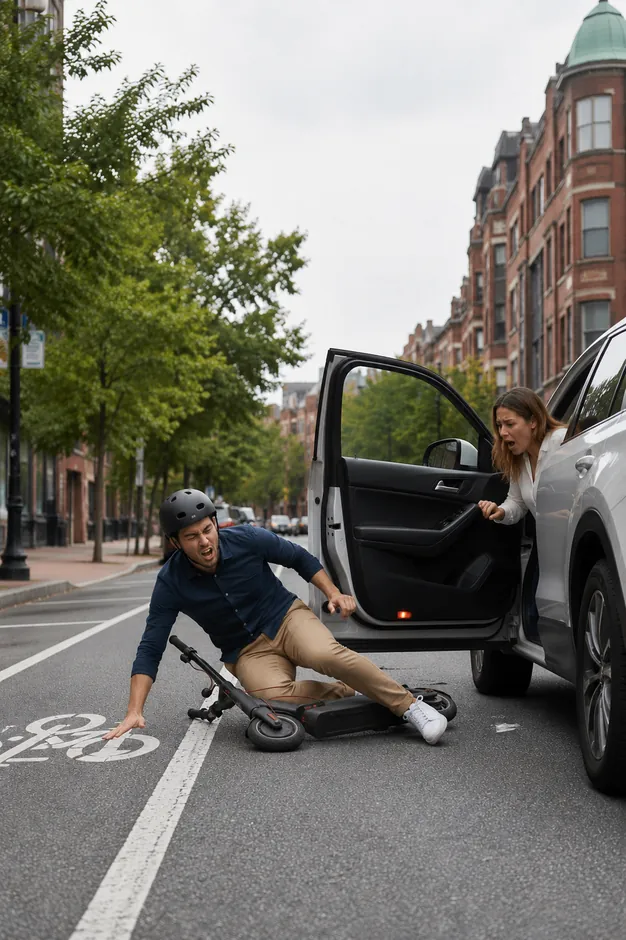
Parked cars and restaurant crowds fill the narrow lanes downtown on busy evenings, and delivery vans add to the crush. Riders slip between stopped cars, and drivers leaving a space rarely look that low. Pressed against the curb, a rider has no room to steer clear of a door or a bumper. Shop and restaurant cameras often capture those seconds, though many overwrite within days.
Older streets here carry seams, patched trenches, worn brick, and rail lines that a car crosses without noticing. A scooter’s small wheels drop into a groove or catch a lip and stop at once, launching the rider forward. Whoever maintains that surface may share responsibility, and deadlines for notice can arrive fast. Photograph the spot the same day, with a shoe or a coin beside it for scale.
Winter mornings and evenings send scooter commuters out in full darkness. Early and late shifts make lights essential, and a rider without a strong headlight is hard to spot. Slowing for whatever the headlights reveal remains the driver’s job. Wet leaves, ice, and melting snow make matters worse by cutting the grip of a small tire.
Parked rental scooters often land across walkways, in doorways, and at curb cuts. Pedestrians trip over them, and riders swerve around them. Whoever placed or abandoned the machine there may answer for blocking the path. Fleet companies also decide where scooters are dropped off, which shapes how many end up in walkways. Snap a photo of where it sat before anyone moves it.
Riders often use scooters for the last stretch between a bus or train stop and home. Those trips end at crowded curbs and crossings, where drivers are busy watching signals. One badly timed entry into a crosswalk can put a rider in front of a turning car. Cameras at transit stops sometimes record the moment.
Families with older children use scooters for the trip to school. Crossing guards and slow zones protect some routes, yet drivers dropping off students still turn quickly across the same paths. Parents should save any messages from the school and photograph the spot where the child fell.
Many minor scooter crashes never produce a police report. Officers may skip a fall with no car involved, and hurt riders often leave unsure whether to call. Any crash with a car should get a report number, along with notes you write soon afterward. Names and phone numbers of bystanders who stopped are worth saving.
Fleet companies draw zones on their apps where riding or parking is allowed. Those maps can show whether riders were steered toward a hazardous place or machines were left where they did not belong. App data also shows how long a scooter sat idle, whether a low battery was reported, and when it was last serviced. All such requests are made in writing.
Knowing how riders move through this city helps us decide which records to seek first. Doorbell cameras, shop cameras, campus cameras, and the company’s own logs each cover a different stretch of the ride. What you experienced matters most, with the local picture in a supporting role.
A scooter claim can cover broken wrists, dental work, missed shifts, and months of therapy.
Months of bills follow a scooter crash, well past the emergency visit. Some riders return to work within days, while others need months. Wrists, elbows, shoulders, and knees absorb the initial impact when a rider falls, and faces and teeth follow close behind. Every injury on that list produces separate bills and separate records. A sound claim lists them individually so that nothing dissolves into one vague total.
Treatment leads the list. Months of treatment may include casts, surgery, physical therapy, dental repairs, and scar care. Hitting the head hard can lead to lasting trouble with memory and focus, and signs may take weeks to appear. Doctors’ forecasts of future care belong in the claim today, because settled cases rarely reopen.
Income losses follow. Missed shifts, lost tips, and hours spent at appointments all count. Students may lose a semester of work or see a career start delayed, and delivery workers may lose the machine that earned their living. Your employer’s letter, along with pay stubs and schedules, shows what missed shifts have cost you. Self-employed riders can rely on invoices and tax returns as proof.
Ordinary routines change as well. With a broken wrist, everyday tasks like cooking, cleaning, and carrying groceries become hard. Paid help and rides to appointments belong on the cost list. Writing down each day what you could not do gives those costs solid backing. Equipment damage counts as well: a cracked helmet, a shattered phone, torn clothing, and broken glasses can all be replaced through the claim, so keep or photograph each item until an adjuster has seen it. One folder for receipts keeps anything from slipping through. Pet care and child care during the healing months sometimes join the list.
Suffering and fear count as harm. After one fall, a rider may dread every scooter and every busy crossing. What you describe, and what those close to you have seen, reveal how the injury has reshaped ordinary days. Poor sleep, nerves near traffic, and a dropped hobby all count. Visible scars on the face or arms are a separate loss, and so is the fear that lingers after healing.
Hospitals and health plans, along with workplace insurers, often demand repayment after a settlement. Repayment rules can shrink what you keep, which is why we negotiate them down. Every expense record and loss record joins one file, and the insurer sees how the pieces add up to a single figure, with documents behind each entry.
Old injuries never erase a claim for new harm. Should a fall worsen a bad shoulder or a weak wrist, the added harm still counts, and medical records mark where the earlier problem stopped. Young people and older adults face added stakes. A teenager’s growing bones may heal unevenly and need checkups for years. Older riders can lose independence after a fall, and paid help at home adds up quickly. Doctors describe what each life stage is likely to demand, and the claim reflects those descriptions.
Deaths from scooter crashes leave relatives with losses of another sort. Relatives may claim funeral bills, the wages the household loses, and the guidance and care that person offered. Those cases are handled gently and at the pace the family chooses. Waiting for a settlement offer until doctors or the estate can describe the full picture protects everyone involved.
Medical Bills and Future Care
Lost Wages and Earning Capacity
Pain, Suffering, and Hardship
Wrongful Death of a Loved One
After seeing a doctor, save the scooter number and ride screen.
Get medical care and a police report
See a doctor right away, even if you feel okay, and make sure the crash is reported to police. Fast care builds a record tying your injuries to the wreck, which insurers question if you wait too long.
Save the scooter and the evidence
Photograph the scooter, the scene, and any injuries before anything is moved or repaired. Note the scooter's ID and company, save your ride record in the app, and get names and numbers from witnesses.
Talk to a lawyer before the insurer
Before you give an insurer a statement or accept a quick payout, talk with a lawyer who can sort out the coverage. Early advice shields the evidence and your deadline while you focus on your recovery.
- 5.0 stars out of 100+ reviews
A Lowell scooter accident lawyer can name the people who may owe you.
Describe where you were riding, what the driver or the machine did, and how your body feels now. In reply we cover who may be at fault, which items to keep this week, and how much time your claim may need. Keep the scooter’s number, your ride screen, and every photo exactly as they are until we talk.
By submitting this form, you acknowledge that doing so does not create an attorney-client relationship. Please do not include confidential information. Contacting us does not obligate you to retain our services.
Our Clients.


Our Practice Areas.
Larson Law helps injured people and families across Massachusetts after a serious accident. If you were hurt by someone else’s carelessness in Boston, we are ready to listen and explain your options at no cost.
Riders hurt in crashes usually ask about blame, insurance, and deadlines first.
Do I have a claim if a car hit my scooter?
Very likely, if the driver was at fault. A motorist who fails to yield, turns without looking, or opens a door into your path can be liable for your injuries, much like in any crash. A rider on a scooter is far more exposed than someone in a car, so the injuries are often serious. The main tasks are proving the driver was negligent and identifying the insurance that should pay, which a lawyer can do after reviewing the crash, the scene, and your injuries. A free review can tell you what your claim may be worth, at no cost.
What if the scooter was defective?
A machine defect can move blame onto the business behind the scooter. Tests by an engineer often show which part failed, whether brakes, throttle, or battery, so leave the machine untouched. Repair logs and complaint records may show the company knew of the problem before your ride.
What if I hit a pothole or road hazard?
You may still have a claim. A dangerous pothole, a poorly maintained street, or a hidden hazard can throw a rider, and whoever was responsible for that road may share the blame. Claims involving public roads can carry shorter notice deadlines, so it is important to act quickly. A lawyer can investigate who maintained the road, document the hazard before it is repaired, and identify the parties and insurance that should answer for your injuries, while protecting any deadline that applies to your claim.
What if I was a pedestrian hit by a scooter?
Yes, a pedestrian struck by a scooter can have a claim. If a scooter rider was careless, riding where they should not, going too fast, or not watching for people on foot, the rider can be responsible for the injuries. Depending on the facts, the scooter company may also have a role. A lawyer can sort out who was at fault and what insurance is available, then pursue the compensation you are owed for your medical bills, lost income, and the pain the crash has caused.
Whose insurance pays after a scooter crash?
It depends on who was at fault. If a driver caused the crash, that driver’s auto insurance is usually the first place to look, and your own auto coverage may also apply. If a defect caused it, the scooter company’s coverage may be involved. If a road hazard was to blame, a public or private party responsible for that road may answer. Sorting out which coverage applies is one of the first steps, and a lawyer can identify every policy that should pay for your injuries.
How long do I have to file a claim?
Injury lawsuits generally need filing inside about three years, and riders younger than eighteen usually receive extra time. Relatives after a fatal crash follow their own timetable. Public agencies expect written notice far earlier, so a prompt call preserves every option.
What if I was partly at fault?
Recovery remains possible while the other side’s share of blame equals or exceeds yours, though your payment shrinks in proportion. Adjusters try to inflate a rider’s share by citing speed, a phone, or a missing helmet. Ride data and video often decide who is believed.
What is a scooter accident claim worth?
It depends on the injuries and their lasting effects. Value can reflect medical bills, future care, lost wages and earning capacity, pain and suffering, and the impact on daily life. Scooter riders are exposed and often badly hurt, which can mean significant losses, but the available insurance varies with who was at fault. A lawyer can evaluate the claim after reviewing the crash, the parties responsible, and the full medical picture, so you understand what your case may realistically be worth.
Should I take the insurer's first offer?
Usually not before talking to a lawyer. A first offer often comes quickly and is calculated to close the claim cheaply, before the full extent of your injuries is known. Once you accept, you generally cannot reopen the claim for later costs, even if your condition worsens. A lawyer can tell you whether an offer is fair and negotiate for the full value of your losses, including future care, while you focus on recovering rather than on pressure from an insurer.
What if a loved one died in the crash?
Relatives may seek funeral bills, lost household earnings, and compensation for the care and guidance they no longer have. Once an estate representative is appointed, that person brings the case to the insurer or the court. We extend our condolences and let the family decide how fast to go.
How much does a scooter accident lawyer cost?
Nothing upfront. Larson Law handles scooter crash claims on a contingency fee, so there is no charge unless we recover money for you, and the first review is always free. We advance the costs of investigating the crash, preserving the scooter and the ride data, and working with any experts the case needs. We are only paid from a successful result, which lets an injured rider take on insurers and scooter companies without paying out of pocket while they recover, so cost is never a reason to wait.
What should I do right after a scooter crash?
Get medical care right away, even if you feel okay, and make sure the crash is reported to police. Photograph the scooter, the scene, and your injuries, and note the scooter’s ID and the company. Save your ride record in the app and get names and numbers of any witnesses. Avoid giving any insurer a recorded statement or accepting a quick payment before you have spoken with a lawyer, who can preserve the scooter and protect both your health and your claim.