
Lowell Car Accident Lawyer
Serious harm from a crash opens a claim for pain against the careless driver.
Broken bones, permanent scars, or treatment bills past a set level open a pain claim. Short of that line, your own insurer covers most costs, such as doctor visits and missed pay.
- No fee unless we win
- Same-day response
- Free case review
As Seen On:











Your Lowell car accident lawyer handles both your own insurer and the other driver's.
Car crash cases in this state unfold in two stages. Stage one taps the auto policy you already pay for, which pays for early care and some lost income before blame is decided. Stage two begins once the injuries cross a set line, and it lets you pursue the careless motorist for everything else, pain included.
Plenty of injured drivers first learn how this works when an insurer phones them a few days in. That adjuster works for the insurance company, and your interests come second. A recorded chat or a signed release can cut the claim down permanently, so check with us before answering.
Certain crash injuries stay quiet at first. A strained neck, a knee bruised on the dash, or a concussion may need days to show how bad they are. Prompt care from a doctor guards your health and starts a medical record dated near the crash.
Proof settles fault, and it slips away fast. We pull together the crash report, pictures, bystander names, and doorbell or shop video. If the two drivers disagree, a crash expert can read the damage and the road for us.
Medical care after a crash should follow your doctor’s plan. Missed visits and long breaks in care give adjusters a reason to say you healed, even when you did not. Showing up for each visit helps you heal and keeps the record complete.
Adjusters on the other side like to argue you share the fault. Payment still follows when the other driver’s carelessness equals or tops yours, with your percentage trimmed from the award. Facts from the scene are how we answer unfair blame.
Plenty of motorists drive with thin coverage or none. Protection on your own policy for uninsured and underinsured drivers can make up that shortfall, with more possible from a relative’s coverage in your home. Each possible policy gets reviewed before you consider an offer.
Passengers have claims too, sometimes against both drivers. A passenger’s claim can name the driver they rode with, the driver of the other car, or each of them, based on who made the mistake. Riding with a relative does not block a claim against that relative’s insurance.
Car repairs are handled on a separate track, apart from your injury case. Fixing your car, or paying a fair price if it is beyond repair, falls to the at-fault side’s insurer, and a rental should bridge the gap. Your injury claim keeps moving while that part gets sorted out.
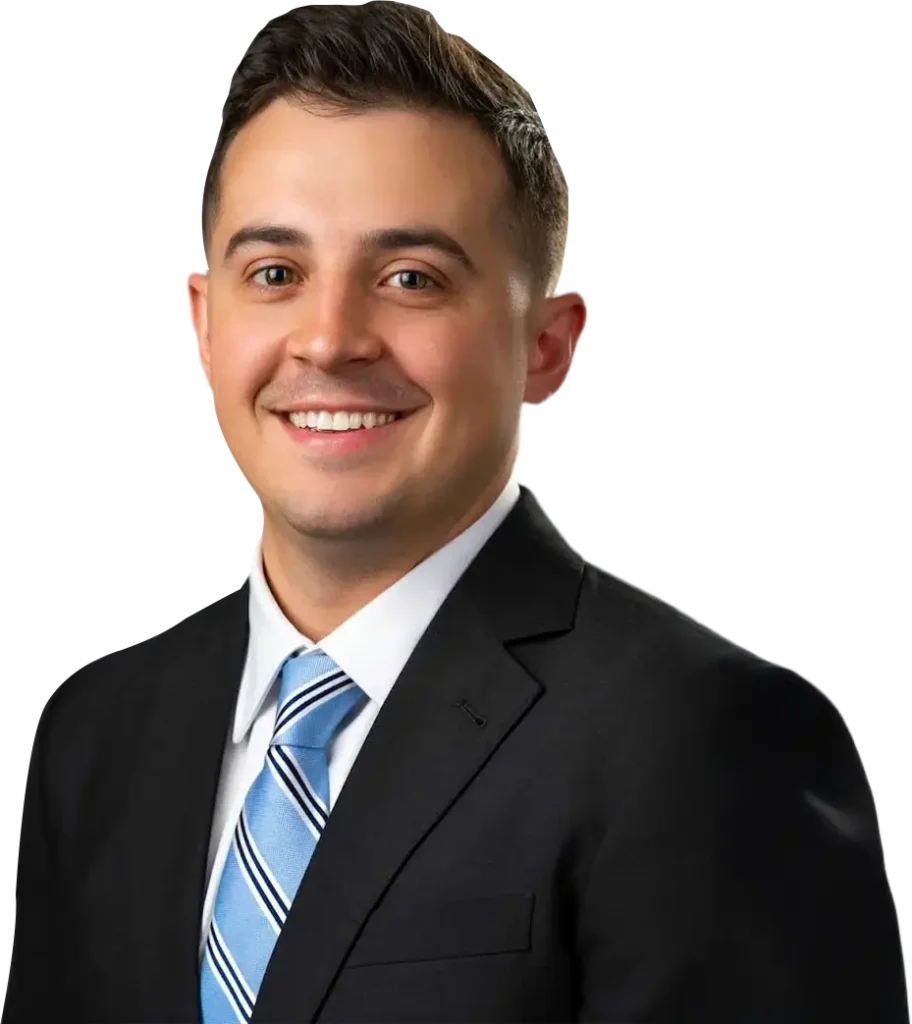
Daniel J. Larson stays involved in every case, and every message gets a same-day reply. We take only injured people as clients and never work for insurers, because the firm exists for people hurt through another person’s driving. Updates come in plain words from the first meeting on.
Anyone hurt in a car crash in Lowell should call before the proof fades. Early work preserves proof, keeps deadlines safe, and puts your version on record before the insurer’s. Every week counts when video and witnesses are involved.
What our clients say

Clear answers and same-day calls are why injured drivers come to our firm.
- We handle car crash injury claims for injured clients across Lowell and the surrounding area.
- We deal with the insurers directly so you are not pressured into an early, low settlement.
- We move quickly to preserve the evidence that proves both fault and the full extent of the harm.
- We know the Massachusetts rules that shape these claims and the ways insurers try to limit them.
- We build each claim on medical proof and documentation, not on a rushed call with an adjuster.
- No fee unless we win your case
- No upfront costs
- Direct attorney access throughout
- Free, no-pressure case review


Your policy and the careless driver's policy each pay a different part of the crash costs.
Money for early treatment comes out of the car insurance you bought, even if the crash was partly your doing. It also replaces a large share of lost wages, until a fixed cap is reached. For people with a health plan, the auto policy may cover only the first part of the medical bills before the health plan takes over.
Tell your own insurer about the crash quickly, and send in the claim forms it asks for. Late forms can slow payments, and the insurer may send you to a doctor it picks. Our office manages those forms so the early bills keep getting paid.
Suing the careless driver for pain requires an injury that meets a set test. Treatment bills above a set level satisfy it, and so do a fracture, permanent scarring, lost eyesight or hearing, or an amputation. A death also meets it.
Write down each doctor visit, the miles you drive to treatment, and every missed workday in one notebook. The auto insurer will want these details, and a clear list speeds up payment. Later on, the notebook becomes proof for the claim against the other motorist.
Past that line, you may ask for physical pain, the daily activities you lost, and the bills still ahead. Before that line, your own coverage handles most money losses. Where you stand against that line shapes every later step.
Riding without a seat belt cannot be used to cut your claim. Insurers sometimes hint that it can, but that argument has no place in a car injury case here. Buckling up is still wise, but leaving it off never lowers what the careless driver owes you.
Optional medical payments coverage is part of some policies. Deductibles and co-pays the basic benefits leave behind may be covered by it. Your policy’s summary page shows each benefit you paid for, and we go over every line of it.
Sometimes both drivers made mistakes. Recovery remains open so long as the other driver was equally careless or more, though your share of blame lowers the award. If more than half the blame falls on you, the claim against the other side ends.
Proving the injury crossed the line takes more than bills. Imaging, scan results, and treating doctors’ notes make the fracture, the scar, or the lasting damage plain. We gather those records early so the insurer cannot argue the line was never met.
Uninsured coverage comes built into every auto policy sold here. It pays your injury claim when the careless driver carried nothing or drove away. Underinsured coverage is optional, and it helps when the other driver’s limits run out. A relative who shares your home may carry coverage that applies too.
Car owners can answer for crashes caused by someone they let borrow the car. Someone driving for work when the crash happened can make the employer answer as well. Each added party can bring more insurance into play.
Serious injuries ripple through a whole household. The spouse and children of someone badly hurt have a right to seek payment for the lost companionship at home. That claim runs beside yours and adds to the careless driver’s bill.
After a release is signed, the claim is over for good. A setback months later cannot be added back in. Settlement talk waits until the doctors can say how full the recovery will be.
A child’s settlement can require a judge’s approval before any money changes hands. The judge checks that the amount is fair and makes sure the funds are protected for the child. We guide parents through that step.
Adjusters for the other driver often want your account on tape during that first week. Declining is allowed, because a rushed reply may be quoted in ways you never meant. We can take those calls instead, so rest and recovery come first.
Drivers visiting from other states face the same fault rules here as local drivers. Their insurers must deal with the claim as any local insurer would. Distant insurers sometimes move slowly, so we keep pressing them for answers.
Within five days of any crash that hurts someone, the drivers must send in a written report. Police reports and tickets help show fault, but they do not decide it. Tickets can be fought in traffic court, and the injury case is decided separately.
A three-year limit applies to most crash injury suits. Young victims generally get more time, since the clock often starts at eighteen. Public bodies blamed for a road defect must receive notice far sooner.
Loved ones of someone killed on the road can bring a case in the estate’s name against the careless motorist. That case also has a three-year limit in most situations, and it can reach burial costs, the income the family counted on, and lost companionship.
Old mill streets and busy highway ramps see many car crashes each year.
State crash records place this city among the busiest for intersection collisions. Many of its corners were laid out for mill workers on foot, not for today’s traffic. Blocked views, sharp angles, and signals spaced only yards apart leave drivers a split second to decide.
Downtown traffic moves through a maze of one-way loops. Visitors miss a turn and swing across lanes to correct it, and locals who know the route move fast around them. Side impacts and lane-change crashes are common in that grid.
Crossings over the water have no shoulder and little space between lanes. Late braking or a drift on a bridge leaves no escape route. Backups at the ends of these crossings set up chain collisions during rush hour.
The highway connector and its ramps carry fast commuter traffic into city streets. Drivers leaving the ramps often keep highway speed too long, and drivers entering them merge into gaps that close quickly. Collisions at these ramps often cause serious injuries.
Students add young drivers, cyclists, and walkers to the traffic near campus. Move-in and move-out weeks bring heavy traffic, with drivers new to the city circling for parking. Distraction and hurried turns cause many of the crashes near campus.
In older neighborhoods, parked cars take up both sides of slim streets. Oncoming drivers have to take turns squeezing by, while a car inching out of a space stays hidden until the last moment. Kids and pets can appear from behind a parked van in a split second.
Winter snowbanks narrow these streets even further. Plowed banks hide the view at corners, and drivers must slow down to match. Speed that suits a dry day can be careless on a snowy one, and drivers must slow to match the road.
Shopping strips toward the city line have a driveway every few yards. Drivers turning in and out cross several lanes of traffic, often while watching for a gap on the far side. Skipping a full look before pulling out is a clear mistake by that driver.
Concerts and games downtown push thousands of cars into a few blocks together. Drivers hunting for parking stop short, pull U-turns, and swing into spaces without warning. Crowds walking to and from the venue add to the risk, especially after dark.
Warehouses and converted mill buildings keep a steady flow of trucks and vans on nearby streets. They double-park, back into loading areas, and make wide swings on streets built for smaller vehicles. Crashes with a work truck can bring the truck’s owner and its insurer into your case.
Traffic near the commuter train station surges at the same times each morning and evening. Commuters racing to catch a train slide through stop signs and cut corners, and some let passengers out without pulling over. Rushing to make a schedule is never an excuse for careless driving.
School zones slow traffic twice a day. Drivers who ignore the lower limit or a crossing guard’s signal put children and parents at risk, and rear-end collisions pile up behind buses and pickup lines. Posted signs and school hours show what any careful driver should have expected.
Every crash site here holds evidence. Traffic signals keep timing records, homes and shops nearby often have cameras, and repair crews keep logs of road work. Our team gathers it early, before it gets erased, and we stand where each driver stood to check the view.
Our knowledge of these streets lets us lay out the crash clearly, so the other side cannot hide behind a vague story. When the scene is clear to them, the careless driver’s excuses lose their weight. Photos taken from the driver’s seat height often show what the careless driver missed.
A strong crash claim covers medical bills, missed pay, and daily pain.
When the auto benefits are exhausted, remaining medical bills shift onto the at-fault motorist’s coverage. That includes surgery, injections, physical therapy, and prescriptions, plus care your doctors expect you will need later. Health plan co-pays and deductibles you paid yourself belong in the total too.
The auto benefits cover only part of lost wages, and only up to a cap. Whatever those benefits leave unpaid can be claimed from the careless driver. Returning to your old trade may not be possible, and in that case the claim counts the lower pay ahead. Self-employed people can prove the loss with tax returns, invoices, and bank records.
Stiff mornings, broken sleep, nerves at every green light, and skipped family trips belong on the at-fault motorist’s tab. They join the claim once the injury crosses the set line. A pain journal, family observations, and the medical chart make those harms concrete, and our explainer on valuing pain goes deeper.
Seat belts and airbags save lives, yet the jolt they absorb still strains necks, backs, shoulders, and knees. Striking a side window or an airbag may leave a brain injury that changes thinking and mood, and the worst crashes can cause spinal cord damage. Treating doctors help us describe each injury and the treatment it calls for.
A few crashes leave a driver or rider relying on others for daily needs long after the hospital stay. Where life-changing injuries are at stake, outside experts price future care, equipment, and missed earnings.
Scars from glass, burns from an airbag, and lasting marks count as separate losses, and a lasting scar can also open the door to payment for pain.
Costs tied to the car itself add up. Tow bills, storage fees, a rental, and a replacement child seat should be paid by the at-fault side, since a child seat should be replaced after any serious crash. A folder of receipts keeps these costs from getting lost.
Help you had to hire while healing also counts. Cleaning, yard work, snow removal, and extra child care become real costs when an injury stops you from doing them yourself. Mileage to medical visits may be added too.
Fear of driving and trouble sleeping after a crash are common and treatable. Counseling costs go into the claim next to physical care, and a counselor’s notes help show the harm.
Some permanent injuries require work on the house, such as a wheelchair ramp, rails beside the tub, or a bedroom moved downstairs. Each change goes into the demand, supported by a therapist’s written advice.
Right away, our team pulls the police file, scene photos, and bystander names, and we ask nearby homes and shops to hold their video. Throughout treatment, every bill and chart note goes into one file, and your doctors hear from us regularly. When recovery reaches a plateau, a written demand listing every loss goes to the insurer, and you learn how the figure was reached before choosing anything.
An insurance company that stalls or offers too little faces a lawsuit and a trial date. Most cases still end in a settlement, yet offers tend to rise when a trial date draws near.
Crash bills paid by your health plan may lead the plan to seek repayment out of the settlement. We bargain that claim down so more of the money reaches you. Clearing those claims before the case closes prevents last-minute surprises.
Medical Bills and Treatment Costs
Lost Wages and Earning Capacity
Wrongful Death Claims
Pain and Suffering
Three early actions help an injured driver build a stronger case.
Get quick medical care and evidence
Get medical care right away, even if you feel fine, because injuries can appear later. Keep records, photos, and the names of those involved, and follow the treatment plan your doctors provide to you.
Talk to Larson Law at no cost today
Reach out for one free, private conversation. We review what happened, explain the benefits you are owed under state law, and tell you exactly what to preserve before the insurer can dispute it later.
We build and then pursue your claim
We build the evidence, deal with insurers, and press for the full value of your injuries, from medical care to lost wages, so you can focus on healing while we handle the fight over what you are owed.
- 5.0 stars out of 100+ reviews
Before you sign any insurance form, call a Lowell car accident lawyer.
One short call gets things started, and we will ask about the crash location, each driver’s actions, and the treatment you are getting now. Our office then identifies every policy in play, fills out the paperwork for your own insurer, and secures the photos, video, and witness names while the trail is fresh. Families mourning someone lost in a crash may also ask us to take the death case.
By submitting this form, you acknowledge that doing so does not create an attorney-client relationship. Please do not include confidential information. Contacting us does not obligate you to retain our services.
Our Clients.


Our Practice Areas.
Larson Law helps injured people and families across Massachusetts after a serious accident. If you were hurt by someone else’s carelessness in Boston, we are ready to listen and explain your options at no cost.
Injured drivers and passengers often raise these common questions.
Lowell has the most dangerous intersections in Massachusetts. How does that affect my claim?
Lowell’s intersection dangers mean crashes here often involve disputed right-of-way and signal timing. That local risk does not decide your claim, but it shapes the evidence, and documenting the specific intersection, signals, and sightlines quickly is often what proves how the crash happened and who was at fault.
How does Massachusetts no-fault PIP insurance work after a Lowell car accident?
Massachusetts PIP coverage pays your initial medical bills and part of your lost wages after a crash, regardless of who was at fault, up to its limits. It is a first layer of protection, but a serious injury quickly exceeds it, which is why a claim against the at-fault driver still matters.
What if I was partly at fault for the crash in Lowell?
Massachusetts uses comparative negligence, so being partly at fault does not bar your claim. Your recovery is reduced by your share of fault, and you can still recover as long as you were not more than half responsible. We work to answer attempts to shift blame unfairly onto you.
My accident happened on Pawtucket Boulevard. What makes that road significant for my claim?
Pawtucket Boulevard carries heavy, fast traffic along the river, and crashes there often involve speed, turning movements, and limited sightlines. Those conditions matter because they shape fault and the evidence, and knowing the road helps us gather the right proof, from camera footage to witness accounts, before it disappears.
What should I do right after a car accident in Lowell?
Get medical care right away, even if you feel fine, because injuries often surface later. Call the police, photograph the scene and vehicles, get the other driver’s information and any witnesses, and report the crash. Then speak with a lawyer before giving a statement to the other driver’s insurer.
What if the at-fault driver in Lowell had no insurance or not enough?
You may still recover. If the at-fault driver had no insurance or too little, your own uninsured or underinsured motorist coverage may apply, and there may be other responsible parties. We review every available source of coverage so a careless, underinsured driver does not leave you without recovery.
How long do I have to file a car accident claim in Lowell?
In Massachusetts you generally have three years from the date of the crash to file a car accident lawsuit. Waiting risks losing evidence and can bar your claim entirely, so it is best to speak with a lawyer early rather than let the deadline draw near.
Are there specific Lowell intersections that are most dangerous and would strengthen my claim?
Some Lowell intersections see far more crashes than others, and a known history of collisions or poor design can support a claim by showing a hazard was foreseeable. We obtain crash data and municipal records for the location so that documented pattern, where it exists, strengthens your case.
Where are Lowell car accident cases filed in court?
Depending on the amount in dispute, a Lowell car accident case is typically filed in the Lowell District Court or in Middlesex Superior Court, which also sits in Lowell. Most claims settle before trial, but knowing the right court and its procedures is part of preparing a case properly.
Does Larson Law handle car accident cases across Middlesex County beyond Lowell?
Yes. We represent injured drivers, passengers, and pedestrians throughout Lowell and the wider Middlesex County and Merrimack Valley region. Wherever the crash happened, the same approach applies: preserve the evidence, deal with the insurers, and pursue the full value of the injury on your behalf.
I was a pedestrian hit by a car in Lowell. Do I have a claim?
Very likely. A pedestrian struck by a car in Lowell can pursue a claim against the driver, and PIP coverage may also apply. These injuries are often severe, so documenting the crash, the driver’s fault, and the full extent of your injuries early is essential to a full recovery.
How much does an attorney cost?
Nothing up front. We work on a contingency fee, so there is no charge unless we recover for you, and the first consultation is free. This lets you get strong representation immediately, without any out-of-pocket cost while your medical bills are mounting.
Results Disclaimer: Past case results, settlements, and verdicts mentioned on this website do not guarantee or predict a similar outcome in any future case. Every case is unique and depends on its own facts and legal issues.