
Insurers photograph the bumper and argue from it, because light damage is a cheap thing to point at. What your body actually took is proved by your own medical record, not the car.
CHARLESTOWN CAR ACCIDENT LAWYER
A minor crash can leave you with a serious injury.
- No fee unless we win
- Same-day response
- Free case review
As Seen On:











The early money in a Charlestown car accident claim is the small money.
A car crash upends an ordinary day in seconds, and in the hours that follow most people are worried about their injuries, their car, and how they will get to work, not about insurance rules. Yet the decisions made in those first days, what you say to an adjuster, whether the injury is documented, whether the evidence is preserved, often shape what the claim is ultimately worth.
The reason is structural. Your own policy starts paying medical bills and lost wages straight away, whoever caused the crash, which is a genuine relief and also a trap. That early cover is quick but capped. The compensation that actually matches a serious injury, the part covering real pain, a long recovery and lasting effects, comes only from the separate claim against the at-fault driver, and the insurer on that side has every reason to keep it small.
That gap is where a lawyer earns their place. Recovering everything the law allows takes documentation, timing, and a firm response to an insurer built to minimise claims. Our team handles that side of it, so a hurt person can focus on healing rather than fighting, the same approach we bring to car crashes in Boston and just over the bridge in Somerville.
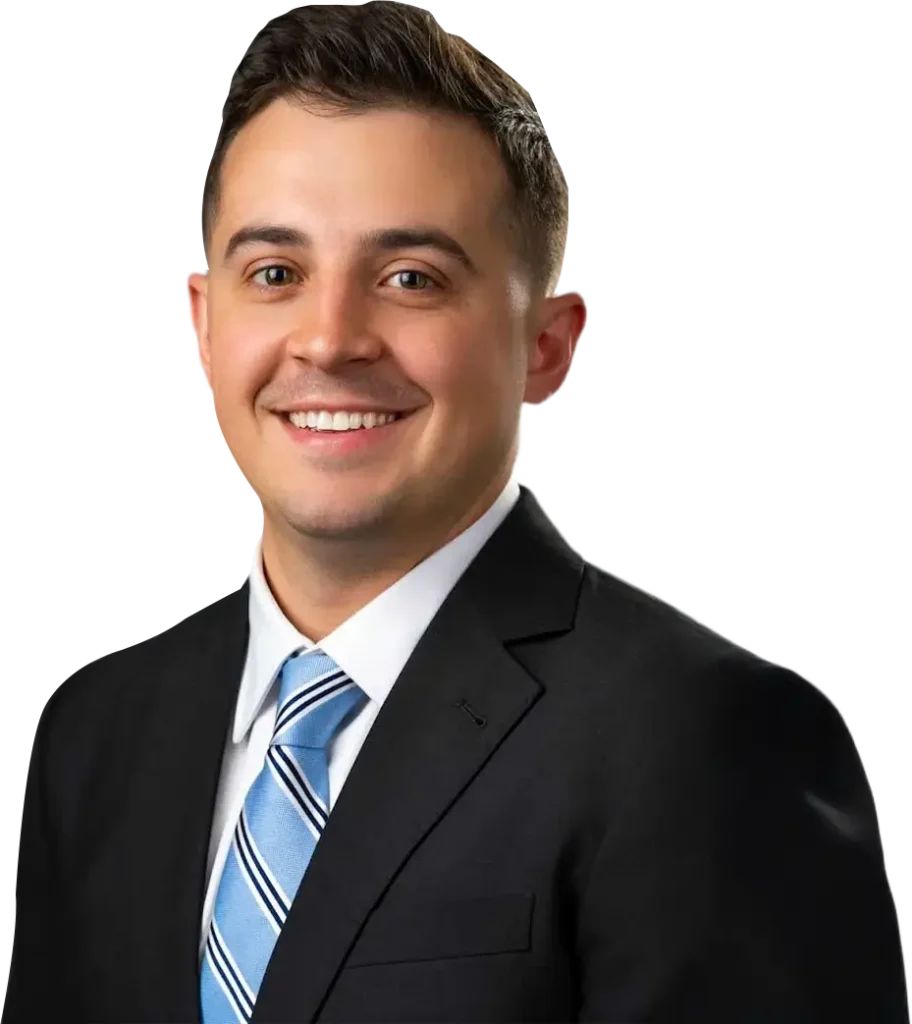
Cases at the firm are handled hands-on by Daniel J. Larson. From the first conversation you work directly with a lawyer who will explain, in plain terms, how the two layers of cover work, what your claim may be worth, and what to do and avoid while it is pending.
The second claim does not open automatically. There is a threshold, measured by the cost of treatment or by the kind of injury sustained, and a genuine injury usually clears it without difficulty. Knowing which side of that line a case sits on changes how it is documented from the first week rather than the first argument.
A claim is also not about blame and confrontation. In practice it is about proof: a clear record of how the crash happened, medical documentation tying the injury to the collision, and an accurate accounting of the losses. Where that record is built early, most claims resolve through negotiation, without a courtroom, and the injured person is free to focus on getting better rather than arguing with an adjuster.
The timing of those two claims is what catches people out. The early cover is still paying while the evidence for the second claim quietly disappears, so nothing feels urgent until the point at which it is already too late to fix. Our wider injury practice across Boston sees the same pattern in every kind of collision.
What our clients say
Jeffrey K.
★★★★★
Attorney Larson or Dan as I refer to him now is a phenomenal lawyer who has turned into a friend. He is knowledgeable, smart, extremely thorough and aggressive. He knows the law and delivers fantastic results in a timely fashion. I consider him a great partner and someone I always want to have in my court/corner when I need legal guidance, and support.
Samantha N.
★★★★★
I can’t say enough wonderful things about Dan and his personal injury firm. I’ve seen firsthand how dedicated, knowledgeable, and compassionate he is. Dan is the type of car accident attorney who truly goes above and beyond—he communicates clearly, fights hard for his clients, and genuinely cares about getting them the best possible results.
Jamal B.
★★★★★
Dan and the whole team at Larson Law were super helpful and informative, they were able to walk me through the whole process of my case and they did everything to make sure that I received proper compensation for the incident that happened to me. And I am glad to say that I am very satisfied with the services provided to me by Larson Law. Great team!
Megan A.
★★★★★
Dan was amazing to work with after my car accident. He kept me updated the whole time, explained everything clearly, and always responded quickly. Great communication and a great outcome—highly recommend!
Johnny M.
★★★★★
Dan helped me with a car accident and it was so easy and he is very communicative and reallly helps you out with all he can! Thanks again Dan!
Sina A.
★★★★★
Dan is the Man. He helped me recover from my car accident and the communication and whole process was smooth sailing. Thank you Dan. God speed.
Lee L.
★★★★★
Attorney Larson of Larson Law Did a great job with my case.. I was in a auto accident in 2024 Attorney Larson took my personal injury case and in 2025 I received a maximum payout. Anytime I had a question or concern he was always available.

Most of the value sits in the claim nobody mentions.
Most of the value sits in the claim nobody mentions.
- We handle the insurer and the paperwork for you, so you are not negotiating a claim while trying to heal.
- We document the full injury with your treating doctors, so a serious crash is not dismissed as minor.
- We identify every coverage that applies, your PIP, the at-fault driver, and your own uninsured protection.
- We know how Massachusetts values a serious car injury, and we build the record to prove it.
- We move fast to preserve the crash evidence, the report, the photos, and any camera footage.
- No fee unless we win
- Free, private case review
- Same-day response
- Honest advice from day one


How hurt you are decides how far the claim goes.
Everything starts the same way whatever the injury. Your own policy pays reasonable medical bills and part of any lost wages straight after a crash, whoever caused it, up to a set limit. Care and income begin immediately, before fault is decided by anyone, which is why the first task after a crash is getting the injury properly documented so those payments are not refused.
Two details about the early cover are worth knowing because they catch people out. It can be coordinated with health insurance, which changes who pays what and in what order, and the limit is shared across the whole of the treatment rather than renewed. A course of physiotherapy that seems modest week by week can exhaust it before anyone has discussed the second claim at all.
What happens next depends entirely on how badly you were hurt. That early cover is capped and it pays nothing at all for pain, for a long recovery, or for lasting effects. Reaching the at-fault driver for any of that requires the injury to pass a set point, measured either by what the treatment costs or by the kind of harm done. A fracture, permanent disfigurement, or a substantial loss of function opens it immediately, whatever the bills say.
That point is the whole hinge of a car case. Below it, a claim is an administrative exercise conducted with your own insurer. Above it, there is a second claim against the driver who caused the crash, and that is where pain and suffering, and the real value of a serious injury, actually live. Whether a case crosses, and how convincingly the medical record shows it, decides more than any argument about fault.
There is a related trap in how the medical record reads. Treatment that stops early, because the pain eased or because work got busy, is later presented as evidence that the injury was minor. Gaps in treatment are argued about far more often than the treatment itself, and they are almost always avoidable if somebody says so at the time.
Fault still matters, but less than people fear. Sharing some of the blame reduces a recovery by that share and only ends the claim if you carried more than half of it. Insurers routinely overstate an injured person’s role to cut what they pay, and answering that with the police report, the physical evidence and witness accounts is frequently the difference between a fair recovery and a discounted one.
A crash caused by an uninsured driver, or by one who left the scene, is not the end of the road either. Your own uninsured and underinsured cover steps in where the responsible driver has no insurance or too little of it, and a policy held by a relative in the same household can sometimes be reached as well. Finding every policy that applies is part of the work, and nobody volunteers the ones you did not ask about.
Timing sits underneath all of it. A claim of this kind generally has to be brought within three years, and a claim involving a publicly owned vehicle carries a far shorter notice deadline. The practical deadline is shorter still, because the vehicle data, the scene and any camera footage disappear within weeks, which is why a careful accounting of every present and future cost begins the moment a file opens.
What ties these together is that the early cover keeps paying while all of it is happening. Nothing feels urgent. The bills are being met, the calls are polite, and the evidence for the claim that actually matters is quietly going. Recognising early that a case has outgrown the first layer is what gets it valued and handled properly
A work vehicle usually means a bigger policy.
Most crashes happen on roads people use every day, in ordinary traffic, at an ordinary hour. Everyone gets out, the damage looks manageable, details are exchanged quickly, and nobody treats it as the serious event it later turns out to have been. Almost nobody is taking notes, and almost nobody should be expected to.
Very little of what decides a claim has to be gathered by the person who was hurt. Who the other driver was insured by, whether the vehicle belonged to them or to an employer, and whether they were working at the time are all established afterward, from the police report, the registration, the insurer’s own disclosures and the policies themselves. That is ordinary work on a file, not something anyone needs to have thought of at the roadside.
It matters because of what sits behind it. A delivery van, a work pickup, a rideshare car, a rental or a vehicle registered to a business usually carries far more insurance than a private driver does. Where somebody was driving for work, that is often the difference between a policy that covers a serious injury and one that runs out partway through the treatment.
Where the crash happened decides what record now exists. A collision on a major road or a bridge approach may bring a different force and a more formal investigation, while one on a local street brings the city police and whatever nearby businesses or doorbell cameras happened to be pointing the right way. Each keeps records for a different period, and each has to be requested from whoever holds it, which is why claims are built on evidence rather than argument, and why it directly affects the income a serious injury costs you while you are out of work.
The kind of road points toward the likely defendant too. A rear-end collision in slow traffic, a merge collision at a highway ramp, and a pedestrian or cyclist struck near a school each raise different questions about fault, about which insurer responds, and about how serious the injury has to be before the at-fault driver can be reached at all.
Geography concentrates particular crashes in particular places, and it is worth knowing which kind you had. Heavy commuter traffic produces rear-end and merge collisions, where fault is usually clear and the argument moves straight to the injury. Tight residential streets lined with parked cars produce backing collisions and low-speed impacts, where the damage looks slight and the injury is doubted from the first phone call. Fast approaches turn a moment’s inattention into a severe wreck, where the question becomes whether any single policy is large enough to cover it.
The ordinary records go quickly, and that is the one real pressure. The police report, the position and damage of the vehicles, any photographs, camera footage and the data stored inside a modern vehicle together establish how the crash happened. Vehicles are repaired or written off within days and footage is overwritten on a routine cycle, so a request has to reach the right people early, whatever anyone has decided about the injury.
More than one party can share responsibility as well: another driver, an employer, or a company whose vehicle was involved. Finding each of them, and the insurance behind each, is often what covers the full cost of a serious injury rather than leaving it capped by a single inadequate policy.
One more thing worth saying plainly. A crash on a familiar road gets underplayed by everyone present, including the person who was hurt. Saying you are fine at the scene is the most natural response in the world, and it is repeated back months later as though it had been a medical opinion. It is answered with the medical record, not with an argument about what you said.
The point of all of this is that a case does not depend on what somebody managed to notice while they were hurt and shaken. It depends on the questions being asked in the days afterward, by someone whose job that is.
Your medical record is doing the arguing for you.
Nobody in this process ever meets you and decides what you have lost. What they read is the medical record, and whatever is not written in it effectively did not happen.
That is why a claim accounts for the emergency and follow-up care, the surgery and rehabilitation a real injury can require, the income lost while you cannot work, and the pain and the lasting disruption a collision leaves behind. The early cover pays a first slice of the bills and a portion of lost wages. Everything beyond that comes from the claim against the at-fault driver, and a full and careful accounting of what is owed is exactly what an insurer works hardest to minimise.
The injuries that cost most are the ones that linger: a back or neck injury, a serious fracture, a head injury from a hard impact. With those, the gap between a first offer and what the injury will actually cost, in future treatment and in lost earning power, can be enormous. Closing it takes the medical record, the treating physicians, and sometimes expert evidence about what the years ahead will require.
Earning power is the part people account for last and feel longest. Time off work is easy enough to add up. Harder, and usually larger, is what changes afterward: a job involving lifting or driving that is no longer comfortable, shifts that cannot be taken, a career paused during treatment and resumed on worse terms. That gap belongs in the claim alongside the wages already gone.
There will also be a doctor on the other side, and it is worth knowing that in advance. An insurer can arrange its own examination, and that report will tend to find the injury less serious, the recovery shorter, and the lasting effect smaller. It is answered with the treating physicians, the imaging and the consistency of the record over time, not with indignation.
Two practical things make the record better, and neither asks much. Telling each doctor about every symptom, including the ones that feel too minor to mention, keeps them in the file where they can be relied on later. And not stopping treatment early, because the pain eased or work got busy, avoids the single most common argument an insurer makes, which is that a gap in treatment proves the injury had resolved.
The adjuster is practised at the rest of it: a friendly early call, a quick low offer, and a recorded statement that fixes a version of events before the full injury is known. None of that is personal. It is what the role is for, and it is why the record has to be built properly while the treatment is still happening.
Where a crash involved more than one driver, or a company vehicle, more than one policy may apply, and reaching each of them can be the difference between a capped recovery and a full one. A serious injury should not be limited to whichever single minimum policy happens to be first in line.
A claim that proves fatal is handled differently again, and what a family can recover in those circumstances is set out separately.
None of this is work an injured person should be doing while still in treatment. Understanding what a claim involves, what coverage applies, and what the case may realistically be worth is what allows a decision to be made with the facts in hand rather than under pressure.
Medical Care and Future Treatment
Lost Wages and Earning Power
Pain, Suffering, and Disruption
Vehicle Damage and Costs
You can decline the recorded statement they ask for.
Get prompt care and a police report
Get checked by a doctor even if you feel only shaken, since some injuries surface later, and make sure the crash is reported so there is an official record. Photograph the vehicles and the full scene.
Be careful about what you tell them
Report the crash to your own insurer, but avoid giving a recorded statement to the other driver’s insurer, and do not accept a fast settlement before your injuries are fully known and well documented.
Speak to a lawyer before you settle
A quick offer often undervalues a serious injury and closes the claim for good, so before you sign any release or give any statement, a free review shows what your case is truly worth and protects it.
- 5.0 stars out of 100+ reviews
Nothing needs signing before a car accident lawyer reads it.
A release is the one document in this process that cannot be undone, and it is usually presented at the point when the least is known about how the injury will settle. A conversation with our team can set out which cover applies now, what the second claim would have to show, and what a serious injury tends to be worth once the treatment has run its course, so that whatever gets signed is signed with the whole picture in view rather than the first few weeks of it.
By submitting this form, you acknowledge that doing so does not create an attorney-client relationship. Please do not include confidential information. Contacting us does not obligate you to retain our services.
Our Clients.


Our Practice Areas.
Larson Law helps injured people and families across Massachusetts after a serious accident. If you were hurt by someone else’s carelessness in Boston, we are ready to listen and explain your options at no cost.
Most people apologise before asking about money.
How does Massachusetts no-fault PIP work after a Charlestown crash?
Massachusetts is a no-fault state, so your own policy’s PIP pays your first medical bills and part of your lost wages regardless of who caused the crash, usually up to $8,000. A serious injury lets you step beyond no-fault and pursue the at-fault driver for the full harm, including pain and suffering.
What if I was partly at fault for the crash?
You can still recover. Massachusetts comparative negligence lets you collect as long as you were not more than half at fault, with your award reduced by your share. Insurers often overstate a victim’s fault to pay less, and pushing back with the police report and the evidence is central to the case.
How long do I have to file a car accident claim?
A car-accident injury claim generally must be filed within three years of the crash, and a claim against a city or state vehicle carries a much shorter notice deadline. PIP has its own early deadline. Acting quickly protects all of them and keeps the evidence fresh.
What should I do right after a crash in Charlestown?
Get medical care and a police report, photograph the vehicles and the scene, and exchange insurance and contact details along with any witnesses. Report the crash to your own insurer, but avoid a recorded statement to the other driver’s insurer, and call a lawyer before accepting any offer.
What if the other driver had no insurance?
You are not out of options. Your own uninsured-motorist coverage steps in when an at-fault driver has no insurance or flees, and underinsured coverage adds to a policy that is too small. Identifying every applicable policy, including a resident relative’s, is part of what we do.
My crash was on I-93 or the Tobin Bridge. What is different?
A highway crash on I-93 or the Tobin Bridge usually brings State Police, who may complete a formal reconstruction, and higher speeds mean more serious injuries. A crash on a local Charlestown street brings the Boston Police and any nearby cameras. The setting changes the evidence, not your right to recover.
I was a pedestrian or cyclist hit by a car. Do I have a claim?
Yes. A pedestrian or cyclist struck by a car has a claim against the driver, with access to the driver’s liability coverage and sometimes PIP. These cases usually involve serious injuries that clearly cross the tort threshold, opening the door to full recovery for medical costs, lost income, and more.
The insurer offered a quick settlement. Should I take it?
Be careful. Insurers often offer a fast, low settlement before the full extent of an injury is known, and accepting it closes the claim for good. A free review of the offer against your actual and future losses shows whether it is anywhere near fair before you sign anything.
Where are Charlestown car accident cases filed?
Charlestown is in Suffolk County, so most cases are handled in the Suffolk County courts, with smaller claims in the Boston Municipal Court’s Charlestown Division and larger ones in Superior Court. Many resolve through insurance negotiation without a filing. Where a case belongs depends on its size and complexity.
What is my car accident claim worth?
It depends on the severity of your injuries and their lasting effect, not on an insurer’s first offer. A fair value accounts for medical care and future treatment, lost income and earning power, and the pain and disruption a serious crash causes. Crossing the tort threshold opens the full recovery.
Do I need a lawyer for a car accident claim?
For a serious injury, yes. No-fault, the tort threshold, and multiple coverages are easy to get wrong, and an insurer is practiced at paying less. Your own advocate documents the injury, identifies every policy, values the claim correctly, and lets you focus on healing.
What does hiring you cost?
Nothing upfront. These cases are handled on a contingency fee, so you owe no attorney fee unless we recover for you, and the first consultation is free. That lets you pursue the full value of your claim without any financial risk of your own.
Results Disclaimer: Past case results, settlements, and verdicts mentioned on this website do not guarantee or predict a similar outcome in any future case. Every case is unique and depends on its own facts and legal issues.