
Brockton Pedestrian Accident Lawyer
Drivers turning into store driveways often cut across people walking.
Before crossing a sidewalk, every driver must look for people walking and let them pass first. Cameras over shop entrances often capture that turn, revealing who truly moved first.
- No fee unless we win
- Same-day response
- Free case review
As Seen On:












Early medical bills get paid while fault remains disputed.
Drivers in this city must watch for people walking at every point along their route, not only at painted crossings. Shop doorways, bus shelters and plaza exits bring cars and walkers close together dozens of times each hour. Motorists glancing only at oncoming traffic before turning can easily miss someone stepping across the driveway. That missed glance usually explains the collision far better than any step the walker took. Holding the driver to that duty anchors every claim this firm brings for injured walkers.
Emergency room statements start piling up within days, long before fault gets resolved by anyone. Surprisingly, coverage purchased for your car also pays early medical bills, up to a fixed limit, after injuries on foot. Walkers who own no car can often claim that benefit through coverage bought by a relative sharing their address. Lacking both, walkers usually turn to insurance on the striking vehicle for those early treatment costs. Remaining treatment charges shift onto health insurance, and the case against the negligent motorist proceeds independently.
Proof along the commercial strip vanishes fast, which makes those first few days after a collision especially valuable. Cameras mounted over store doors, gas pumps and drive-through windows often catch turning cars from overhead. Many businesses overwrite those recordings within days unless someone asks, in writing, that they be preserved. Witnesses tend to be shoppers, bus riders or clerks on break, and they scatter before police finish their report. Collecting names, recordings and the officer’s report early gives the claim solid footing before memories blur.
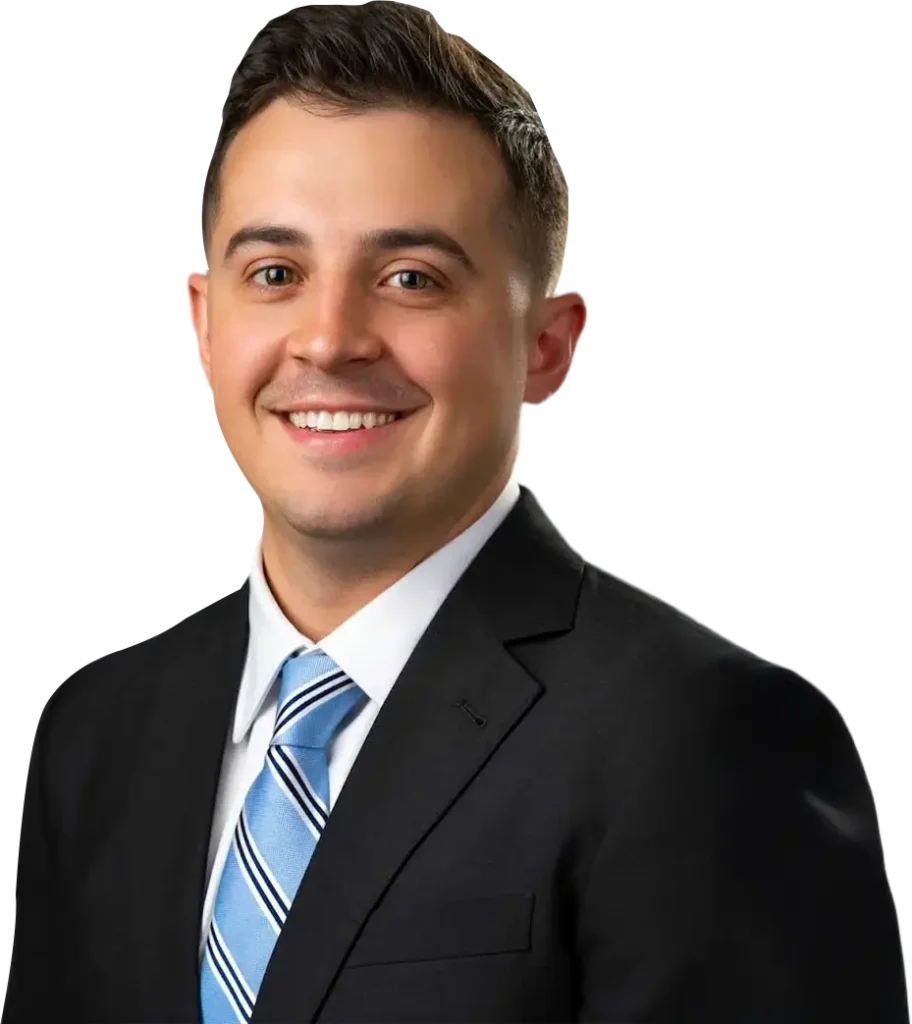
Courtroom-ready preparation shapes how Daniel J. Larson approaches disputed pedestrian collisions from the earliest interview onward. Clients describe what happened once, after which the attorney fields every insurance call personally. Bruises, casts and stitches get photographed early, and those pictures join the medical records in one organized file. Negotiations open only once doctors can predict how long these injuries will disrupt work and ordinary routines.
Similar rules govern the larger city northward, and our coverage of walkers injured on those busier streets explains them. This page stays focused on the bus terminal, the rail platforms, the mall lots and the long commercial strip here. Traffic patterns in this city differ, with wide multi-lane roads and long stretches between marked crossings. Those gaps push many walkers to cross where the bus actually stops rather than hundreds of feet away. Insurers then try to brand that ordinary choice as carelessness, and the claim must answer them.
Blame can extend past the motorist, particularly when a business laid out its lot or driveway poorly. Employers whose delivery vans or work trucks strike walkers usually answer for their drivers during working hours. Drivers working for rideshare apps or taxi companies hold separate commercial coverage while transporting passengers or awaiting trips. Identifying each company involved early widens the insurance available for serious, lasting injuries.
What our clients say

Clients avoid settling before their injuries are fully known.
- We handle pedestrian injury claims against drivers and their insurers across Brockton
- We prove the driver was at fault, even when they try to blame the person on foot
- We move fast to secure the crash report, the vehicle data, and any nearby video footage
- We push back on the quick, low offers insurers make before your injuries are fully known
- Attorney Daniel J. Larson prepares every pedestrian case as if it may have to go to trial
- No fee unless we win
- Free, private case review
- Same-day response
- Honest advice from day one


Store owners sometimes share responsibility for dark, confusing driveways.
Motorists owe pedestrians constant attention, whether those pedestrians cross a road, a store driveway or a lot aisle. Signals, stop lines and marked crossings set specific moments when a driver must stop and let walkers pass. Beyond those markings, drivers still must slow down, look ahead and avoid striking anyone they could reasonably see. Separately, our page on drivers who do not let others go first explains how that duty works between vehicles. Speed, distraction and poor lookout are the usual ways drivers break this duty around stores and transit shelters.
Store driveways make drivers cross the walkway.
Drivers pulling into a store or plaza from the road must cross the sidewalk, where walkers already have priority. Leaving the lot, drivers must stop before the walkway and check both directions before nosing toward traffic. Many instead watch only for a gap in the road, rolling across the sidewalk with their gaze fixed leftward. Walkers coming from the right are especially exposed, because the driver’s head is turned left toward oncoming cars. Collisions like these happen constantly along the long commercial strip running through this city.
Parking lots create a different danger, because drivers reverse out of spaces with limited views behind them. Shoppers walking behind parked vans and pickup trucks may stay hidden until the reversing car is already moving. Private property brings extra wrinkles, which a guide to collisions inside store and mall lots untangles. Lot collisions often happen at low speed, yet a reversing bumper can still break a hip or knock someone onto pavement.
Restaurants and pharmacies often wrap drive-through lanes around their buildings, cutting across the path walkers take to the door. Drivers focused on the menu board or the pickup window frequently creep forward without checking who is crossing. Exits from those lanes usually feed straight into a sidewalk or a busy road, adding another blind turn. Employees carrying orders out to cars also walk through these lanes during busy shifts. Striking anyone in a drive-through lane breaches the same duty to watch that applies on any public road.
Businesses that own or manage these lots can share responsibility when the layout itself invites collisions. Burned-out lights, faded crosswalk paint, missing stop signs and hedges blocking sight lines all make collisions more likely. Owners and managers must keep lots reasonably safe for customers, and that duty includes lighting and traffic flow. Maintenance logs, complaint records and earlier incident reports can prove management knew and still did nothing. Bringing the owner’s insurance into the claim can matter greatly once injuries prove severe.
Walkers have options when the driver lacks insurance.
Wide roads in this city often space marked crossings far apart, so walkers frequently cross near their bus stop. Crossing between marked crossings never gives a motorist permission to strike someone walking. A walker outside a crosswalk must let vehicles pass, yet drivers must still keep a lookout and brake when someone appears. Claim handlers frequently overstate where the walker crossed while ignoring the driver’s speed or phone use. Lighting, distance, the driver’s view and the walker’s clothing all help show what an attentive motorist would have spotted.
Mistakes by the walker rarely end the claim, because blame gets divided between everyone involved. A jury compares the conduct of both, and the walker’s award shrinks by whatever share of blame is assigned. Only a finding that the walker bore more blame than the driver cuts off payment entirely. Fuller treatment of that rule sits on a page explaining how shared blame affects recovery. Careful evidence keeps the walker’s share small, which protects money needed for treatment and missed wages.
Drivers sometimes leave after striking someone, particularly at night along dark stretches near warehouses and fast food lots. Reporting the collision to police promptly preserves both the criminal investigation and the right to seek payment from your insurer. Store cameras, broken parts and paint fragments sometimes identify the vehicle days or weeks later. Unidentified drivers raise their own questions, which a page on drivers who flee after striking someone answers.
Each auto policy sold here includes protection against uninsured drivers, and that protection follows you while walking. It also applies when a fleeing driver is never identified, standing in for the missing driver’s insurance. Walkers without their own car may reach the same protection through a relative’s policy covering their household. Claims under your own policy still demand evidence that the other motorist drove carelessly and caused genuine harm. Your insurance company then stands in the driver’s shoes and often argues against you, so preparation matters equally.
Commuters cross wide, busy roads near terminals, malls and warehouses.
This working city lies about twenty miles south of the capital, and many people walk to jobs, stores and buses. Wide roads with four or more lanes carry heavy traffic through downtown and out toward highway ramps on the outskirts. Marked crossings along those roads can sit far apart, leaving long stretches where walkers have no painted path. Drivers on these roads often travel faster than the posted limit, especially at night when traffic thins out. Signals at major crossings give walkers limited time, and turning drivers frequently cut into that time. Signal and turning disputes, common at these junctions, are explained on a page covering collisions where roads meet.
Stretching across town, a long commercial strip holds plazas, gas stations, banks and drive-through restaurants. Almost every business along it has its own driveway, so cars cross the sidewalk dozens of times per block. The shopping mall on the city’s edge adds acres of parking lots, ring roads and bus stops near the entrances. Shoppers crossing from the bus stop or a distant space must weave through moving cars before reaching the entrance. Holiday seasons and weekend sales crowd these lots with distracted drivers hunting for spaces. Many collisions handled from this city begin in exactly these places.
Two hospitals pull patients, visitors and nurses across busy roads during every shift, including overnight. The city’s public high school ranks among the largest in the region, and thousands of students arrive and leave on foot. Crowds also gather at the fairground and the ballpark, where games and events end with walkers and cars leaving together. Lots at these venues empty quickly, and drivers eager to leave often ignore attendants and walkers. Those injured farther north, inside the capital’s biggest neighborhood, should consult our guide for that neighborhood’s injured walkers. Here, attention stays on the venues, plazas and transit stops of this city.
Transit riders and warehouse crews cross unlit roads.
A central bus terminal downtown serves routes reaching every part of the city and several neighboring towns. Riders leaving buses often cross the surrounding streets immediately, sometimes stepping out ahead of the bus itself. Motorists passing a stopped bus must expect people on foot and slow down rather than speeding around it. Buses leaving the curb can also strike riders who are still walking alongside them. Transit operators carry their own insurance and may follow their own claim rules, which makes early action important. Video from buses and terminal cameras can reveal exactly how the collision unfolded.
Three commuter rail stops serve this city, and morning and evening trains release crowds of walkers within minutes. Arriving trains empty quickly, and riders rushing toward parked cars often cut across driveways outside marked paths. Drivers picking up passengers stop suddenly, pull into crosswalks and make quick turns that catch walkers off guard. Lighting around some stations is weak in winter, when evening trains arrive after dark. Station driveways and nearby rail crossings add further turning traffic to an already crowded scene. Each station’s layout shapes what an approaching motorist could see and how early that view opened.
Night shifts at warehouses on the city’s edges send many workers walking from bus stops along dark roads. Sidewalks are missing along several of those roads, forcing workers onto the shoulder while trucks pass at speed. Nighttime motorists there must still scan for people walking, using headlights and slowing whenever visibility drops. Commercial trucks heading to loading docks share these roads, and their drivers carry heavier duties and larger insurance policies. Reflective clothing helps, but its absence never excuses a motorist who ignored what lay ahead. Shift records and bus schedules help confirm why a worker was walking there so late.
Payroll stubs and therapy charts reveal everything recovery costs.
Bumpers usually strike a walker at leg height, so the lower legs take the first and hardest blow. Shinbone fractures, along with breaks of the thinner bone beside it, often require surgery and metal hardware. Healing timelines are described further on a page about fractures and the long recovery they bring. Healing commonly takes months, with weeks on crutches followed by extended physical therapy. Some fractures heal unevenly, leaving one leg shorter or bringing arthritis that appears years afterward. Surgeons’ notes, X-rays and therapy records document each stage of that recovery. Scarring from surgical incisions, and later hardware removal, can add further procedures to that timeline.
Knees bear much of the twisting force when a walker is thrown sideways or forward onto pavement. Torn ligaments, damaged cartilage and fractures at the top of the shinbone often need surgery and lengthy rehabilitation afterward. Ligament repairs are explained in more depth through a guide to damaged knee ligaments and cartilage. Pelvic fractures occur when the hood or grille strikes at hip height, which happens often with larger trucks and sport utility vehicles. Those fractures can keep someone off their feet for months and may affect walking permanently. Crutches, canes and wheelchair rentals during those months belong among the documented expenses. Older walkers face added risk, since a pelvic or hip fracture can permanently limit independent living.
Heads often strike the windshield, hood or pavement, sometimes all three in rapid order. Brain injuries run from mild concussions to dangerous bleeding that neurosurgeons must relieve through emergency operations. Headaches, memory gaps, irritability and poor concentration sometimes surface several days later. Diagnosis gets fuller treatment in a guide to brain trauma from sudden impacts. Brain scans can look normal even when real injury exists, so neurologists and therapists rely on testing over time. Cognitive testing repeated over several months gives insurance companies concrete scores instead of vague complaints. Spouses and coworkers often notice personality changes first, and their accounts strengthen the medical file.
Internal injuries can be hidden at first, because bleeding inside the belly or chest may not show for hours. Torn spleens and bruised livers or kidneys often need emergency scans, and some need surgery to stop bleeding. Warning signs appear on our page discussing bleeding and organ damage inside the body after impacts. Walkers who feel dizzy, short of breath or sore across the belly should seek emergency care immediately. Prompt imaging builds a timeline linking that internal bleeding directly to the moment of contact. Hospital records noting those symptoms tie the injury firmly to the bumper strike. Healing may require repeated scans, follow-up visits and restrictions on lifting that last several months.
Employers’ letters, payroll records and tax returns confirm the shifts and hours an injured worker missed. Hourly, per-shift and cash workers need careful records, since gaps are easy for insurance companies to dispute. Medical work restrictions explain why someone could not return to a warehouse floor, a cash register or a delivery route. Missed promotions, lost overtime and canceled training courses also belong in that wage picture. Help from family members with dressing, bathing and rides to appointments also carries real value. A simple daily journal tracking pain, sleep and missed outings fills gaps that medical records leave. Assembled together, those records reveal the collision’s full cost, far beyond that first emergency room total.
Medical Bills and Future Care
Lost Wages and Earning Capacity
Pain, Suffering, and Hardship
Wrongful Death of a Loved One
Doctors come first, solid evidence second, and legal advice third.
Get medical care and a crash report
See a doctor right away, even if you feel okay, and make sure the crash is reported to police. Fast care builds a record tying your injuries to the wreck, which insurers question if you wait too long.
Document the scene and every driver
Photograph the scene, the vehicle, and any injuries, and write down the driver's information and the plates. Get names and numbers from witnesses, and note exactly where you were when the car hit you.
Talk to a lawyer before the insurer
Before you give an insurer a statement or accept a quick payout, talk with a lawyer who can sort out the coverage. Early advice shields the evidence and your deadline while you focus on your recovery.
- 5.0 stars out of 100+ reviews
Callers learn quickly which insurance policies might cover their bills.
Walkers hurt anywhere in this city can call to talk through the collision, the injuries and the insurance questions already arriving. Even a brief conversation clarifies which insurers may pay and what proof still needs protecting. Our broader injury practice based in the capital backs every local case. Calls are returned quickly, in plain language, without pressure.
By submitting this form, you acknowledge that doing so does not create an attorney-client relationship. Please do not include confidential information. Contacting us does not obligate you to retain our services.
Our Clients.


Our Practice Areas.
Larson Law helps injured people and families across Massachusetts after a serious accident. If you were hurt by someone else’s carelessness, we are ready to listen and explain your options.
Struck pedestrians usually raise these practical concerns early.
Do I have a claim if a car hit me?
Most people struck on foot do. A motorist who fails to yield at a crossing, runs a light, turns without looking or is distracted can answer for the harm caused. People on foot are badly exposed, so injuries are often serious, and the work centers on proving that carelessness and finding every policy that should pay.
What if I was not in a crosswalk?
A strong claim may remain. Drivers must watch for people on foot everywhere, not only at painted crossings, and walking outside one does not make someone automatically at fault. Any share of blame only reduces the award unless it passes half. Insurers often exaggerate a walker’s role, so evidence about the driver’s speed and attention matters.
Whose insurance pays for my injuries?
Several policies can respond. Your own auto policy, or one belonging to a relative in your household, usually pays early medical bills up to a set limit whoever was at fault. The careless driver’s liability coverage answers for the full harm, and your own coverage for uninsured drivers may step in when that driver has none.
What if the driver fled the scene?
Options usually remain. Report the collision to police promptly, because your own coverage for uninsured drivers can often pay when the driver is never found. Store cameras, broken parts and witnesses sometimes identify the vehicle later. Preserving that evidence early keeps both the police search and the insurance claim moving forward.
What if I was partly at fault?
Yes, partial blame rarely ends a walker’s case, so long as the driver carries an equal or larger portion. Their final award then shrinks by whatever percentage of blame gets assigned to them. Insurers routinely inflate that share, so proof of how fast and how carelessly the motorist drove matters greatly.
How long do I have to file a claim?
Generally, a walker has a fixed period counted in years after being struck to begin a lawsuit against the motorist. Injured children get longer, because their deadline usually stays frozen until adulthood. Footage and witnesses vanish much sooner, so acting early preserves proof while keeping the filing window open.
What is a claim like this worth?
Value follows the injuries and their course. Medical bills, future care, lost wages, earning ability, pain and the effect on daily life all count. People struck on foot are often seriously hurt, and the insurance available also shapes the result, so value becomes clearer once the medical picture settles.
Should I take the insurer's first offer?
Rarely, at least not right away. Early offers arrive quickly and are calculated to close the file cheaply, before the full course of recovery is clear. Accepting ends the claim, so later surgery or therapy would go unpaid. Compare any offer with your bills, lost pay and the treatment still ahead before deciding.
What if a loved one was killed?
Surviving relatives pursue a death claim through whoever the court appoints to manage the person’s estate. Recoverable losses cover the person’s paychecks, the companionship and guidance relatives miss, and every funeral bill. Relatives usually have a fixed period following the death to sue, while a lawyer handles the investigation.
What if the driver was uninsured?
Your own policy may cover it. Coverage for uninsured drivers comes with every auto policy sold here and follows you while walking, and a household relative’s policy may also apply. The claim runs against your own insurer, which still requires proof of the driver’s carelessness and your injuries, and that insurer may resist paying.
What does hiring a lawyer cost?
Nothing is paid while the case is open. The lawyer receives an agreed percentage of any recovery, set out in writing at the start, and nothing is owed if the case recovers nothing. Costs for the crash report, store video and any experts are advanced by the firm while the claim moves forward.
What should I do right after being hit?
Get medical care right away, even if you feel fine, and make sure police record the collision. If you can, photograph the scene, the vehicle and your injuries, note the plate number, and collect witness names. Avoid recorded statements to the driver’s insurer until you have spoken with a lawyer.