
Cambridge Car Accident Lawyer
Your settlement should be reviewed carefully.
Cambridge’s roads put drivers, cyclists, MBTA buses and pedestrians close together. Larson Law helps the injured understand their rights and what a claim may support after a crash.
- No fee unless we win
- Same-day response
- Free case review
As Seen On:












Cambridge’s older roads still shape crash risks.
Cambridge is one of only three Massachusetts cities that has adopted a Vision Zero policy aimed at eliminating traffic deaths, alongside Boston and SomervilleMassDOT crash records. Despite that commitment, the roads remain a serious source of injury. A pedestrian safety study analyzing MassDOT data from 2001 to 2014 found that Massachusetts Avenue between MIT and Harvard contained 15 of the dangerous intersections identified across the entire state, and was the site of 196 pedestrian collisions during the study period – the highest pedestrian crash cluster of any single area in all of Massachusetts. Cambridge ranked second in the state for total dangerous pedestrian intersections, with 45 identified, behind only Worcester. High-crash areas extend through Harvard Square, Porter Square, and along the stretch of Massachusetts Avenue from Hancock Street to Blanche Street, per a 2016 MassDOT report.
Massachusetts Avenue is not the only dangerous corridor in Cambridge. Memorial Drive, Cambridge Street, and the roads surrounding Kendall Square all generate consistent car accident claims. When a crash in Cambridge leaves you injured because of someone else’s negligence, your rights under Massachusetts law apply the same way they would anywhere in the state. A Cambridge car accident lawyer can review your situation at no cost and explain where you stand.
Few places in Massachusetts mix modes of travel as tightly as Cambridge. Commuters, rideshare drivers, delivery vans, MBTA buses, cyclists in bike lanes, and pedestrians crossing mid-block all share crowded streets around Central Square, Harvard Square, Kendall, and the busy corridors of Massachusetts Avenue and Memorial Drive. That density means even a low-speed collision can involve several vehicles, an injured cyclist or walker, and more than one insurer pointing fingers. The hours and days after a Cambridge crash are when a case is won or lost — when treatment is documented, the scene and any camera footage still exist, and statements are fresh. Talking with a lawyer early helps build the record correctly from the start rather than reconstruct it later.
The sooner that groundwork begins, the stronger a Cambridge car accident claim tends to be, and the less room an insurer has to dispute what actually happened.
Because deadlines and evidence both work against delay, the practical value of acting early is hard to overstate. Policies can be identified, witnesses located, and the scene and records documented while the information still exists. Those early steps rarely feel urgent in the moment, but they are often what a strong claim later depends on.
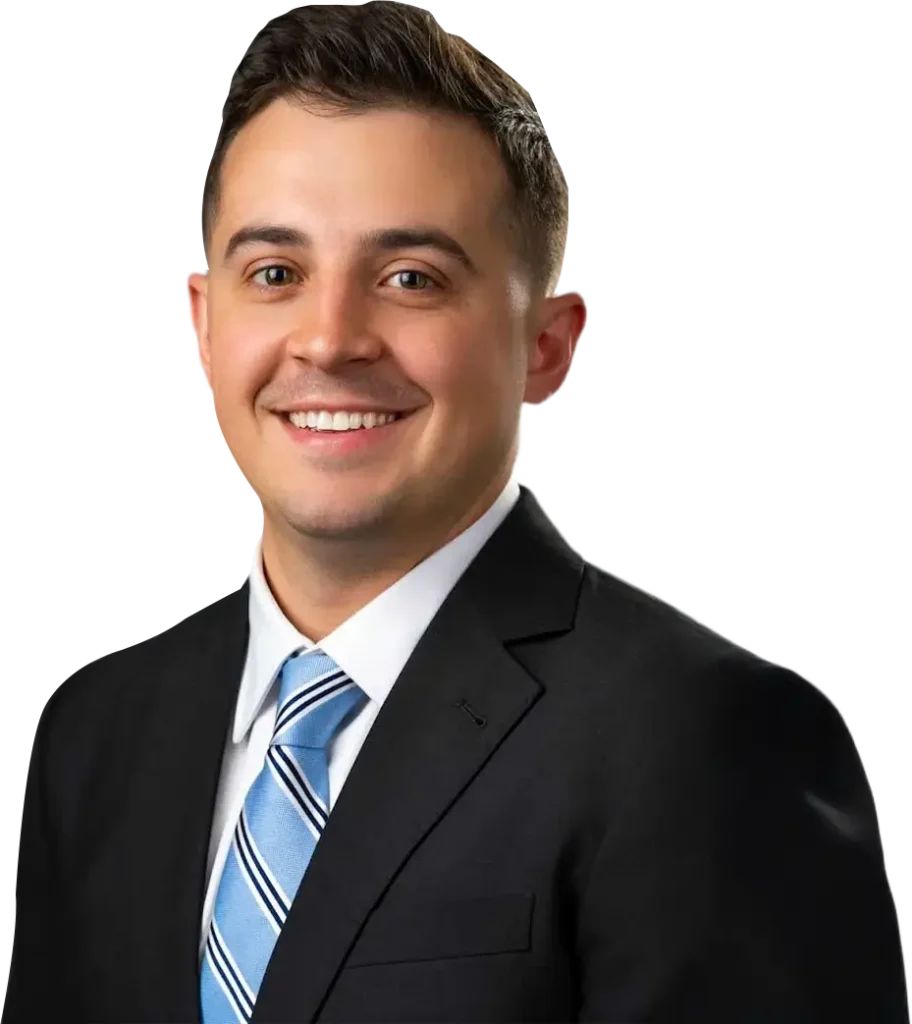
Every case at the firm is handled under the direction of Daniel J. Larson, whose background and credentials are set out on his attorney profile. From the first conversation you work directly with a lawyer who knows the details of your Cambridge crash and can explain, in plain terms, where your claim stands and what it may be worth.
What our clients say

After a crash, the insurance company moves fast to protect their side.
- We handle car crash injury claims for injured clients across Cambridge and the surrounding area.
- We deal with the insurers directly so you are not pressured into an early, low settlement.
- We move quickly to preserve the evidence that proves both fault and the full extent of the harm.
- We know the Massachusetts rules that shape these claims and the ways insurers try to limit them.
- We build each claim on medical proof and documentation, not on a rushed call with an adjuster.
- No fee unless we win your case
- No upfront costs
- Direct attorney access throughout
- Free, no-pressure case review


Where the crash happened can shape the case.
Cambridge’s roads carry a mix of traffic that few cities in Massachusetts match. Students from Harvard and MIT on foot and on bikes, MBTA buses and Red Line riders connecting at Central and Kendall Squares, Uber and Lyft drivers threading through narrow streets, and delivery vehicles serving the dense residential and commercial neighborhoods all share roads that in many cases follow routes laid out in the 17th and 18th centuries. Understanding where your accident happened helps identify what evidence exists and what the documented crash history of that location may add to your claim.
Massachusetts Avenue
Massachusetts Avenue is Cambridge’s primary north-south spine, running from the Boston border through Central Square, Inman Square, Harvard Square, and Porter Square before continuing into Arlington. The stretch between MIT and Harvard Square has been identified as the single highest pedestrian crash cluster in the state of Massachusetts in MassDOT crash data data, with 196 pedestrian collisions recorded during the 2001 to 2014 study period and 15 dangerous intersections concentrated along it. Car accidents involving turning vehicles, cyclists, MBTA buses, and pedestrians are a consistent pattern on this corridor. Cambridge reduced its default speed limit on city roads to 25 mph in response to concerns about pedestrian safety
Memorial Drive and the Charles River corridor
Memorial Drive runs along the Cambridge side of the Charles River and connects the city to the western neighborhoods and Alewife. It is a high-speed corridor by Cambridge standards, and the combination of pedestrian and cyclist access along the river path with vehicle speeds creates a consistent pattern of serious crashes. Memorial Drive is the site of periodic fatal crashes
Cambridge Street and the East Cambridge corridor
Cambridge Street runs from East Cambridge through Inman Square and into Somerville. It is one of Cambridge’s primary east-west arterials and carries significant residential, commercial, and delivery traffic daily. East Cambridge, home to the Edward J. Sullivan Courthouse and surrounding legal district, generates consistent vehicle and pedestrian activity on the streets connecting it to the broader city road network. Cambridge Street intersections have been included in the city’s own Vision Zero crash analysis
Kendall Square and the biotech corridor
Kendall Square is home to MIT and one of the densest concentrations of biotech and tech companies in the country. The area generates significant commuter vehicle traffic, rideshare pickups, and pedestrian movement between MBTA Red Line exits and surrounding buildings. The roads immediately around Kendall Square are among the most heavily used in Cambridge and are documented crash locations in the Cambridge Police Department open crash data records.
Harvard Square and Porter Square
Harvard Square is consistently identified in MassDOT and city data as a high-crash area for pedestrians and cyclists. The convergence of MBTA Red Line traffic, tour buses, delivery vehicles, cyclists, and pedestrians at and around Harvard Square creates one of the most complex traffic environments in the greater Boston area. Porter Square, where Massachusetts Avenue intersects with Somerville to the north, is similarly identified as a high-incident area.
Car accident cases from Cambridge are filed in one of two courts depending on the amount in dispute. Smaller civil claims are handled by the Cambridge District Court, located at 4040 Mystic Valley Parkway, Medford, MA 02155, which serves Cambridge, Arlington, and Belmont. Larger personal injury claims where the amount in dispute exceeds the District Court’s civil limit are filed at Middlesex Superior Court at 40 Thorndike Street, Cambridge, MA 02141
Massachusetts is a no-fault auto state, so your own Personal Injury Protection (PIP) coverage pays first. Under G.L. c. 90, § 34M, PIP provides up to $8,000 for reasonable medical bills and part of lost wages regardless of who caused the crash, and those benefits should be pursued promptly because strict deadlines and paperwork rules apply. No-fault does not end the story. To step outside the PIP system and pursue the at-fault driver for pain and suffering, your case must meet the tort threshold in G.L. c. 231, § 6D — generally more than $2,000 in reasonable medical expenses, or an injury involving a fracture, permanent or serious disfigurement, or loss of sight or hearing. Most genuinely injured crash victims clear that bar.
Fault still governs everything above PIP. Massachusetts follows modified comparative negligence under G.L. c. 231, § 85: you can recover as long as you are not more than 50% at fault, with your award reduced by your own share. When the at-fault driver is uninsured or carries too little coverage, your own uninsured or underinsured motorist coverage can fill the gap, and Cambridge’s many out-of-state and rental vehicles make that coverage especially important. All of this runs against the clock — under G.L. c. 260, § 2A, a car accident lawsuit generally must be filed within three years of the crash.
Insurers move quickly after a Cambridge crash, and not in your favor. An adjuster may call within days for a recorded statement, offer a fast settlement before the full extent of an injury is known, or argue that a gap in treatment means you were not badly hurt. You are not required to give a recorded statement to the other driver’s insurer, and early offers rarely account for future care, permanent limitations, or the value of time lost from work and daily life. Having a lawyer handle those communications keeps the focus on your recovery, makes sure medical records and wage documentation are gathered properly, and preserves the leverage that comes from being ready to file suit within the limitations period if a fair settlement never arrives.
One Cambridge-specific wrinkle deserves attention: the property-damage claim and the injury claim are separate matters. Settling the repair on your car quickly does not require you to resolve — or waive — the injury claim, yet insurers sometimes blur the two, offering a fast check that quietly asks you to release everything. Keep them separate, get your medical questions answered before signing anything, and have a lawyer review any release, because once you sign away an injury claim it is very difficult to reopen. The safest sequence is treatment first, documentation second, and settlement only once the full picture of the injury is clear.
No two cases are exactly alike. Alongside car collisions, our attorneys also handle truck accidents, motorcycle collisions, bus crashes, and rideshare wrecks, bringing the same focus on full recovery to every client.
When a claim moves forward, the harm Massachusetts law recognizes reaches past the first medical bills to the cost of future treatment and rehabilitation, earnings lost during recovery and any reduction in future earning capacity, and the physical pain and diminished quality of life a serious injury imposes. Proving these elements depends less on argument than on documentation, and the strength of that record, built steadily from the first appointment, usually matters more to the outcome than anything said to an adjuster by phone.
Injured people also encounter familiar claim tactics. An insurer may seek a recorded statement before the full extent of an injury is known, question whether treatment was necessary, point to a gap in care, or argue that a preexisting condition explains the symptoms. None of these is the final word, but each is a reason to be careful about what is said and when, and to let a consistent medical record, rather than a phone call, define the injury.
We also help injured clients as a Lowell car accident lawyer.
Because Massachusetts is a no-fault state, the first medical bills and a portion of lost wages after a crash are paid by your own Personal Injury Protection coverage, regardless of who caused it; this matters because care can begin without waiting to prove fault. To recover fully from the at-fault driver for pain and the lasting effects of an injury, though, the case generally must meet the state’s threshold for stepping outside no-fault, which turns on the seriousness of the injury. Understanding where a claim falls against that threshold shapes both its strategy and its value, and it is one of the first questions worth answering after a serious Cambridge crash.
When more than one vehicle or party contributed to a crash, sorting out each one’s share of responsibility becomes central, because the recovery available can depend on identifying every insurer involved. A driver, a vehicle owner, an employer whose worker was driving, and sometimes a municipality responsible for a dangerous road condition may each bear part of the fault. Investigating those relationships early, while the evidence is fresh, is often what turns a partial recovery into a full one.
What a car accident claim may cover.
The scope of what your claim may support depends on your injuries, the insurance coverage available, and the facts of the crash. We work to identify every applicable category so nothing that applies to your situation is missed.
Fault in Massachusetts is measured rather than assumed. Under Chapter 231, Section 85, the state applies modified comparative negligence, so a person found more than half responsible recovers nothing and any share of fault reduces the recovery. Insurers routinely work to shift responsibility onto the injured person, which is one reason early statements to an adjuster can matter more than they appear to at the time.
Deadlines run from the start. Under Chapter 260, Section 2A, most personal injury actions in Massachusetts must be filed within three years, and some claims carry far shorter notice requirements. Because the evidence that proves a claim tends to fade long before a deadline arrives, acting early usually protects a claim more than anything done later.
A fair car accident claim accounts for far more than the first medical bills. It includes the future care an injury may require, the income lost during recovery, and any lasting reduction in your ability to work, alongside the pain and the disruption to daily life that a serious crash causes. A careful accounting of past and future losses, including lost income and reduced earning capacity, is what gives a demand its credibility and keeps an insurer from anchoring to the smallest defensible number.
Insurers move quickly after a Cambridge crash to limit what they pay, through fast low offers, requests for recorded statements, and arguments that shift blame onto the injured person. Much of the evidence that proves both fault and the full extent of an injury, from scene photos and police reports to medical records, is easiest to secure soon after the crash and hardest to recover once time has passed. Building the claim on that documentation, rather than on an adjuster’s early phone call, is what protects its value.
None of this is something an injured person should have to manage alone while recovering. A free, early conversation can explain what your claim may involve, what it could be worth, and what evidence would strengthen it, so the decisions you make are informed rather than rushed by an insurer’s timeline.
Medical Bills and Treatment Costs
Lost Wages and Earning Capacity
Wrongful Death Claims
Pain and Suffering
Hurt in a Cambridge crash. Three things to do right now.
Get medical care
Start with treatment and a clear record of what happened. Note the street, intersection, vehicles, injuries, and photos while details are fresh. Avoid recorded insurer statements before legal counsel.
Get a free case review
Cambridge crashes often involve cameras, public transit routes, cyclists, drivers, and pedestrians. A case review helps identify what evidence should be requested before it is deleted or lost forever.
We take over from here
From there, we deal with the insurer, track deadlines, collect records, and keep the case organised while you continue care. You stay informed without carrying the legal work alone for the whole case.
- 5.0 stars out of 100+ reviews
Talk to a Cambridge car accident lawyer today. No cost, no pressure.
Cambridge’s roads generate car accident claims involving Massachusetts no-fault PIP, pain and suffering thresholds, and crash evidence that disappears fast. Tell us what happened and we will explain what applies to your specific situation, what evidence to secure, and what your claim may be worth pursuing.
Whatever the details of your Cambridge crash, our Boston personal injury attorney team can review it for free and explain your options with no obligation.
By submitting this form, you acknowledge that doing so does not create an attorney-client relationship. Please do not include confidential information. Contacting us does not obligate you to retain our services.
Our Clients


Our Practice Areas
Larson Law represents injured people across Cambridge and the surrounding Middlesex County area, and the same team also handles car crashes in Boston.
What to know before filing a car accident claim.
Massachusetts Avenue in Cambridge is known for crashes. Does the road's history affect my claim?
It can be relevant. A documented pattern of crashes at a Cambridge intersection, along with police reports and any city traffic-safety data, can help show a hazard existed and support how the crash happened. The road’s history does not decide fault by itself, but it can strengthen the evidence.
How does Massachusetts no-fault PIP insurance work after a Cambridge car accident?
Massachusetts is a no-fault state, so your own Personal Injury Protection under G.L. c. 90, § 34M pays initial medical bills and lost wages regardless of fault. Only when injuries are serious enough can you step outside no-fault and pursue the at-fault driver directly for the full harm.
What if I was partly at fault for the crash in Cambridge?
You can still recover. Under Massachusetts comparative negligence, G.L. c. 231, § 85, you may collect as long as you were not more than half at fault, with your award reduced by your share. Insurers often exaggerate your role, so how fault is apportioned is worth challenging.
I was hit by a car as a pedestrian or cyclist on Massachusetts Avenue in Cambridge. Do I have a claim?
Yes, potentially. A pedestrian or cyclist struck by a driver on a Cambridge street can bring a claim against the at-fault driver, and no-fault PIP benefits may also apply. These cases turn on who failed to use reasonable care, and evidence from the scene is often decisive.
What should I do right after a car accident in Cambridge?
Call 911 so Cambridge Police document the crash, get medical care even if you feel okay, and photograph the scene, the vehicles, and any injuries. Collect the other driver’s information and any witness names, and avoid giving the insurer a recorded statement before you understand your rights.
Does Cambridge's Vision Zero policy affect how car accident claims work?
Indirectly. Cambridge’s Vision Zero commitment means the city collects crash and traffic-safety data and documents dangerous locations, and those records can become useful evidence about a hazard. The policy does not change your legal rights, but the data it generates can help prove how and why a crash occurred.
What if the driver who hit me in Cambridge was driving for Uber or Lyft?
Then a rideshare company’s insurance may apply on top of the driver’s. Coverage depends on whether the driver was waiting for, en route to, or carrying a passenger at the time, which changes the limits available. Sorting out which policy applies is an important early step in these claims.
What if the at-fault driver in Cambridge did not have enough insurance?
Then your own optional underinsured motorist coverage may pay the difference, up to the limits you bought. Massachusetts also requires uninsured motorist coverage for hit-and-run or uninsured drivers. Reviewing every policy in your household is the first step to finding the full coverage available to you.
How long do I have to file a car accident claim in Cambridge?
In most cases you have three years from the date of the crash to file, under G.L. c. 260, § 2A. Miss that deadline and the court can bar your claim entirely. Claims against a public entity like the MBTA carry shorter notice rules, so confirm yours early.
I was in an MBTA bus accident in Cambridge. Can I file a claim?
Potentially yes. If an MBTA bus or another public vehicle was involved, you may have a claim, but claims against public entities carry special, much shorter notice deadlines and procedures. Because those requirements are strict and easy to miss, it is important to act quickly and get advice early.
Where are Cambridge car accident cases filed?
Car accident cases from Cambridge are generally handled in the Middlesex County courts. Smaller claims may proceed in a district court, while more serious injury cases are typically filed in Middlesex Superior Court. Which court hears the case affects both timeline and procedure.
Does Larson Law handle car accident cases across Middlesex County beyond Cambridge?
Yes. Larson Law handles car accident claims throughout Cambridge and across Middlesex County and the surrounding area. Wherever the crash happened, we can review the facts, deal with the insurers, and pursue the recovery you are owed, beginning with a free case review.
Results Disclaimer: Past case results, settlements, and verdicts mentioned on this website do not guarantee or predict a similar outcome in any future case. Every case is unique and depends on its own facts and legal issues.