
Quincy Wrongful Death Lawyer
Camera video gets erased and people forget details while families grieve.
Vehicles get fixed, video is erased, and witnesses disperse while a family is busy with funeral and financial matters. Early legal help preserves proof without adding to that load.
- No fee unless we win
- Same-day response
- Free case review
As Seen On:












Cases begin once judges appoint someone representing every surviving relative.
A relative’s death through someone else’s carelessness brings practical problems alongside the grief. Paychecks stop, bills keep arriving, and insurers telephone with their questions. Relatives are frequently unsure who has authority to act or what the law lets them recover. Civil claims cannot undo the loss, yet they replace financial support and call the wrongdoer to account. Knowing the basic structure makes the earliest decisions less daunting.
Fatal cases here arise in many ways. A large number result from collisions on the expressway and the main commercial artery. Pedestrians are struck near the transit stations, employees are killed on construction sites, and patients die after errors in care. Falls inside stores and nursing facilities prove fatal for older adults with surprising frequency. Every type brings different defendants, insurers, and rules.
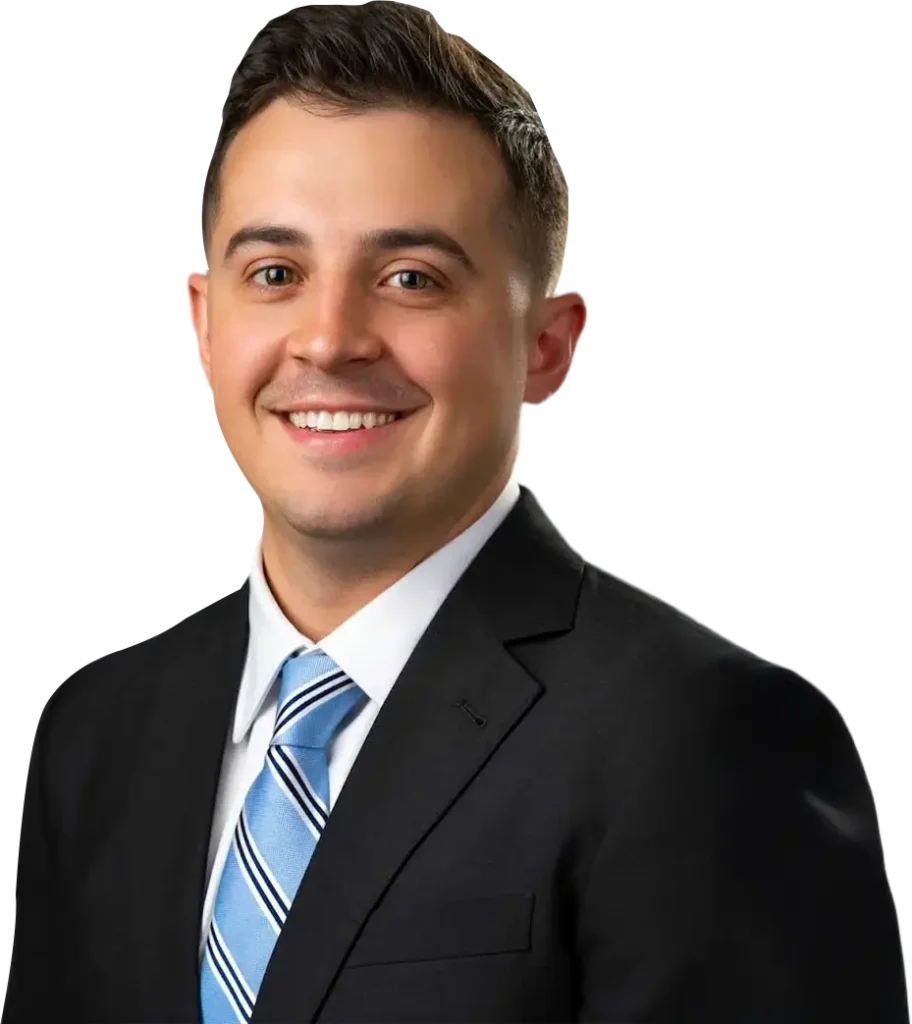
Death cases at our firm receive the personal attention of Daniel J. Larson, assisted by a second lawyer. At the first meeting, families learn who may serve as the estate’s representative and how the appointment is obtained. Preservation letters are sent to drivers, companies, and institutions that hold evidence. Phones, vehicles, and equipment are named specifically in those letters. Autopsy findings, the death certificate, and treatment records are requested once the family consents. Contact with insurers passes to us so that relatives are left alone. Their calls and letters are simply forwarded to us.
Probate is the first legal step because only a court-appointed representative can sue. A person named in the will usually serves, and a close relative is appointed where no will exists. The petition is filed in the probate court for the county where the person lived. Appointment commonly takes several weeks, though expedited procedures exist for urgent situations. Investigation and negotiation can begin while the petition is pending. A judge decides who serves when relatives cannot agree.
Evidence should be secured long before a complaint reaches the courthouse. Reconstruction reports prepared by police after a fatal crash may take months. Vehicles held as evidence are released once the criminal inquiry ends, and they should be inspected before repair or sale. A letter to the owner and insurer asks that the vehicle be left untouched. Federal safety officials investigate workplace deaths, and their file is obtainable. Medical cases depend on the complete chart, including nursing notes and electronic audit trails. Audit trails show who opened or altered the record and when.
Payment is sometimes offered to a family within days. Insurers may propose covering funeral costs if someone signs a release. Such documents can extinguish the whole claim for a small fraction of its value. No relative other than the appointed representative has authority to settle in any event. Waiting for advice protects every beneficiary and gives up no right.
What our clients say

Insurance company calls go straight to Larson Law, sparing families that strain.
- We handle wrongful death claims for families across Quincy and the neighboring communities.
- We bring the claim through the estate's representative, the way Massachusetts law requires.
- We investigate and prove the negligence that caused the loss, not only its consequences.
- We handle the insurers and the paperwork so a grieving family does not have to carry that too.
- We build each claim on evidence and records rather than on a rushed call with an adjuster.
- No fee unless we win your case
- No upfront costs
- Direct attorney access throughout
- Free, no-pressure case review


Fixed rules, rather than wills, decide how relatives divide whatever money arrives.
Legally the claim is owned by the estate’s representative, who pursues it for the surviving relatives’ benefit. Beneficiaries are determined by law and not by the will. First claim on the recovery belongs to a surviving spouse and any children. Where there are none, parents, siblings, or more distant kin may qualify. Priority among them follows the rules for an estate without a will. The representative owes each of them a duty of fairness. A probate judge resolves any dispute among beneficiaries.
Shares follow a fixed pattern. Everything goes to the spouse if the couple had no children. With one child, spouse and child divide the recovery equally, and where several children survive the spouse takes one third while they share the rest. Children alone divide the whole equally. No distinction is drawn between adult and minor children. A judge has to approve how any minor’s share is handled.
Compensation covers the income the person could reasonably have been expected to bring home. Economists work that figure out from earnings history, age, and expected working life. Services such as childcare and home maintenance are valued and added. The family is also compensated for lost companionship, comfort, and guidance. Each element gets its own explanation in our article on what the family can claim when an accident proves fatal.
A surviving spouse’s loss of the marital relationship is among the recoverable items. Children may recover for losing a parent’s care and direction. Parents of an adult child recover only in narrow situations. Testimony from relatives and friends establishes the closeness of these relationships. Shared routines, holidays, and daily contact are the details that matter. Related principles appear in our discussion of claims for a lost relationship.
Funeral costs and burial costs, if reasonable, are recoverable. So are medical bills from the final injury or illness. Awareness and pain before dying give the estate an additional claim for that suffering. Proceeds of that claim pass through the estate and may be subject to its debts. General creditors of the estate can reach that portion but not the family’s own recovery. Careful allocation between the two claims affects what the family finally receives.
Where gross negligence, or conduct that was willful, wanton, or reckless, led to the death, punitive damages may be awarded. Drunk driving, falsified safety records, and deliberate disregard of known hazards would each qualify. Such damages exist to punish and are awarded on top of compensation. Insurance policies sometimes exclude them, which affects collection. The law fixes a minimum whenever such damages are awarded. The standard gets a full explanation in a piece of ours on damages meant as punishment.
Work deaths, medical errors, and public bodies bring extra rules.
Deaths at work are covered by the employer’s insurance, which pays dependents weekly benefits and the cost of burial. Suing the employer itself is generally not permitted. An action for wrongful death remains available against any outside company that contributed through its own carelessness. Construction deaths frequently involve the general contractor or a supplier of equipment. Site owners who kept control of safety can be reached too. Coordination of the two claims should begin immediately.
Medical negligence cases require proof from a qualified physician that accepted standards were not met. Retaining the right specialist is the first major step. Hospitals, doctors, and nursing facilities are each covered by separate insurers. Certain categories of damages are limited, with exceptions for the gravest losses. Charitable institutions benefit from a cap that does not protect individual providers. Individual clinicians are therefore sued together with the institution. Cases of this kind take longer and demand extensive expert review.
Generally the suit must be brought within a fixed period after the death. If the cause was not immediately known, the period may run from the representative’s discovery of it. Within a shorter fixed period, a city, state agency, or public authority must receive a written presentment, and damages against it are capped. Medical cases have an outer limit measured from the treatment itself. That outer limit applies even where the error was discovered late. Missing any one of these dates forfeits the claim.
Proof of negligence is the same as it would have been had the person survived. The defendant must have fallen short of reasonable care, and that shortfall must have led to the fatal result. Carelessness by the deceased, if any, reduces the award proportionally. Recovery is barred only where that person bore more than half the responsibility. Defendants raise this argument often because the victim cannot answer it. Vehicle data and scene evidence must therefore do the answering.
Fast highway traffic makes local crashes especially deadly.
High-speed travel on the limited-access expressway produces the most severe collisions. Wrong-way entries and crossover crashes are rare but almost always deadly. We discuss them on our page about vehicles travelling against traffic. Alcohol and confusion at unfamiliar ramps are the usual explanations. State police reconstruct these events in detail. Each vehicle’s recorded speed, braking, and steering are downloaded. Their findings often become the backbone of the civil lawsuit that follows.
The main commercial artery mixes fast through traffic with turning vehicles and pedestrians. Frontal impacts occur when a motorist drifts across the center stripe, a subject covered in our head-on collision material. Pedestrians crossing between distant signals are struck at night. Lighting levels and crosswalk spacing get measured afterward. Business cameras on that road frequently capture the collision on video. Video requests have to be made within days.
Job sites and care homes account for other deaths.
Construction near the rail stops and across the downtown core has brought cranes, excavations, and work at height. Struck-by incidents and falls kill even experienced tradespeople. Several companies share responsibility on a large site. Owner, general contractor, and each trade may be insured separately. Which firm was directing operations is established from site contracts and safety plans. Federal citations issued afterward carry considerable evidentiary weight.
Many older residents live in nursing homes and rehabilitation centers here. Deaths follow untreated infections, falls, choking, and medication errors. Pressure wounds that reach the bone are a marker of prolonged neglect. Staffing records and state inspection reports reveal systemic problems. Corporate owners often operate many facilities with the same shortcomings. The complete chart should be requested by the family promptly. Similar cases are handled through our work on neglect in care facilities.
Deaths on transit property, or involving public vehicles, bring the special notice rules for governmental defendants into play. Fatal incidents on the water may be governed by maritime law. Recreational boating deaths in the bay raise that question each summer. Workplace deaths at marine terminals can fall under a federal benefit program. Working out the correct legal framework is an early and essential task. Errors at that stage are difficult to correct later.
Families can handle most steps from home.
Families from the adjoining neighborhood on the northern side are assisted through our wrongful death lawyers serving that area. That team also handles fatal injury cases in the bigger city. Most meetings can take place at the family’s home or by video. Evening and weekend appointments are arranged when needed. Documents are signed electronically where possible. Relatives living out of state can participate fully.
With no acute-care facility in the city, critically injured people are taken elsewhere. Records must be gathered from the ambulance service, the receiving hospital, and sometimes a second facility after transfer. Delays between facilities are examined for their effect on survival. In sudden or violent deaths the medical examiner may perform an autopsy. Next of kin are entitled to that report. It often answers questions about cause that insurers would otherwise dispute. Toxicology results in that report can also rebut false accusations.
County probate judges appoint the representative and, at the end, approve the distribution. Wrongful death suits go to the superior court, usually in a county where one of the parties lives or does business. Federal court is an option where the defendant is from another state. Trucking and product cases often end up there. Criminal charges, if any, proceed separately in the district or superior court. Prosecutors keep the family informed through a victim advocate. A conviction can often be used in the civil proceeding.
Lost family income usually ranks highest among everything that relatives can recover.
Lost financial support usually makes up the biggest portion. A parent in mid-career may have decades of earnings ahead. Raises and promotions that were likely belong in the projection. The calculation includes health insurance, retirement contributions, and similar benefits. Stay-at-home parents provide services whose replacement cost is substantial. Childcare, cooking, transport, and running a household are each given a price. Economists and vocational experts present these figures to the insurer or jury.
No formula measures a lost companion and guide. Jurors consider how close the family was and what role the person played in it. Photographs, messages, and testimony from friends give that loss substance. The ages and needs of children are especially significant. Each beneficiary’s relationship is considered individually. Grandchildren raised by the deceased, adopted children, and stepchildren raise questions needing early review.
Grief itself is not compensated under the wrongful death law, although the lost relationship is. Anyone in the family who witnessed the fatal event may hold an independent claim for the emotional injury. Counseling records support such claims. Proof usually includes physical symptoms of the distress. Allocation of settlement funds depends on that distinction. Our lawyers explain it to each family early on.
Medical and funeral expenses are documented with bills and receipts. Travel by relatives during the final hospital stay is sometimes recoverable. Reasonable outlays for a headstone and a gathering afterward are included. Reimbursement for treatment before death may be claimed by health insurers and public programs. Negotiation of those demands comes before distribution. Funeral homes will usually wait for payment once told that a claim has been opened. Estate expenses, probate costs among them, are deducted before distribution.
Settlement requires the agreement of the representative, the beneficiaries, and the paying insurer. Where minors or incapacitated persons are involved, a judge reviews the terms. Structured payments can provide for children over time. College-age distributions are a common design. Trusts may protect a beneficiary’s eligibility for public benefits. Guardians for minors are appointed where the surviving parent has a conflict. The advantages of each path are compared in our article on resolving a case by agreement or by trial.
Trial is sometimes the only route to a just outcome. Wrongful death trials rely on experts in liability, economics, and medicine. Relatives testify about the person and about what daily life is like now. Verdicts may include interest from the date the suit was filed. That interest can add substantially to the final judgment. An appeal, though uncommon, can lengthen the timeline. Preparation typically occupies two years, sometimes longer.
Many families want answers as much as compensation. Litigation compels the defendant to produce documents and testify under oath. Internal emails and incident reviews often explain what the family was never told. Safety changes at the company or facility sometimes follow from what is learned. Settlement terms can require a policy change or a written acknowledgment. Accountability of that kind has value that is hard to state in numbers. We keep families informed of every development.
Medical Bills and Future Care
Lost Wages and Earning Capacity
Pain, Suffering, and Hardship
Wrongful Death of a Loved One
Evidence gets saved while judges handle the paperwork.
Secure the records and the evidence
Get certified death records, police reports and medical examiner documents as soon as available. Note the exact location, nearby cameras, and transit details, and avoid signing releases before review.
Talk with a Larson Law attorney now
Call us or fill out the form. We review what happened, explain what the law may allow your family, outline the probate appointment process, and identify the exact deadlines that can affect your claim.
We handle everything else from here
Moving forward, we coordinate the estate appointment, preserve all evidence, manage insurer communications, and handle every legal deadline while your family focuses on each other and what comes next.
- 5.0 stars out of 100+ reviews
Call whenever your family feels ready, since nothing needs preparing.
Whenever you are ready, call or write, and a lawyer will respond promptly. Nothing needs gathering beforehand except the person’s name and the day they died. The appointment process will be explained, and preservation letters will go out at once. Relatives abroad can join by video. Local death cases are handled by the senior lawyers of our injury group.
By submitting this form, you acknowledge that doing so does not create an attorney-client relationship. Please do not include confidential information. Contacting us does not obligate you to retain our services.
Our Clients.


Our Practice Areas.
We handle wrongful death and serious injury cases across Quincy and the neighboring communities.
Grieving families ask first about time limits.
Who in our family can file the lawsuit?
Only the personal representative of the estate may file, and a probate judge makes that appointment. It is usually the person named in the will, or a close relative when there is no will. The representative acts for all the surviving relatives entitled to share, who do not file separate suits.
How long does our family have to file?
Families generally have a fixed period, starting at the death or when its cause reasonably became known. Where a transit vehicle, a city truck, or public road maintenance contributed, a written claim must be presented much sooner. Probate appointment takes time, so families should begin well before either date.
Does a road’s crash history matter to our claim?
It can. Earlier fatal or serious collisions at the same location may show that a hazard was known, which matters when road design, lighting, or signals played a part. Claims over road conditions run against public bodies and carry early notice rules, so the history should be requested right away.
How is the recovery divided among family members?
Shares are fixed by law. If no children survive, the spouse keeps the entire recovery. One child shares equally with the spouse, and several children together receive two thirds while the spouse keeps one third. If no spouse survives, children share equally, and a judge approves any minor’s portion.
What is the difference between a wrongful death claim and a survival claim?
One claim, for wrongful death, compensates relatives for income, services, companionship, and direction that the death took away. The other, a survival claim, is the estate’s and covers pain the person felt while still conscious, plus medical bills. Both are brought together by the representative, but the proceeds are distributed differently.
Can we still file if our loved one was partly at fault?
Possibly, yes, provided the deceased was not chiefly responsible. Whatever is awarded is then reduced by that person’s percentage of the blame. This defense is popular with insurers because the victim cannot give an account, which makes measurements and neutral witnesses essential.
A public transit vehicle was involved. What does that mean for our claim?
Because the transit authority is public, special rules govern claims against it. Formal written presentment is required within a fixed period, and a cap limits the amount recoverable. The authority’s own video, vehicle data, and operator records should be demanded immediately, since retention periods are short.
Our loved one died in an accident at work. Can we bring a claim?
The answer turns on whose carelessness was responsible. Weekly benefits for dependents, and burial costs, come from the employer’s insurance, and the employer generally cannot be sued. A contractor, equipment maker, driver, or other outsider whose negligence contributed can still be sued over the death.
Our loved one died after hospital care. Do we have a malpractice claim?
Liability arises where a provider fell below accepted standards of care and that lapse contributed to the fatal outcome. Proof requires review of the full chart by a qualified physician. Strict deadlines apply, and hospitals organized as charities are protected by caps that individual doctors do not share.
Where does the probate process happen?
Probate is handled in the probate court for the county where your relative lived. That court appoints the personal representative and later approves how any recovery is distributed. The lawsuit itself is filed separately in a trial court. Most of the paperwork can be signed from home, with a lawyer attending the hearings.
How long does a wrongful death case usually take?
It varies with the facts. A claim with clear fault and adequate insurance may resolve within months of the representative’s appointment. Cases involving disputed fault, several defendants, medical negligence, or a public body usually take longer, and a case that goes to trial can run for a few years.
Do you handle wrongful death cases in nearby towns?
Yes. The firm represents families in the surrounding communities and across the state. The same rules on who may file and how a recovery is shared apply everywhere, while the probate court depends on where your relative lived. Call, text, or send the form on this page whenever you are ready.
Results Disclaimer: Past case results, settlements, and verdicts mentioned on this website do not guarantee or predict a similar outcome in any future case. Every case is unique and depends on its own facts and legal issues.