
Electric scooters turned up on Massachusetts sidewalks and bike lanes faster than the law could keep up with them. They are convenient, cheap, and easy to grab from a rack with a phone, and they are also involved in a growing number of serious injuries. When a crash happens, riders quickly discover that the rules governing scooters, and the insurance behind them, are far less settled than the rules for cars, which can leave an injured person unsure where to turn.
If you were hurt on an electric scooter in Massachusetts, your options depend heavily on how the crash happened and who, or what, caused it. This article walks through when insurance covers an electric scooter injury, when a claim runs against a rental company or a manufacturer instead, and how Massachusetts scooter rules, fault, and deadlines shape what you can recover.
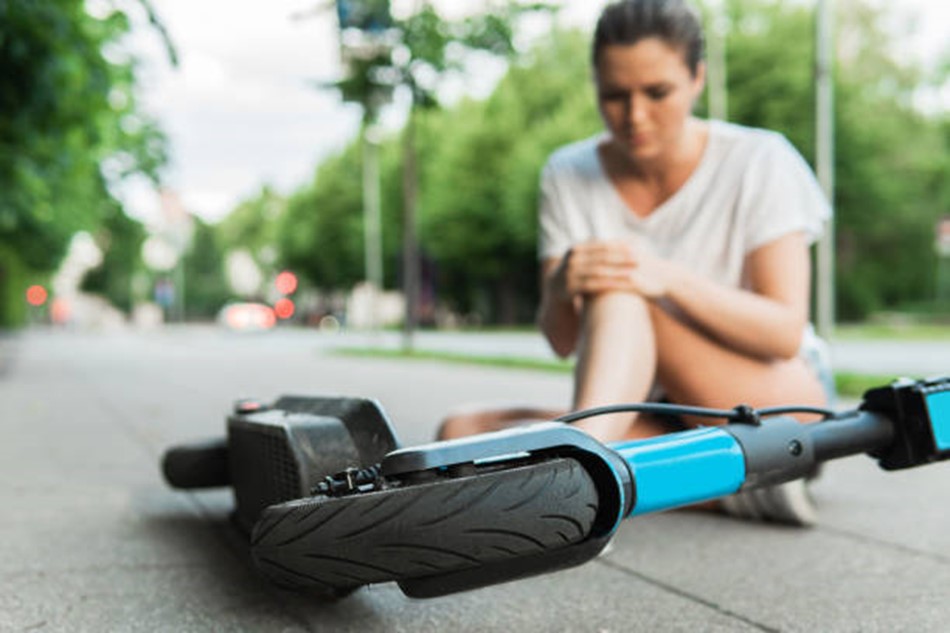
When does insurance cover an electric scooter accident?
The first question after a scooter crash is almost always practical: who pays the medical bills? The answer turns on whether a motor vehicle was involved, because Massachusetts’s no-fault system is built around cars, not scooters, and that single fact often decides which doors are open to you.
If a car hit you
When a motor vehicle strikes a scooter rider, the most important coverage is usually the driver’s. Massachusetts is a no-fault state, and the personal injury protection on the vehicle that hit you may pay a portion of your medical bills and lost wages regardless of fault, in much the same way it covers a pedestrian or cyclist, under MGL c. 90, § 34M. Whether a scooter rider is treated like a pedestrian for these purposes can depend on the circumstances, which is one of the genuinely unsettled edges of scooter law. For a serious injury, you can also pursue the at-fault driver directly once your claim crosses the tort threshold in MGL c. 231, § 6D, reaching the pain and suffering and the full losses that no-fault leaves out.
If the driver was uninsured or fled the scene
Scooter riders are just as exposed to hit-and-run and uninsured drivers as anyone else, and the same protection applies. Massachusetts requires every auto policy to carry uninsured motorist coverage under MGL c. 175, § 113L, which reaches hit-and-run and uninsured drivers, and as an injured rider you may be able to use your own policy or a resident relative’s policy even though you were on a scooter rather than in a car. Underinsured coverage, for a driver who carried too little insurance to cover a serious injury, is optional in Massachusetts, so whether it applies depends on what was purchased. Sorting out which policy responds is the kind of question that is easy to get wrong alone.
If no car was involved
The harder cases are the ones where no motor vehicle is in the picture: a rider who hits a pothole, is thrown by a malfunctioning scooter, or falls on a poorly maintained path. Because no-fault coverage flows from motor vehicles, a solo scooter crash usually falls outside it. That does not necessarily mean there is no claim. Your own health insurance may cover treatment, and depending on the cause, a claim may lie against the company that made or maintained the scooter, or against a property owner whose dangerous condition caused the fall. Identifying which of those paths exists, and which one actually has insurance behind it, is the central question in a no-vehicle scooter case.
How the law classifies a scooter rider
Part of what makes scooter claims tricky is that Massachusetts law has not fully decided what a scooter rider is. A motorized scooter is regulated as its own category, not quite a motor vehicle, not quite a bicycle, and not a pedestrian, yet the no-fault insurance system and the rules of the road were written with those older categories in mind. That gap means questions like whether a rider struck by a car counts as a pedestrian for no-fault benefits do not always have a clean answer, and the result can vary with the facts. The practical effect is that an injured rider should not assume either that coverage automatically applies or that it automatically does not. The classification question is worth resolving early, because it determines which insurance is even on the table. Insurers sometimes use that same ambiguity the other way, and our guide on how insurers treat e-bike and scooter riders as barely covered explains how to push back when coverage is minimized.
What a scooter claim can recover
When a scooter claim does have a responsible party and coverage behind it, the categories of compensation are the same as in other injury cases. A claim can account for the medical care you have needed and will need, the wages you lost and any lasting effect on your ability to earn, and the pain, the limitations, and the disruption the injury caused in your daily life. Because scooter riders are unprotected, the injuries are often serious, and the value of a claim should reflect the full arc of recovery rather than the first bills to arrive. Understanding what your case may be worth usually means looking past the early treatment to the long-term picture.
Claims against rental companies and manufacturers
Many scooter injuries have nothing to do with another driver and everything to do with the scooter itself, or the company that rented it out. These claims follow a different body of law from a typical traffic crash, and they are where some of the most valuable scooter cases are found.
When the scooter was defective
If a brake failed, a throttle stuck, or a wheel or frame broke apart, the injury may be the result of a defective product. Massachusetts does not use a separate strict-liability tort; instead, as the Supreme Judicial Court recognized in Back v. Wickes Corp., 375 Mass. 633 (1978), the implied warranty of merchantability functions as the state’s form of strict liability, and MGL c. 106, § 2-318 lets anyone foreseeably affected by a defective product sue its manufacturer, distributor, or seller. For a shared scooter, that can reach both the manufacturer that built an unsafe machine and the rental operator that put it, or kept it, in service.
Negligent maintenance of shared scooters
Rental operators are responsible for keeping their fleets in safe condition, and a scooter returned to service with a known defect, worn brakes, or a damaged frame can support a negligence claim against the company independent of any manufacturing defect. Because the operator controls the maintenance records and the service history of a specific scooter, those records are central to such a claim, and they are exactly the kind of evidence that is far easier to obtain through a properly framed legal claim than by asking on your own. A pattern of deferred maintenance can turn a single failure into evidence of a company that cut corners.
The liability waiver in the app
Most scooter rental apps require riders to accept a liability waiver buried in the sign-up terms, and injured riders often assume that waiver ends the matter. It does not always. The enforceability of these waivers in Massachusetts is fact-specific, and a waiver generally cannot excuse gross negligence or a defective product, nor can it always be enforced as broadly as the company would like. Whether a particular waiver bars a particular claim is a legal question worth evaluating rather than conceding, because the company has every reason to treat the waiver as the end of the conversation when it may not be.
When a property owner shares the blame
Not every fall is the scooter’s fault. A rider thrown by a deep pothole, an unmarked construction hazard, a defect in a sidewalk or shared path, or debris left where people ride may have a claim against whoever was responsible for that condition. On private property, that can be the owner or occupier under ordinary premises liability principles; on a public way, it can involve a city or the state, with the shorter notice deadlines that government claims carry. Pinning down who controlled and was responsible for maintaining the spot where you fell is often the difference between a viable claim and a dead end, and it is rarely obvious from the scene.
More than one party may be responsible
Scooter crashes frequently involve more than one possible defendant, and the strongest claims account for all of them. A single incident might implicate the driver who struck you, the manufacturer of a scooter that failed, the operator that maintained it poorly, and the city responsible for the road, with each carrying its own insurance. Massachusetts law lets you pursue every party whose negligence contributed, and identifying all of them early can expand the coverage available to pay for a serious injury rather than leaving you to rely on a single, possibly thin, policy. The reflex to focus on just one obvious target is one of the quietest ways a scooter claim is undervalued.
Massachusetts scooter rules, fault, and deadlines
Beyond coverage, the rules that govern how scooters may be ridden, and how fault is shared, shape every scooter claim. So does the clock, which runs from the moment of the crash whether or not you yet know how serious your injury is.
What Massachusetts law requires of scooter riders
Massachusetts regulates motorized scooters under MGL c. 90, § 1E, which sets out a number of rules: a rider must hold a valid license or learner’s permit, may not exceed twenty miles per hour, must keep to the right side of the road, must have working stop and turn signals so that both hands can stay on the handlebars, must wear protective headgear, may not carry a passenger, and may not ride after sunset or before sunrise. On top of the state law, many cities and towns regulate shared scooters through their own pilot programs and ordinances, so the specific rules can vary by location. A rider’s compliance, or a violation, often becomes part of the fault analysis after a crash, which is one more reason the details of how and when you were riding matter.
How fault is shared
Massachusetts uses a modified comparative negligence rule under MGL c. 231, § 85, where your recovery is reduced by your share of the fault and barred only if your share is greater than the other side’s. In a scooter case, the defense will often point to the rules above, that you were not wearing a helmet, were riding after dark, or exceeded the speed limit, to argue that you share the blame. Those arguments matter, but they do not automatically defeat a claim, and they have to be weighed against the conduct of the driver, manufacturer, or property owner who actually caused the harm. How that balance is framed, and how carefully your own account is documented, can change what you recover.
The deadline, and why scooter cases should start early
Most scooter injury claims must be filed within three years of the crash under MGL c. 260, § 2A, and a claim against a city or public agency for a dangerous road or path can carry its own much shorter notice requirements, so confirming the right Massachusetts statute of limitations for your situation matters. Scooter cases also depend on evidence that disappears quickly: the specific scooter and its maintenance history, the app’s trip and waiver records, and footage from nearby cameras. Because so much of what proves a scooter claim is controlled by the rental company or fades from the scene, starting early, while the scooter and the records still exist, is often what makes the difference between a provable claim and a frustrating one.
Disclaimer: Statute of limitations rules can vary significantly by state, jurisdiction, and the specific type of claim. The information above is general in nature. Please consult a qualified attorney for advice specific to your situation.
Why scooter injuries are often more serious than they look
Scooters put a rider a few inches off the ground, moving at the speed of traffic, with nothing between them and the pavement. The result is that a scooter crash that looks minor can produce head injuries, wrist and arm fractures, facial injuries, and concussions that develop over the following days. As with any injury, the legal value of the claim follows the medical record, so prompt care and honest, consistent follow-up matter, both for your recovery and for answering the inevitable argument that the injury was not as serious, or not as connected to the crash, as you say. The riders who fare best are usually the ones who treated the injury seriously from the start.
What to do right after a scooter crash
The steps that protect a scooter claim are simple but time-sensitive. Get medical attention and keep following up, so the record reflects the true extent of your injuries. If a vehicle was involved, get the driver’s information and call the police; if the scooter failed, note its identification number and, if you safely can, photograph it before it is collected and returned to the fleet. Save your ride receipt and the app’s record of the trip, and photograph the scene, including any road or path hazard that contributed. And be cautious about giving a recorded statement or accepting a quick offer before you understand your injuries, because those early moments are where scooter claims are most often quietly diminished.
A note on helmets and comparative fault
Because Massachusetts requires headgear for motorized scooter riders, the absence of a helmet is one of the first things a defense will raise after a head injury, so it is worth understanding how that argument actually works. Failing to wear a helmet does not bar a claim, and it is only relevant to the extent it actually contributed to the specific injury; a broken wrist or a fractured leg has nothing to do with headgear. Even for a head injury, the question is how much, if at all, a helmet would have changed the outcome, which is a factual issue rather than an automatic reduction. Treating the missing helmet as the end of the claim, the way an insurer might, gives away far more than the law actually requires.
An electric scooter accident is not as simple as it looks
An electric scooter crash sits in a genuinely unsettled corner of Massachusetts law, where coverage depends on whether a car was involved, the most valuable claims may run against a manufacturer or a rental company rather than another driver, and a liability waiver may or may not stand in the way. None of that means an injured rider is without options; it means the options are less obvious, and the evidence harder to reach, than in an ordinary car crash. If you were hurt on a scooter and you are not sure who is responsible or what coverage applies, an early review can sort out the paths that exist before the scooter is back on the street and the records have moved on. You can see the range of personal injury matters we handle, and because so much of dealing with insurance companies is about not accepting the first answer, it helps to have a Boston personal injury attorney who knows where to look. Consultations with Larson Law are free, so you can reach our team here at no cost. The sooner the scooter and its records are preserved, the more of the picture survives to be proven. There is no cost to finding out where a scooter claim stands, and often a great deal to lose by waiting.
FAQs
Does insurance cover an electric scooter accident in Massachusetts?
It depends on how the crash happened. If a car hit you, the driver’s no-fault personal injury protection may cover part of your bills and lost wages, much as it does for a pedestrian or cyclist, and you may be able to pursue the driver for more. If no vehicle was involved, no-fault usually does not apply, and the claim may instead run against the scooter’s manufacturer, the rental company, or a property owner. An attorney can identify which coverage actually applies to your situation.
Can I sue the scooter rental company if I was hurt in Massachusetts?
Possibly. A rental operator can be responsible for putting a defective scooter into service or for negligently maintaining its fleet, and the manufacturer can be liable for a true product defect. The company controls the maintenance and service records that often prove these claims, which is one reason early legal help matters. Whether a claim exists depends on what caused the crash.
Does the liability waiver in the scooter app stop me from making a claim?
Not necessarily. The enforceability of these waivers in Massachusetts is fact-specific, and a waiver generally cannot excuse gross negligence or a defective product, nor can it always be enforced as broadly as the company claims. Whether a particular waiver bars your particular claim is a legal question worth evaluating rather than simply accepting.
What are the rules for riding an electric scooter in Massachusetts?
Massachusetts law requires a motorized scooter rider to hold a valid license or learner’s permit, stay under twenty miles per hour, keep right, use working stop and turn signals, wear headgear, carry no passenger, and avoid riding after dark. Many cities and towns add their own rules through scooter programs. A rider’s compliance, or a violation, can become part of the fault analysis after a crash.
How long do I have to file a scooter injury claim in Massachusetts?
Most scooter injury claims must be filed within three years of the crash under MGL c. 260, § 2A, but a claim against a city or public agency for a dangerous road or path can carry a much shorter notice deadline. Because scooter evidence disappears quickly, it is wise to confirm your timeline and preserve the records with an attorney early.