
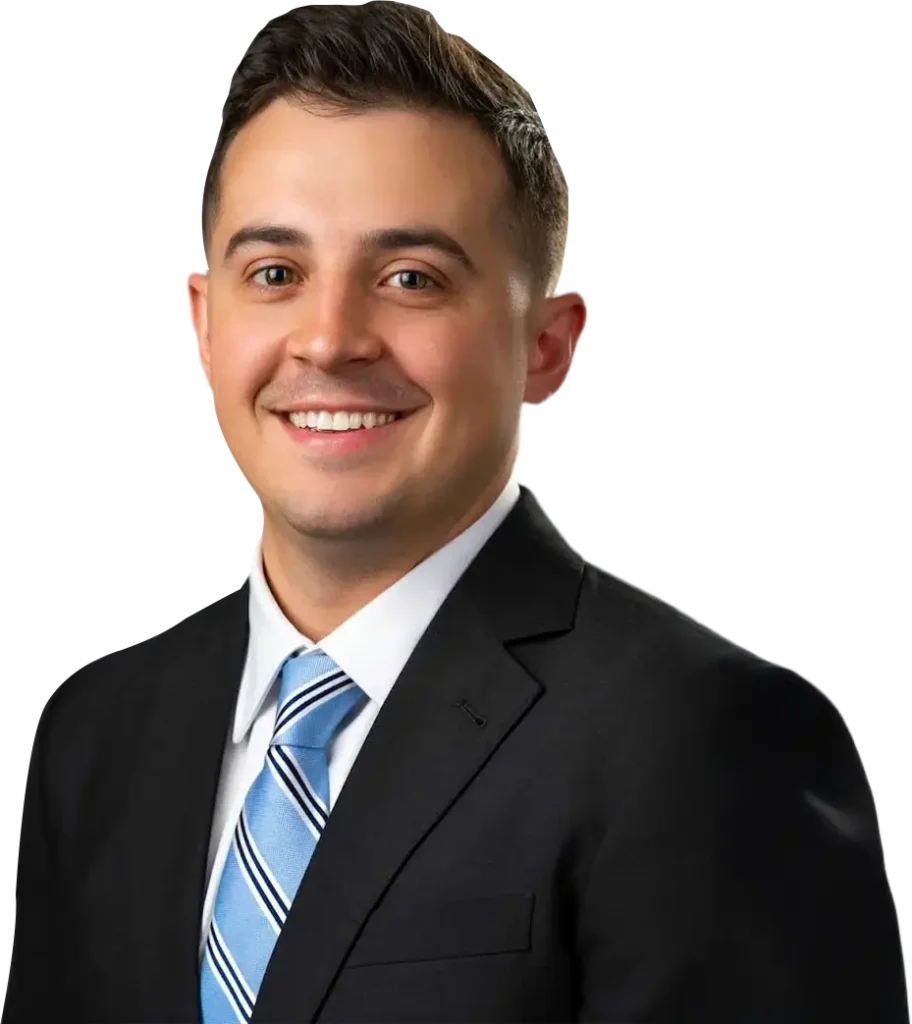










Attorney Daniel J. Larson

Everett Pedestrian Accident Lawyer

Drivers must stop for you when you cross.

Crosswalks here stay busy from morning to night. Once you step into one, any driver nearing your side of the street must stop completely, and one who rolls ahead carries the blame.

As Seen On:

NBC News
WBZ CBS News Boston logo

People hurt while walking rely on an Everett pedestrian accident lawyer to answer the driver's excuses

Nothing stands between a person walking and the front of a moving car. Your body absorbs the bumper first and then the street. Broken bones, torn ligaments and weeks of therapy are common, and the careless driver’s insurer usually starts shaping the story before you are home from the hospital. An Everett pedestrian accident lawyer keeps that story honest and shows where the motorist’s eyes were instead of on you and the crossing ahead.

Insurers comb through small details hoping to pin the crash on the walker. They may say you were reading a text, that you crossed a few steps from the painted lines or that the light had already changed. None of that cancels the driver’s job of scanning the road, easing off around walkers and braking for anyone in the path. Our reply focuses on what was plainly visible from behind that wheel.

Many drivers who strike someone on foot say the same thing afterward: they never saw the person. That sentence often helps your case more than it hurts, because anyone driving through town is expected to notice people directly ahead. Missing a person in plain view is simply careless driving.

Losing the ability to walk comfortably can hit harder than people expect. People who used to reach work, stores and friends on foot may need weeks or months before they can cross a street again without pain. Your case should account for that loss of freedom, the physical therapy it takes to rebuild strength and any help you need at home during the months you rely on others to get around.

A fall onto the pavement can also injure the head in ways nobody notices right away. Headaches, dizziness and trouble with memory sometimes appear days later. Our page on harm to the brain from a fall on hard ground explains how those effects are treated and proven, and we ask your doctors to screen for them early.

When a child, a partner or a friend was walking beside you, each person who was hurt brings an individual claim covering their own injuries. We handle those claims together so that no one’s recovery is overlooked and every family member’s losses are counted.

Pedestrian cases here are guided by Daniel J. Larson himself. As a legal team for people hurt while walking, we stay in close touch with the doctors and therapists treating you, so the file tracks each phase of healing, from that first emergency visit until you can walk unaided.

Your energy belongs on rebuilding strength, not on arguments with an adjuster. We take every call from the driver’s insurer, update you as things progress and make sure nothing gets signed before you understand what it covers.

What our clients say

Jeffrey K.
★★★★★
Attorney Larson or Dan as I refer to him now is a phenomenal lawyer who has turned into a friend. He is knowledgeable, smart, extremely thorough and aggressive. He knows the law and delivers fantastic results in a timely fashion. I consider him a great partner and someone I always want to have in my court/corner when I need legal guidance, and support.
Samantha N.
★★★★★
I can’t say enough wonderful things about Dan and his personal injury firm. I’ve seen firsthand how dedicated, knowledgeable, and compassionate he is. Dan is the type of car accident attorney who truly goes above and beyond—he communicates clearly, fights hard for his clients, and genuinely cares about getting them the best possible results.
Jamal B.
★★★★★
Dan and the whole team at Larson Law were super helpful and informative, they were able to walk me through the whole process of my case and they did everything to make sure that I received proper compensation for the incident that happened to me. And I am glad to say that I am very satisfied with the services provided to me by Larson Law. Great team!
Megan A.
★★★★★
Dan was amazing to work with after my car accident. He kept me updated the whole time, explained everything clearly, and always responded quickly. Great communication and a great outcome—highly recommend!
Johnny M.
★★★★★
Dan helped me with a car accident and it was so easy and he is very communicative and reallly helps you out with all he can! Thanks again Dan!
Sina A.
★★★★★
Dan is the Man. He helped me recover from my car accident and the communication and whole process was smooth sailing. Thank you Dan. God speed.
Lee L.
★★★★★
Attorney Larson of Larson Law Did a great job with my case.. I was in a auto accident in 2024 Attorney Larson took my personal injury case and in 2025 I received a maximum payout. Anytime I had a question or concern he was always available.
Cambridge pedestrian accident lawyer, lowell pedestrian accident lawyer New Bedford pedestrian accident lawyer Everett pedestrian accident lawyer

Our office records every change the crash made to the way you walk

Traffic law puts most of the duty to prevent a pedestrian crash on the driver

Walkers carry no frame, belt or airbag, so traffic law loads most of the duty of care onto whoever is driving. Several of those rules apply only when someone is walking, and they shape almost every claim after a car hits someone walking here.

The clearest rule covers marked crosswalks. Once you step onto the side of the street the driver is using, or close enough that you could be in danger, that driver must stop and wait, not merely slow down. A second driver may not swing around a vehicle waiting for you at a crossing, a move that causes many serious injuries on wide, busy roads.

Leaving the painted lines does not remove the driver’s duty. People who cross mid-block are expected to let traffic pass first, yet anyone behind the wheel who sees a person in the road must still ease off and do what they can to avoid hitting them. A walker who took a shortcut and a driver who never slowed can both carry some fault, and the driver’s share is often the larger one.

Turns bring their own duty. Anyone turning right at a light, including a turn on red where it is allowed, must give way to anyone already crossing in front of the car. Being in a hurry to beat the next light does not change that duty, and neither does a quick glance that missed you.

Sidewalks are meant to be safe ground. A car rolling out of a driveway, a gas station or a store lot has to stop before it crosses the walkway, and nobody may drive along a sidewalk to get around traffic. When a car reaches you there, the question of fault usually answers itself.

People using wheelchairs, walkers or motorized mobility chairs are treated as pedestrians under the law, whether they are on the sidewalk or crossing the street. The same stopping and yielding rules apply to them, and a driver cannot excuse a crash by saying the person was not walking.

The law shields people who cannot see the traffic around them. A driver who approaches someone crossing with a white cane or a guide dog must come to a complete stop and stay stopped until that person has passed. Ignoring that rule is a plain breach, and it weighs heavily in the claim built afterward.

Some streets have no sidewalk at all. There, people walking should stay on the shoulder, facing oncoming traffic when they can, while drivers must give them room and pass at a safe speed. A driver who crowds the shoulder or brushes past someone walking has broken that duty.

The law judges children differently from grown-ups. A young walker is judged by what a child of that age would reasonably understand, not by what a grown driver knows. A driver near homes, parks or school routes is expected to allow for sudden movements, and a child’s filing clock usually waits until adulthood.

When blame is shared, the rule is the same for walkers as for anyone else, but the facts tend to favor the person on foot. You may still be paid if your own share of blame stays no larger than what the drivers carry between them, and any award drops by your percentage. A jury weighs who had the better chance to prevent the crash, and a person steering a heavy car usually had far more of that chance than a person walking.

Payment for early treatment follows its own order when you are on foot. When you or a relative living with you carries auto coverage, that policy normally pays for early doctor visits plus some missed pay, walking or not. With no policy anywhere in your home, the company insuring the striking car steps into that role. Asking the driver to pay for pain and permanent effects becomes possible after the injury crosses a legal line, and pedestrian injuries usually do.

Filing time is limited too. Court action against the driver normally must begin within three calendar years of being hit; our guide to time limits for filing an injury lawsuit explains the exceptions. Evidence fades much faster than that, so the early weeks matter most.

These rules only help once someone ties them to the facts of your crossing. We show which rule the driver broke, answer every effort to push fault your way and bring each responsible policy into the claim. That work starts with a short conversation about your walk that day and the car that reached you.

Much of daily life in this city happens on foot

Much of daily life here moves on foot. People walk to jobs, markets, places of worship, clinics and the homes of friends, often several times a day, and many households get by with one car or none at all. Teenagers head to practice and older neighbors make their daily rounds on the same blocks. Every one of those trips depends on drivers who stay alert to the people sharing the street with them.

Delivery traffic has changed how the streets feel for anyone walking. Food orders, packages and grocery runs keep vans and personal cars stopping, turning and pulling away all day long, often with a driver checking an app for the next address. A driver racing the clock is still expected to watch for people at the curb, and a rushed stop or a sudden reverse that catches someone walking is the driver’s responsibility. The company behind the delivery may also carry insurance that applies while its driver was working.

Crowds bring their own risk. When a game, a religious service or a community event lets out, dozens of people cross at once and cars queue up waiting to leave. Some drivers grow impatient and inch forward through the group or roll into the first gap they see. A person hit in that moment was doing exactly what everyone around them was doing, and the driver who pushed ahead carries the fault. Staff or officers directing traffic help, but each driver still has to stop for every person crossing.

Early mornings on weekends see a different kind of foot traffic. Runners, people walking dogs and neighbors heading out for coffee use roads that feel empty, and some drivers treat that quiet as permission to speed up or skip a full stop. Light traffic never relaxes a driver’s obligation to scan for walkers, and a driver caught off guard by a jogger was simply not looking. A quiet street is exactly where people expect to feel safe.

Our familiarity with the routes people here walk daily matters when an insurer argues that no one should have been crossing at a certain spot. We can explain why residents cross where they do, how long they wait for a gap and why a careful driver passing through that stretch should have expected someone on foot. Grounding the claim in how the street is actually used leaves an insurer little room to wave it away.

Street parking puts many residents on foot in the road itself. Loading groceries into a trunk, buckling a child into a car seat or walking around your own car to reach the driver’s door all happen a step or two from moving traffic. Drivers passing a row of parked cars are expected to give that space room, and one who clips a person beside a parked car has plainly fallen short.

Cold mornings create a hazard that is easy to prevent. Some drivers pull out with frost or fog still covering most of the windshield, peering through a small cleared patch. Anyone who drives that way cannot see people crossing ahead, and choosing to move before the glass is clear is careless in a way a jury understands immediately.

Whatever brought you out that day, a shift at work, an errand or a walk with family, the claim is about the driver who stopped paying attention to everyone nearby. Our focus stays there from the first conversation to the final number, and the claim will reflect every way the injury changed your days on foot.

Your job's physical demands shape how we measure your lost pay

Being struck on foot leaves problems that a person hurt inside a car rarely faces in the same way. Standing at work, reaching an appointment or crossing to a pharmacy may be impossible for weeks. We take on the parts of the claim that are hardest to manage while you are off your feet, leaving you free for treatment and rest.

Plenty of local jobs keep workers upright or moving for an entire shift. Cashiers, nurse aides, cooks, warehouse workers and home care staff often cannot return to full duty while a leg, hip or ankle heals. We gather a plain description of what your job physically requires and pair it with your doctors’ limits, so the insurer sees exactly why you missed work and how much fewer hours or a switch to different work will take from your paychecks later.

Family members often become the missing legs of the household. A spouse drives you to appointments, an adult child helps you bathe, a neighbor picks up your groceries. That help is worth something even when nobody is paid for it. We log who stepped in, how often and how many hours it took, and we include that time in the claim instead of treating it as a favor the driver can ignore. Paid help at home, such as an aide for the first weeks, is counted as well.

The worst pedestrian crashes can crush a foot or leg beyond saving. When surgeons must remove part of a limb, the claim needs to cover decades of fittings, replacement devices, therapy and changes to daily routines and work. Our page on losing part of a leg or foot after a crash explains how those future needs are measured, and we bring in specialists who plan that care in detail.

Insurers for the driver sometimes ask for your full phone records to argue you were distracted while crossing. Handing over months of calls and messages is rarely necessary. We push back on requests that reach too far and agree only to what actually relates to the moment you were struck, which keeps your private messages out of an argument that should be about the driver. When the records show the phone was idle, they can also settle the question quickly.

Joints that were broken or twisted in a crash can wear out faster later in life. Knees, hips and ankles damaged in a pedestrian crash sometimes develop arthritis years after the bones have healed. We ask your orthopedic doctors whether that risk applies to you, and when it does, we fold that likely future treatment into the amount we seek.

Talks with the driver’s insurer run through our office. We lay out your losses for the adjuster in a clear, organized way, explain every figure the insurer puts back on the table and never let a number go unanswered. If the insurer refuses a fair result, the case goes to court, where the driver must explain why someone standing in full view was missed.

You deal with healing, therapy and the slow return to walking on your own. We deal with the paperwork, the adjusters and the long list of costs that follow a pedestrian crash, and we stay reachable whenever a new question comes up.

Crosswalk and Intersection Crashes

Failure-to-Yield Collisions

Hit-and-Run Pedestrian Cases

Catastrophic and Fatal Crashes

Only a few tasks fall to you after a car strikes you while walking

Get care and note where it happened

Get emergency medical care right away, even if you feel able to walk, and if you can, photograph the crossing and signals; make sure police respond, get the driver’s details, and get witness contacts.

Talk to an Everett crosswalk lawyer

Reach out for a free and private conversation. We explain how the no-fault and crosswalk rules apply, answer any blame an insurer places on you, and tell you what evidence must be preserved right now.

We fight the blame and press harder

We collect the signal data, camera footage, and witness accounts, answer the driver-friendly story with hard evidence, and pursue the at-fault driver for the full cost of your injury, not a low offer.

Bring the questions from your crash to an Everett pedestrian accident lawyer at our office

On foot you had no metal around you, while the driver had speed, weight and steel on their side. Their insurer will want your account of the crossing before you have finished your first round of treatment, so let us hear it first. We listen to where you were walking, what you remember of the car and what the injuries now keep you from doing, then explain how we would pursue that driver. Call our office, or write to us through this page, at whatever hour suits you.

By submitting this form, you acknowledge that doing so does not create an attorney-client relationship. Please do not include confidential information. Contacting us does not obligate you to retain our services.

Our Clients.

People on foot face different questions from drivers once a car hits them

What should I do after being hit by a car in Everett?

Get emergency medical care right away, even if you feel able to walk, because serious injuries can hide behind adrenaline. Make sure police respond, get the driver’s information, and photograph the crossing and signals if you can. Do not give the driver’s insurer a statement first.

That claim is common and often untrue. We answer it with evidence — signal timing, the point of impact, the driver’s speed and sightlines, witnesses, and any camera that saw the crossing — so the facts decide fault, not a convenient story.

Yes. Personal injury protection covers a pedestrian struck by a motor vehicle, paying early medical bills and part of lost wages regardless of fault. The benefits come from the vehicle that hit you, or from your own auto policy if you have one.

Once your injuries clear the tort threshold — generally more than two thousand dollars in medical costs, or a fracture, permanent disfigurement, or lasting loss of sight or hearing. Pedestrian injuries are usually serious enough to qualify.

You may still recover. Crossing outside a crosswalk does not automatically bar a claim; it is weighed under comparative negligence. Drivers must still watch for people on foot, and a speeding or distracted driver can be largely or fully at fault.

You can still recover. Under comparative negligence your compensation is reduced by your share of fault and barred only if you are more than half responsible. Because pedestrians are unfairly blamed, we work to keep responsibility where the evidence puts it.

Generally three years from the date of the crash. Acting early matters, because crosswalk conditions change, signals are re-timed, and camera footage is overwritten long before that deadline arrives.

A hit-and-run does not leave you without options. Your own uninsured motorist coverage can pay when the driver cannot be found, and we work to identify the driver through cameras and witnesses. Report the crash to police promptly.

There is no fixed figure. Value depends on the severity and permanence of your injuries, the care you will need, your lost income, and the pain you endure. Pedestrian crashes often cause serious harm, and we document each loss fully.

With no protection against a vehicle, pedestrians often suffer traumatic brain injury, spinal damage, broken bones, and serious internal injuries. Some are permanent. Prompt medical care protects both your health and the record tying your injuries to the crash.

Nothing upfront. We work on a contingency fee, so you pay no attorney fee unless we recover money for you. The initial review of your case is free, so there is no financial risk in finding out where you stand.

Yes. We represent injured pedestrians in Everett and the surrounding communities, including Chelsea, Malden, Medford, Somerville, and Charlestown. Reach out by phone or through the form on this page for a free review.
