Another driver was careless and you were hurt, so their insurance company now decides what your treatment, your missed work, and your pain are worth. That number can be challenged.

ATTLEBORO CAR ACCIDENT LAWYER
The first offer comes before anyone knows what you need.
- No fee unless we win
- Same-day response
- Free case review
As Seen On:











An Attleboro car accident lawyer proves who caused the crash.
A collision in Attleboro puts two separate insurance systems into motion, and most people meet the second one only after the first runs out.
Your own policy answers first. It covers your initial treatment and part of the income you miss during recovery, and it does so without asking who was responsible. That help is real, and it has a ceiling. It stops at a fixed figure, it was never built for months of care, and it contributes nothing toward what the crash has taken out of daily life.
Everything that first layer leaves out belongs to a separate claim, brought against whoever caused the collision. Whether you can bring one turns on how far the injury actually goes. Once treatment costs climb past a certain level, or the injury involves a break, a permanent scar, or a lasting loss, that second claim opens and it reaches the whole experience, not only the paperwork. Establishing that your injury meets that level, and that the collision was not your doing, is the part that takes real work.
Both insurers begin assembling their position the hour the crash is reported. Yours is working out how much treatment it will cover. Theirs is hunting for a reason to pay less, and the easiest one to find is a hole in the record. The first few days therefore outweigh almost everything that follows. The report gets written then, the footage still exists, and the earliest medical visit is what links your injury to the crash itself.
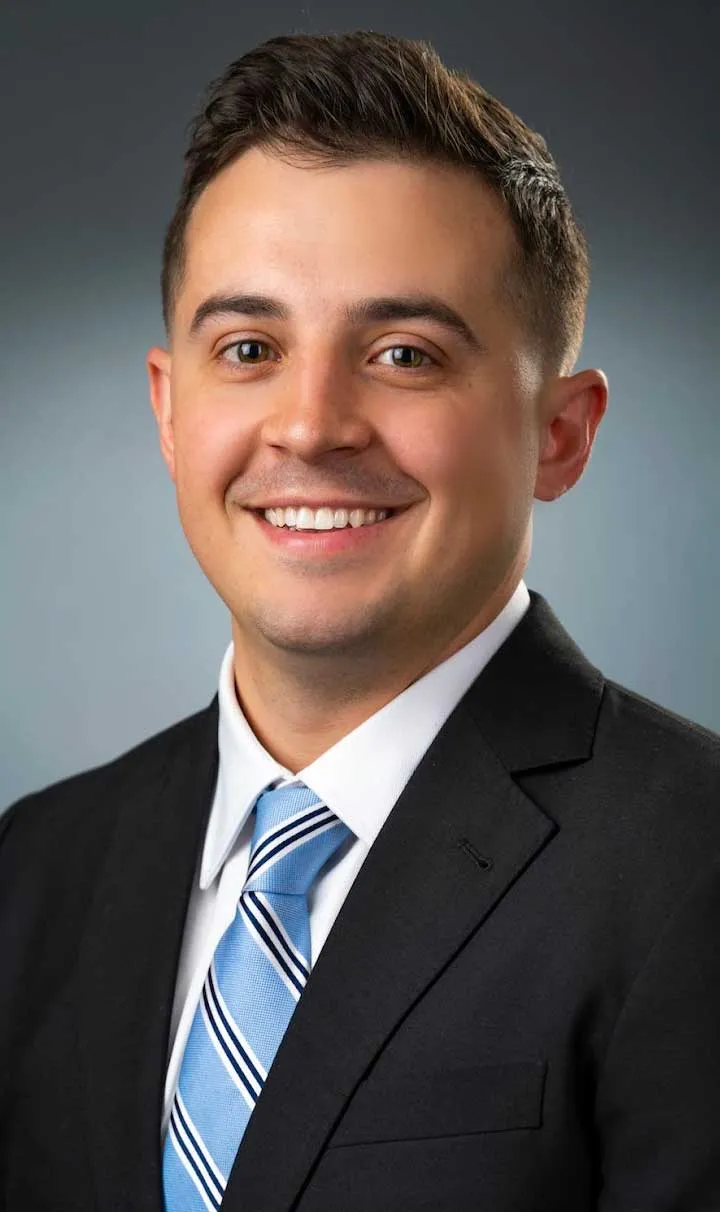
Most of these claims are decided by something quieter than a single piece of evidence. They are decided by whether anyone did the patient early work of recording what happened and tying each injury back to the collision while the proof was still there. Daniel J. Larson takes these cases on directly, and they begin with that record rather than with an argument.
What our clients say
Jeffrey K.
★★★★★
Attorney Larson or Dan as I refer to him now is a phenomenal lawyer who has turned into a friend. He is knowledgeable, smart, extremely thorough and aggressive. He knows the law and delivers fantastic results in a timely fashion. I consider him a great partner and someone I always want to have in my court/corner when I need legal guidance, and support.
Samantha N.
★★★★★
I can’t say enough wonderful things about Dan and his personal injury firm. I’ve seen firsthand how dedicated, knowledgeable, and compassionate he is. Dan is the type of car accident attorney who truly goes above and beyond—he communicates clearly, fights hard for his clients, and genuinely cares about getting them the best possible results.
Jamal B.
★★★★★
Dan and the whole team at Larson Law were super helpful and informative, they were able to walk me through the whole process of my case and they did everything to make sure that I received proper compensation for the incident that happened to me. And I am glad to say that I am very satisfied with the services provided to me by Larson Law. Great team!
Megan A.
★★★★★
Dan was amazing to work with after my car accident. He kept me updated the whole time, explained everything clearly, and always responded quickly. Great communication and a great outcome—highly recommend!
Johnny M.
★★★★★
Dan helped me with a car accident and it was so easy and he is very communicative and reallly helps you out with all he can! Thanks again Dan!
Sina A.
★★★★★
Dan is the Man. He helped me recover from my car accident and the communication and whole process was smooth sailing. Thank you Dan. God speed.
Lee L.
★★★★★
Attorney Larson of Larson Law Did a great job with my case.. I was in a auto accident in 2024 Attorney Larson took my personal injury case and in 2025 I received a maximum payout. Anytime I had a question or concern he was always available.

The people deciding your claim do not work for you.
- We handle car accident claims across Attleboro and all of Bristol County.
- We understand Massachusetts no-fault PIP and the exact thresholds that open a claim against the at-fault driver.
- We move fast to preserve the police report, camera footage, and vehicle evidence before it disappears.
- We deal with both insurers directly so you are not pushed into an early, low settlement.
- We build each claim on medical proof and crash evidence, not a rushed call with an adjuster.
- No fee unless we win your case
- No upfront costs
- Direct attorney access throughout
- Free, no-pressure case review


What a crash claim actually turns on.
Whether your claim stays small or becomes a real one usually comes down to a single question: how far the injury goes. Once treatment costs climb past a certain level, or the injury involves a break, permanent scarring, or a loss you do not get back, the claim stops being about receipts and starts covering everything the collision took. What makes that case is not an argument, it is the medical record. Gaps in treatment, a first visit weeks after the crash, or notes that never connect the pain to the collision are what an insurer reaches for when it wants to keep a claim in the smaller category.
When the insurer says part of it was your fault
Blame is rarely treated as all or nothing. An adjuster may accept that the other driver caused the collision and still argue you carried some share of it, because every percentage point shifted onto you comes off what they pay. Carrying part of the blame does not end the claim, provided your share stays at or under half, and whatever share sticks comes straight off the final figure. That is why an early recorded statement matters so much, since a few sentences given in the first week, before the injuries have finished showing themselves, can set that percentage for the life of the claim.
There is also a clock. The outside limit on most injury claims here runs to roughly three years, counted from the day of the collision, which sounds generous and almost never is. Evidence leaves long before the deadline does. Footage is written over within weeks, damaged cars are repaired or sold for parts, and witnesses stop being able to describe what they saw. By the time the limit is close, the claim that can still be proved is usually a smaller thing than the claim that once existed.
Thin coverage on the other side is its own problem, and a common one. Some collisions are caused by drivers carrying nothing at all, and plenty more by drivers carrying the legal minimum and not a dollar beyond it. That does not automatically cap what you recover. Your own policy may include protection written for exactly this situation, and another policy in the same household can sometimes be reached as well. Working out which policies apply, and in what order they pay, is ordinary work on a serious claim, and it is frequently where the gap between a token result and a real one turns up.
Where a crash happens changes how it is handled.
The road your crash happened on decides more than people expect. A collision on the interstate that runs through the city is investigated by a different police force than one on a city street, which means a different report, written to a different standard, arriving on a different timetable. Highway speeds also change the injuries themselves, and an insurer reading a high-speed collision report treats the claim differently from the first day.
Crashes on the commercial stretches tend to be slower and better documented, because the businesses lining them run cameras. That footage is the most useful evidence available and the most perishable. Most systems record over themselves within a week or two, and no business is obliged to keep anything for you. Someone has to ask, in writing, before the file is gone, and that is usually the most time-sensitive thing anyone does on a car crash claim.
Where you were taken afterward matters for a different reason. The first clinician to see you writes the record every later argument is built on, and they write down what you tell them. A description given while you are shaken and focused on the obvious injury can leave the quieter ones unmentioned, and an insurer will read that silence as proof they came from somewhere else. Going back to add them later never carries the weight of having said them first.
Where the case is eventually filed is a separate question again. Smaller claims are resolved in the local district court and move relatively quickly. Anything substantial goes to the county court, where the timetable is longer and the process more involved. Neither route changes the size of what you are owed, but they run at different speeds, and knowing which one a case is heading for changes how early the work has to be done.
Sitting close to the state line adds one more wrinkle. A meaningful share of the traffic through the city is registered elsewhere, and a crash with an out-of-state driver brings in a policy written under different rules and an adjuster working from a different playbook. That does not make the claim harder to win. It does mean the first decisions about which insurer to put on notice, and in what order, need to be right.
What gets counted when a claim is valued.
The costs of a serious crash arrive in waves. The first hospital bill is the one everybody sees, and it is rarely the largest. Surgery scheduled months out, therapy that runs through a year, imaging repeated to check whether something healed properly, medication, equipment, changes to a home that no longer suits the person living in it. A claim that closes before those are known closes short, and it does not reopen.
Lost income works the same way and gets undercounted for the same reason. The pay missed while you were off work is simple arithmetic and easy to prove. What is harder, and usually worth more, is what the injury leaves you able to earn afterward. The overtime that is no longer possible, the trade that needed you on your feet all day, the step up that quietly stops being available. That loss is real and it has to be demonstrated rather than asserted.
Then there is the part with no invoice attached. A serious injury takes things that were never purchased in the first place, including sleep, patience, the ability to lift a child, and a whole season of doing the thing you actually enjoy. Insurers discount this category hardest, because it resists arithmetic. It is also the part most people would give the most to have back.
How much of this gets counted comes down to what was written down at the time. A file that follows the injury from the first visit through every setback carries weight no letter can manufacture. The work is in recording it while it is still happening.
Medical Bills and Treatment Costs
Lost Wages and Earning Capacity
Pain, Suffering, and Hardship
Scarring and Permanent Injury
The first three moves decide how the claim turns out.
Get medical care, then get a report
Get medical care right away, since crash injuries often worsen, and make sure the police document the crash; that report and your medical record tie the injury to the driver’s fault immediately fully.
Document the scene and the vehicles
Photograph the scene, the vehicles, the road, and the damage, and get the names of any witnesses; this evidence and the vehicle positions help prove how the other driver caused it immediately clearly.
Talk to a lawyer before the insurer
Before you give either insurer a recorded statement or accept a quick payout, speak with a lawyer first, since early advice preserves the evidence and your filing deadline for the claim immediately a.
- 5.0 stars out of 100+ reviews
Start before the insurer does.
Most people wait because they are not sure there is anything worth acting on yet. There usually is. Early work on the evidence is what holds a claim together later, and a first conversation commits you to nothing beyond the conversation. If what happened reaches wider than one crash, the firm’s main injury practice covers that ground.
By submitting this form, you acknowledge that doing so does not create an attorney-client relationship. Please do not include confidential information. Contacting us does not obligate you to retain our services.
Our Clients.


Our Practice Areas.
Larson Law takes on claims for people injured by careless driving. If that is what happened to you, the next step is a direct conversation about the crash and where the claim realistically stands.
Most people arrive with the same few questions.
Do I have a claim if another driver hit me in Attleboro?
Very likely, if the other driver was at fault. After an Attleboro crash your own PIP pays your first medical bills regardless of fault, but when your injuries are serious enough you can claim directly against the at-fault driver. The main questions are whether the other driver’s negligence caused the crash and whether your injuries meet the threshold to step outside no-fault. A free review can tell you whether the facts support a claim and roughly what it may be worth, at no cost to you. The sooner we begin, the more of the evidence we can preserve before it is lost or altered, and the stronger your position becomes when the insurer decides how to value the claim. In our experience, early legal help changes how the insurer treats a claim from the very first conversation about it.
How does Massachusetts no-fault PIP work after a crash?
Your own insurer handles the earliest costs, regardless of blame, and stops at a ceiling. Nothing in that first layer answers for the injury itself. Past a certain level of harm, responsibility shifts to whoever caused the collision, and the claim covers the whole of it.
When can I claim pain and suffering after an Attleboro crash?
Two things can open that door. Treatment costs may climb past a set level, or the injury qualifies on its own, such as a break, scarring that stays, or sight or hearing you do not get back. Either way, the record written at the time is what settles it.
What if I was partly at fault for the crash?
Partial responsibility does not end things, so long as your portion stays at or below half. Whatever portion is assigned gets deducted from the result, which gives an adjuster every reason to push it higher. What was recorded at the scene is what holds that figure in place.
How long do I have to file a car accident claim in Attleboro?
About three years, in most cases. The deadline is rarely the real constraint though, because the material a claim rests on thins out long before it arrives. Waiting until the limit is close usually means arguing from a weaker file than the one that existed in week one.
What if the other driver had no insurance or too little?
The claim moves to your own policy. Drivers here generally hold coverage that answers when the responsible party has none, and often a further layer for when their limits fall short. What you can actually draw on comes down to how those policies are written.
Who pays for my injuries after an Attleboro car crash?
Your own PIP pays first, and then the at-fault driver’s liability insurance covers the full harm once you meet the threshold; where their limits fall short, your UM/UIM coverage may apply. In some cases more than one party is responsible — for example, another driver or a party responsible for a road hazard. A lawyer identifies every responsible party and every policy so the available coverage actually pays for your losses. That way your ability to hold a careless party accountable never depends on what you can afford to pay a lawyer up front. Everyone deserves fair, capable representation regardless of their financial situation or the size of the claim.
What is an Attleboro car accident claim worth?
It depends on the severity and lasting effect of the injuries. Value can reflect past and future medical care, surgery and rehabilitation, lost wages and reduced earning capacity, pain and suffering, and any permanent scarring or disability. A soft-tissue injury that heals is worth far less than a fracture, a serious head injury, or an injury that keeps you from your job. A lawyer can evaluate the claim after reviewing the medical records and how the crash has affected your life. We make sure the claim accounts for future care and any long-term loss of earning capacity, not only the bills you have already received. Serious injuries carry costs that continue long after the initial treatment has ended, and the claim should reflect that.
I hit my head in the crash. Does that change anything?
It can, significantly. Car crashes are a leading cause of traumatic brain injury, and head injuries do not always show their full effect right away. Prompt medical evaluation matters both for your health and for connecting the injury to the crash in the record. A serious head injury can substantially increase the value and complexity of a claim, so it should be documented carefully and followed over time rather than assumed minor. Keeping every bill, report, and photograph together in one place makes the claim far easier to prove and much harder to dispute. Well-organized records shorten the process and reduce the chance of a costly dispute down the line.
Where would my Attleboro crash case be handled?
Smaller civil claims tied to Attleboro are generally handled at the Attleboro District Court on North Main Street, and larger personal injury cases are filed at the Bristol County Superior Court. In practice, most crash claims settle with the insurer before any trial, but a lawyer prepares each case as if it may be tried, which is often what it takes to move an insurer to a fair number. Because serious injuries can affect your work, your routine, and your relationships for a long time, they deserve careful and complete documentation. We take the time to understand how the injury has changed your daily life, your work, and your plans.
How much does an Attleboro car accident lawyer cost?
Nothing upfront. Larson Law handles car accident claims on a contingency fee, so there is no charge unless we recover money for you, and the first review is always free. We advance the costs of investigating the crash, obtaining the police and medical records, and working with any experts the case needs, and we are paid only from a successful result, so cost is never a reason to wait. We handle every filing, court appearance, and deadline, so a simple procedural misstep never puts your recovery at risk. Missing a filing deadline can end an otherwise strong claim, so we track every date closely for you.
What should I do right after a car accident in Attleboro?
Call the police so the crash is documented, get medical care promptly even if you feel only shaken, and photograph the scene, the vehicles, and the road before anything is moved. Get the other driver’s license and insurance details and the names of any witnesses. Avoid giving either insurer a recorded statement or accepting a quick payment before speaking with a lawyer, since these early steps preserve the evidence and your claim. There is never any cost to have us review your case, or a settlement offer, before you decide how you want to proceed. A short, free conversation is often enough to know whether you have a claim worth pursuing.