
Cambridge Truck Accident Lawyer
A truck crash may call for close review.
Cambridge truck crashes involve tight evidence windows, road issues, and insurer pressure. Larson Law helps the injured in Middlesex County weigh their options and protect a claim.
- No fee unless we win
- Same-day response
- Free case review
As Seen On:










Road accidents involve rules that most drivers and lawyers do not know.
Cambridge is not a city built for large commercial trucks. Its streets were laid out centuries ago, its bridges have low clearances, and the City of Cambridge maintains a published list of truck-restricted streets at cambridgema.gov. Memorial Drive – one of the most well-known roads in Cambridge – is prohibited to commercial trucks, with height restrictions as low as 9 feet in some locations. Despite that, trucks do end up on restricted roads, and the resulting crashes carry a specific legal weight: a driver who ignored a posted restriction violated a legal duty the moment they turned down that road. At the same time, Cambridge’s legitimate truck corridors – I-93’s exit to Monsignor O’Brien Highway, East Cambridge’s commercial streets, and the biotech delivery routes around Kendall Square – carry real freight traffic every day and generate their own crashes. Federal FMCSA regulations, multiple potentially liable parties, and data that can be overwritten within days all make these cases more complex than a standard car accident claim.
If you were hurt in a truck crash in Cambridge, acting fast matters. A Cambridge truck accident lawyer can step in early, preserve the evidence the carrier wants to see disappear, and build the case before the other side gets ahead of you.
Because deadlines and evidence both work against delay, the practical value of acting early is hard to overstate. Policies can be identified, witnesses located, and the scene and records documented while the information still exists. Those early steps rarely feel urgent in the moment, but they are often what a strong claim later depends on.
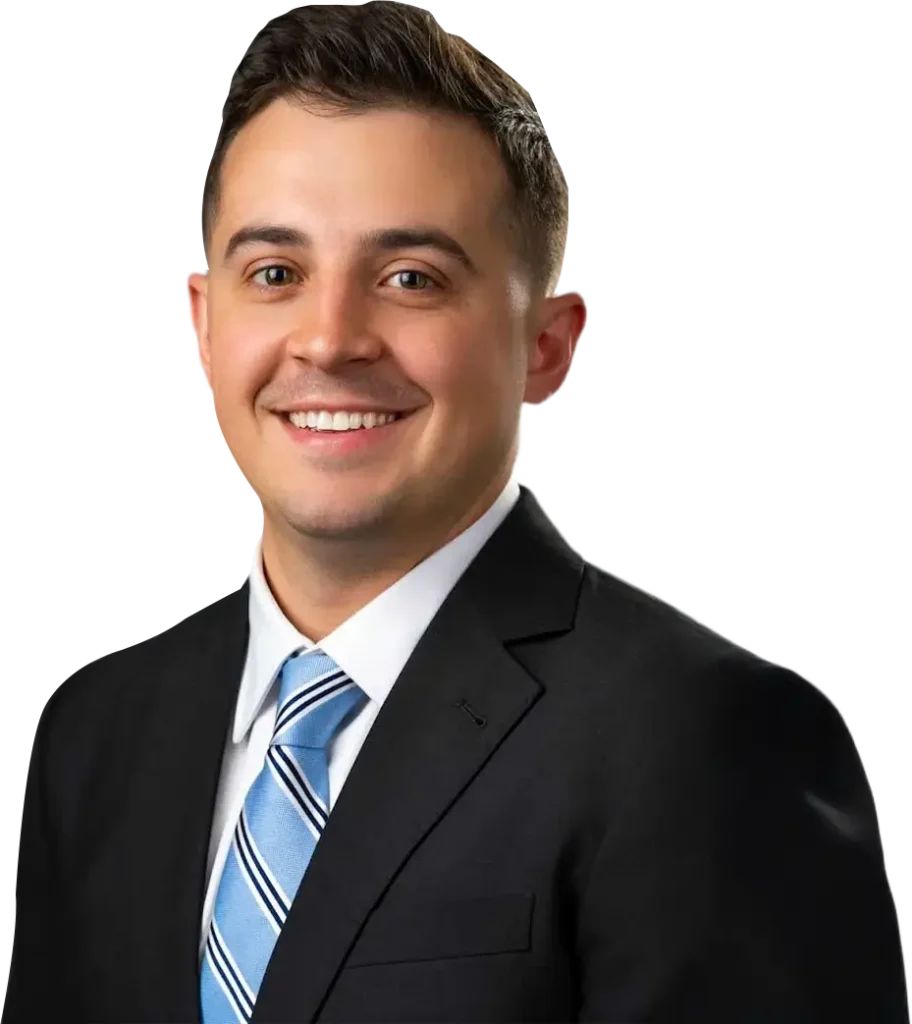
These claims are handled directly by Daniel J. Larson, who has represented people seriously injured in commercial truck crashes across Cambridge and the greater Boston area.
Cambridge truck accident victims have trusted Larson Law.

Carriers send investigators to crash scenes fast. Here is how we respond.
- We handle truck crash injury claims for injured clients across Cambridge and the surrounding area.
- We deal with the insurers directly so you are not pressured into an early, low settlement.
- We move quickly to preserve the evidence that proves both fault and the full extent of the harm.
- We know the Massachusetts rules that shape these claims and the ways insurers try to limit them.
- We build each claim on medical proof and documentation, not on a rushed call with an adjuster.
- No fee unless we win your case
- No upfront costs
- Direct attorney access throughout
- Free, no-pressure case review


Where trucks belong in Cambridge - and where they do not.
Cambridge is one of the few Massachusetts cities with a formally published list of truck-restricted streets, available at cambridgema.gov. Understanding where your crash happened tells us two things immediately: whether the truck was on a legal route, and what the documented crash history of that corridor looks like.
Memorial Drive – prohibited to commercial trucks
Memorial Drive is one of Cambridge’s most recognizable roads, running along the Charles River from Kendall Square toward the Alewife area. It is also prohibited to commercial trucks. Height restrictions on the river parkways can be as low as 9 feet in some locations. The phenomenon known locally as ‘Storrowing’ – a truck driver ignoring parkway height restrictions and becoming wedged under a low bridge – is documented regularly in the Boston area, and Memorial Drive falls within the same restricted parkway network as Storrow Drive. If a commercial truck caused your accident on Memorial Drive, the driver’s presence on a restricted road is direct evidence that they violated a posted legal duty. That violation does not automatically establish full liability, but it significantly strengthens a negligence argument.
I-93 and Exit 25 – Monsignor O’Brien Highway
Interstate 93 runs along Cambridge’s eastern edge. Exit 25 from I-93 leads directly to Route 28 / Monsignor O’Brien Highway, which is the primary legal access route for commercial trucks entering East Cambridge and Kendall Square. This corridor carries significant freight traffic, including delivery vehicles servicing Cambridge’s dense biotech district. The MBTA has explicitly designated Monsignor O’Brien Highway as the truck route for Cambridge in its own construction detour orders. Crashes on I-93 near the Cambridge exits and on Monsignor O’Brien Highway itself fall within State Police jurisdiction and generate State Police crash reports that are critical evidence.
McGrath Highway and East Cambridge commercial streets
McGrath Highway in Somerville connects directly to Cambridge’s East Cambridge street network. MBTA truck detour routes explicitly direct trucks between Monsignor O’Brien Highway and McGrath Highway, confirming this is a recognized freight corridor serving Cambridge. The streets of East Cambridge – including Cambridge Street, First Street, Second Street, and Third Street – carry commercial delivery traffic for the biotech companies, CambridgeSide retail, and the legal district near the Edward J. Sullivan Courthouse. Delivery trucks operating in these corridors interact daily with pedestrians, cyclists, and passenger vehicles at some of Cambridge’s most active intersections.
Route 2 and the Alewife corridor
Route 2 ends at the Alewife rotary in northwestern Cambridge. The rotary connects Route 2 to Fresh Pond Parkway, Alewife Brook Parkway, and the surrounding residential and commercial areas. Commercial vehicles using Route 2 to access Cambridge from Lexington, Concord, and western suburbs must navigate the Alewife rotary before entering the city’s surface road network. MassDOT is studying a redesign of the Alewife rotary. Until that project is complete, the complex rotary geometry creates consistent merging risk for commercial vehicles.
Kendall Square delivery corridors – Main Street, Binney Street, Broadway
Kendall Square’s biotech and tech corridor generates enormous daily freight volume – research supplies, equipment deliveries, construction materials for ongoing developments like the Volpe Center redevelopment at 1.4 million square feet, and waste removal. Main Street, Binney Street, and Broadway are the primary surface streets serving Kendall Square and MIT. These streets are not restricted truck routes, but the density of pedestrian and cyclist traffic through the Kendall Square area creates consistent conflict between commercial vehicles and other road users. The City of Cambridge tracks crash data for all city streets through the Cambridge Police Department Open Data Portal at data.cambridgema.gov.
Truck accident cases from Cambridge are filed in one of two courts depending on the amount in dispute. Smaller civil claims are handled by the Cambridge District Court at 4040 Mystic Valley Parkway, Medford, MA 02155. Larger personal injury claims are filed at the Middlesex Superior Court at 40 Thorndike Street, Cambridge, MA 02141
One feature of truck cases sets them apart from ordinary car crashes: the evidence that proves fault often sits with the trucking company, not on the street. Driver logs, electronic control-module data, maintenance records, dispatch instructions, and the driver’s qualification file can all be decisive, and companies are not required to keep them forever. A prompt legal hold — a formal demand that this material be preserved — sent early in a Cambridge truck case can be the difference between proving a violation and being left with only the drivers’ competing accounts.
No two cases are exactly alike. Alongside truck wrecks, our attorneys also handle car crashes, motorcycle collisions, bus crashes, and rideshare wrecks, bringing the same focus on full recovery to every client.
When a claim moves forward, the harm Massachusetts law recognizes reaches past the first medical bills to the cost of future treatment and rehabilitation, earnings lost during recovery and any reduction in future earning capacity, and the physical pain and diminished quality of life a serious injury imposes. Proving these elements depends less on argument than on documentation, and the strength of that record, built steadily from the first appointment, usually matters more to the outcome than anything said to an adjuster by phone.
Injured people also encounter familiar claim tactics. An insurer may seek a recorded statement before the full extent of an injury is known, question whether treatment was necessary, point to a gap in care, or argue that a preexisting condition explains the symptoms. None of these is the final word, but each is a reason to be careful about what is said and when, and to let a consistent medical record, rather than a phone call, define the injury.
We also help injured clients as a Lowell truck accident lawyer.
A truck was involved. That changes the legal landscape immediately.
Truck accident claims in Cambridge involve layers that standard car accident cases do not. Here is what changes when a commercial vehicle is involved, and why those changes matter for your claim.
Federal regulations created a paper trail – if you act fast enough to preserve it
Commercial truck drivers and carriers operating in interstate commerce must follow FMCSA regulations under 49 CFR Part 395. Drivers are limited to 11 hours of driving after 10 consecutive hours off duty, cannot drive past the 14th hour of a shift, must take a 30-minute break after 8 cumulative hours, and are capped at 60 or 70 hours weekly. Since December 18, 2017, most commercial motor vehicles in interstate commerce have been required to use electronic logging devices under 49 CFR Part 395 Subpart B – devices that automatically record duty status, driving time, location, and speed. Carriers must retain ELD data for a minimum of six months under 49 CFR 395.22. The truck’s event data recorder captures speed, braking, and steering at the moment of impact, but has no federal minimum retention period and can be overwritten when the truck returns to service. On Cambridge’s roads, where crash scenes are dense and evidence disappears fast, getting a legal hold letter to the carrier immediately is essential.
Cambridge’s truck restrictions create an additional negligence argument
When a commercial truck crashes on a road where trucks are legally prohibited – like Memorial Drive or any street on Cambridge’s truck-restricted list – the driver’s violation of a posted legal restriction is relevant to the negligence analysis. A driver who disregards a posted weight or height restriction has breached a duty of care independent of how the crash itself occurred. This is a dimension of truck accident claims that does not exist in most other Massachusetts cities, and it is one that an attorney familiar with Cambridge’s specific road rules can use to strengthen the case.
Multiple companies may be responsible – not just the driver
A commercial truck crash in Cambridge can involve liability extending well beyond the driver. The trucking company may be liable under respondeat superior for its driver’s conduct, or independently for negligent hiring, supervision, or training. The owner of the truck or trailer, if different from the carrier, may be liable if a maintenance deficiency contributed. The company responsible for loading or securing cargo may be liable if an unsecured load played a role. Third-party maintenance providers can be liable for negligent inspections or repairs. Parts manufacturers face product liability claims if a defective component caused or worsened the crash. In Cambridge’s biotech delivery environment, where multiple ownership layers are common in supply chain operations, identifying every responsible party requires a thorough investigation from the start.
Workers’ compensation does not block all your options
If your truck crash happened while you were working, workers’ compensation under Massachusetts General Laws the workers’ compensation law is generally the exclusive remedy against your direct employer. But third-party claims against the truck driver, the carrier, or other responsible parties whose negligence caused the crash remain available alongside your workers’ compensation claim. Cambridge’s construction and biotech industries mean workers are frequently on the road in circumstances that can involve commercial vehicle accidents.
Fault in Massachusetts is measured rather than assumed. Under Chapter 231, Section 85, the state applies modified comparative negligence, so a person found more than half responsible recovers nothing and any share of fault reduces the recovery. Insurers routinely work to shift responsibility onto the injured person, which is one reason early statements to an adjuster can matter more than they appear to at the time.
Deadlines run from the start. Under Chapter 260, Section 2A, most personal injury actions in Massachusetts must be filed within three years, and some claims carry far shorter notice requirements. Because the evidence that proves a claim tends to fade long before a deadline arrives, acting early usually protects a claim more than anything done later.
What a Cambridge truck accident claim may cover.
What your claim may support depends on how badly you were hurt, and truck crashes tend to cause the most severe injuries on the road. A fully loaded tractor-trailer can weigh twenty to thirty times more than a car, so the forces in a collision are enormous. Survivors often face spinal damage, multiple fractures, internal injuries, and head trauma. When a crash causes permanent impairment, the matter reaches the level our catastrophic injury attorneys handle, where lifelong care and lost earning capacity must be projected. A violent blow to the head can cause a traumatic brain injury whose effects on memory, focus, and mood require careful medical documentation to prove.
The value of a claim is built from several parts. Economic damages cover the measurable costs, from emergency and hospital care through surgery, rehabilitation, and future treatment, together with the income lost during recovery, which we document as part of your lost wages claim, including reduced earning capacity when an injury limits future work. Non-economic damages address the human toll, the pain and the disruption to daily life, evaluated as pain and suffering. Understanding how these combine is central to how any injury settlement is calculated, which is why an early, evidence-based valuation protects more of a claim’s value than an insurer’s first number.
Truck cases turn on evidence that carriers control and can lose quickly. Driver logs, electronic logging device data, maintenance and inspection records, dispatch and route records, and the truck’s onboard event data can prove fatigue, mechanical neglect, or an unlawful route, but much of it may be overwritten or discarded within weeks. A prompt legal hold demanding the carrier preserve these records is often the single most important early step, and it is difficult for an unrepresented person to secure in time.
Unlike an ordinary car crash, a truck collision often involves several potentially responsible parties: the driver, the motor carrier, a cargo loader, a maintenance contractor, a broker, and sometimes a parts manufacturer. Each may carry its own insurance, and commercial policies are typically far larger than personal auto coverage. Identifying every responsible party and every applicable policy early is what ensures there are enough resources to cover a serious injury, and it is a central part of building a truck accident claim.
In Cambridge, the problem is compounded by streets and restrictions never designed for large commercial vehicles. Routes like Memorial Drive are closed to trucks, and a carrier that ignored a posted restriction has already made a critical mistake. Reconstructing where the truck was, whether it belonged there, and what its records show takes both federal-rule knowledge and local familiarity, and pairing the two is what turns a chaotic crash scene into a documented, provable claim.
Because federal deadlines to preserve evidence and state deadlines to file both run from the date of the crash, and because insurers begin building their defense immediately, getting advice early is not about rushing to court. It is about protecting your options while the proof still exists and the responsible parties can still be identified. A careful review at the outset costs nothing, and for a serious truck injury it often makes the difference between a documented claim and a disputed one. The goal from day one is a claim built on records, not assumptions.
Medical Bills and Future Treatment Costs
Lost Wages and Earning Capacity
Wrongful Death Claims
Pain and Suffering
Hurt by a truck in Cambridge. Three steps that protect your claim right now.
Get medical care and document the scene
Get medical care right away, explain what happened, note the truck, carrier, location, road conditions, and photo. Avoid recorded statements before legal review.
Talk to a lawyer before the data disappears
Call us or fill in the form before records disappear. We review the crash, identify the rules and evidence involved, and explain what must be preserved before it is lost.
We take over the legal process
We send legal hold letters, secure electronic and paper records, deal directly with insurers, and build the case around what the evidence shows in your truck crash claim.
- 5.0 stars out of 100+ reviews
Talk to a Cambridge truck accident lawyer today. No cost, no pressure.
Truck crash evidence in Cambridge disappears fast, carriers move quickly, and the road rules here are more complex than most cities. Tell us what happened and we will explain what federal and Massachusetts law applies, which Cambridge road rules are relevant, and what to do right now to protect your claim.
If a truck crash in Cambridge has upended your life, the most important early step is a free, no-obligation review of what happened. The clock on preserving a carrier’s records starts immediately, so the sooner a lawyer can send a preservation demand and begin identifying every responsible party, the stronger your position. Bring whatever you have, photos, the truck’s company name or DOT number, a police report, and your medical records, and we will explain where your claim stands and which deadlines apply. There is no fee unless we recover for you. Truck cases are more complex than ordinary car crashes, with federal rules, multiple insurers, and evidence the carrier controls, but that complexity is exactly why experienced help early so often changes the outcome, and why you should not have to face the carrier’s insurer alone.
By submitting this form, you acknowledge that doing so does not create an attorney-client relationship. Please do not include confidential information. Contacting us does not obligate you to retain our services.
Our Clients


Our Practice Areas
We handle truck accidents, car accidents, wrongful death, and more across Cambridge, Middlesex County, and all of Massachusetts. For statewide truck accident representation, see our Boston truck accident lawyer page.
We help injured clients well beyond Cambridge, including in Quincy, Worcester, Dorchester, and Brockton. Not sure where your case belongs? Our Boston personal injury team can point you in the right direction.
Cambridge truck accident law - the questions we hear most.
A truck crashed on Memorial Drive in Cambridge and I was hurt. Does it matter that trucks are prohibited there?
Yes, it is directly relevant. Memorial Drive is closed to commercial trucks, so a truck that crashed there was likely violating the restriction. Operating a prohibited vehicle on a restricted road is strong evidence of negligence and can point to the carrier’s failure to plan a lawful route, strengthening your claim against the trucking company.
What is the ELD and why does it matter after a Cambridge truck accident?
An electronic logging device, or ELD, automatically records a commercial driver’s hours behind the wheel under federal hours-of-service rules. After a crash, ELD data can show whether the driver was fatigued or over the legal limit. Because carriers may keep these records only briefly, a prompt legal demand to preserve them is often critical.
Who else besides the driver might be responsible for my Cambridge truck accident?
Often, yes. Beyond the driver, the trucking company can be liable for negligent hiring, training, or supervision, or under respondeat superior for its employee. A cargo loader, a maintenance contractor, a broker, or the truck’s manufacturer may also share responsibility. Identifying every responsible party early determines the insurance available to cover your injuries.
What are the federal hours of service rules and how do they apply to my Cambridge truck accident?
Under federal hours-of-service rules, a commercial driver may drive up to 11 hours after 10 consecutive hours off duty, within a 14-hour window. Violations that lead to fatigue are a common cause of truck crashes, and the driver’s logs and ELD data are central to proving one occurred.
The truck that hit me was a delivery truck, not an 18-wheeler. Does that change anything?
It can. Smaller delivery and box trucks are still commercial vehicles, and many carry the same federal safety obligations and larger insurance policies than passenger cars. The company that owns or contracts the truck may be responsible, and its coverage often exceeds a personal auto policy, which matters when injuries are serious.
What should I do right after a truck accident in Cambridge?
Get medical care first, even if you feel fine, because serious injuries can surface later. Then, if you can, photograph the scene, the truck, and any company markings, and collect witness details. Report the crash to police. Most important, contact a lawyer quickly so the truck’s logs and data can be preserved before they are lost.
Does Cambridge's truck restriction list automatically mean the carrier is liable if a truck crashed on a restricted road?
Not automatically, but it helps significantly. A truck on a restricted road is evidence of a violation, yet you still must show the violation or other negligence caused your injuries. The restriction shifts the picture in your favor, and combined with driver logs, route records, and crash evidence, it builds a strong case against the carrier.
What if the truck accident in Cambridge happened while I was at work?
If you were working when the truck struck you, the workers’ compensation system may provide benefits regardless of fault. Importantly, that does not prevent a separate injury claim against the at-fault driver or carrier. Pursuing both, while coordinating them so benefits are not duplicated, often produces the fullest recovery available to an injured worker.
How long do I have to file a truck accident claim in Cambridge?
Under G.L. c. 260, § 2A, the general deadline is three years from the crash. Because truck cases depend on evidence carriers may discard quickly, such as logs, ELD data, and maintenance records, waiting is risky. Acting early protects both your legal deadline and the proof your claim relies on.
Where are Cambridge truck accident cases filed in court?
Smaller civil claims from Cambridge fall within the Cambridge District Court at 4040 Mystic Valley Parkway, Medford, MA 02155 -. Note that despite its name, the Cambridge District Court is physically located in Medford, not Cambridge. Larger personal injury claims are filed at Middlesex Superior Court at 40 Thorndike Street, Cambridge, MA 02141
Does Larson Law handle truck accident cases across Middlesex County beyond Cambridge?
Yes. While we focus on Cambridge, we handle truck accident and other injury claims throughout Middlesex County and the surrounding area. The federal trucking rules and Massachusetts injury law that govern these cases apply the same way across the region, though the specific carriers, roads, and local records vary from place to place.
The carrier's insurer contacted me right after the crash. Should I talk to them?
Be cautious. The carrier’s insurer often calls quickly to settle cheaply or to get a recorded statement it can use to reduce your claim. You are not required to give one. It is wise to speak with your own lawyer first, so your rights are protected and the full extent of your injuries is known before anything is agreed.
Results Disclaimer: Past case results, settlements, and verdicts mentioned on this website do not guarantee or predict a similar outcome in any future case. Every case is unique and depends on its own facts and legal issues.